Showing posts with label Hilary Ash. Show all posts

Saturday, 4 September 2021

The Transformation of Hoylake Willows


Sally Scott is one the brains behind the idea to rewild an area in Hoylake that was cleared last year. The transformation since then has been amazing to see and learn about. Below we share information from the Hoylake Willows progress report that Sally has produced.


The cleared land in Hoylake in February 2020


The site plan
The site plan


In February 2020 three willow trees near to Hoylake’s Manor Road Station were pollarded – the site was heavily covered with sawdust and woodchip and the 3 stumps presented a forlorn image.

Gradually plants began to colonise the space, but until the 3 stumps first produced new leaves it seemed very slow, however an idea emerged that this space could be protected and monitored for nature.

The site was considered too small an area to have much status, but in August 2020 a botanical survey was undertaken by Dr Hilary Ash, as a result 88 newly emerged plants species were recorded.

At this point we saw another opportunity… That wildflower species could enrich the rough grass edge of the lane that goes to the Hoylake Allotment site providing another source of pollen – and an informal ‘green corridor’.


Early days at the rewilding area of Hoylake Willows


The wildflower area was given No Mow signs by Wirral Borough Council

The wildflower area was given No Mow signs by Wirral Borough Council 


Initial Project Plan

Monitoring of the Rewilding area would continue. This area would have a ‘light touch’ management, with no new planting and the only very limited removal of those plants that risked taking over the site.

Paths would be established, to ease working, to minimise trampling and to increase access to members of the community, many of whom enjoyed spending time in the area during lockdown in 2020.

A Wildflower area (since renamed the Triangle) was prepared, and consideration given to what should be planted and how it was to be best managed.

Our commitment to work with Wirral Borough Council was seen as vital, with the hoped-for increase in Biodiversity and contribution to Green Corridors and Green Space in line with Council policies.


Progress though the year, across all seasons


The earliest flowers in January - Lungwort

The earliest flowers in January - Lungwort


Meadowsweet – blossoms and seed

Meadowsweet – blossoms and seed


Tangle of flowers including relocated Purple Loosestrife

Tangle of flowers including relocated Purple Loosestrife


Rewilding Area

  • Species
It appears that a few species have been lost, eg Hop Trefoil, whilst about 20 newly emerged species have been seen, most recently Common Vetch. We have seen some large swathes of flowering plants, eg Lesser Celandine, Greater Birds-foot-trefoil and Meadowsweet as well as significant clumps of Hedge wound-wort, Mugwort and White Campion, and of course the expected Great Willowherb.

A magnificent stand of Purple Loosestrife has not only reappeared this summer, but the species has spread to new locations on the site.

  • Invasive species
The botanical survey of a year ago recorded a patch of Himalayan Balsam. However, despite frequent checking only a few small shoots have reappeared. Ongoing close monitoring will be necessary.

Though not initially seen/recorded, a line of Japanese Knotweed appeared close to the railway boundary fence, during the year. Wirral BC and Network Rail have been informed, and this part of the site is registered as needing annual treatment by the Council.

  • Trees
As well as the 2 Elder trees, other very young trees have appeared - an Oak and an Ash, 2 Horse chestnuts, 2 Sycamores and numerous Hawthorns. A Norway Maple a few years old has been recognised, but lies just outside the area originally surveyed.

Dr Ash’s survey commented that an Ash tree, also outside the site area, had some signs of Ash Dieback, the visibly affected branches were disposed of, and to date, there is no visible sign of further Dieback.

  • Paths
The paths have been managed with the help of WBC, who provided woodchip to ensure greater visibility and to help maintain these paths.


Teasels and sunflowers


Chives and yarrow
Chives and yarrow


The Triangle

This wildflower area has provided interest and delight from Allotment plot holders and members of the community taking walks on nearby paths. An amazing show of flowering plants has replaced some of the rough grass.

About 30 types of wildflower plants were grown from seed, or donated by well-wishers. Experiments to tackle the dominant species, such as course grass and ground elder, were carried out, using Yellow Rattle, rather than chemicals. The results are yet to be seen.

Some so called ‘garden’ flowers were planted if they are ‘native’, pollen rich and locally grown.


View across the fields from The Willows


In conclusion

All this has been, and still is, an ongoing a source of learning! The focus for both parts of the work has mainly been on flora, but as we gain more experience and hopefully will be less undermined by Covid-19, more attention will be given to our better recognition and monitoring pollinators and other fauna.

A ‘private’ Facebook group has been set up to provide a space for information about, and photos of, the site. It is an informal ‘blog’. Group members can comment and it's a resource for anyone interested in rewilding and wild flower policy.

Join Hoylake Willows Facebook group here:


Wednesday, 5 May 2021

Echo Environment Awards 2021


Echo Environment Awards 2021


On April 28th the Echo Environment Awards evening was hosted by Roger Johnson from the BBC.


Several Wirral organisations or businesses were shortlisted and many congratulations to The Hoylake Pantry who won ‘New Green Business off the Year’ Award.


Echo Award Finalist Certificate


Our own Wirral Wildlife team member Hilary Ash was one of three finalists as Environmental Champion, nominated because of her involvement with New Ferry Butterfly Park and Wirral Wildlife. We were pleased to nominate her because Hilary is one of those superheroic volunteers who covers so many aspects from literally the ‘grass roots’ to the world of really understanding environmental strategies.
Involved in an extensive range of projects and activities, Hilary leads the way by example, enabling people to take action for the environment on their doorstep. She plays a fundamental role in the work of both Wirral Wildlife and New Ferry Butterfly Park.


Hilary Ash
Hilary Ash

We offer many congratulations to the winner, Nick Drew who encouraged the development of a Green Map for the Liverpool City Region, getting the concept adopted in the 2018 Cool Wirral Strategy. The intention of the Mersey Green Map is to connect people to local environmental success stories, natural assets and sustainable businesses that they may not be aware of. Nick recognised the need for an evidence-based and independent look at Liverpool City Region’s environment and was instrumental in the Heseltine Institute Report being produced for LCR Year of Environment. Worried by the pace of progress being made to make Liverpool a zero-carbon city, Nick decided to take action personally. After going on a course to become officially ‘Carbon Literate’ in January 2020, Nick then educated his fellow Wirral Environmental Network trustees on the importance of Carbon Literacy, resulting in the local environmental education charity becoming the first Carbon Literate organisation in the Liverpool City Region and showcasing the path for other local organisations to follow. A worthy winner.


Nick Drew, Environmental Champion Award Winner

Friday, 23 April 2021

A Blooming Success On Road Verges in Eastham


Ladies smock and dandelions in the verge at Lowfields Avenue, Eastham


These photographs show first results of the changed mowing regime for some road verges that is being done in Wirral. These verges are rich in Ladies smock (also called cuckoo flower) and dandelions. The Ladies smock is a key food plant for the orange tip and green-veined white butterflies. Dandelion are an important nectar source for bees and butterflies coming out of hibernation, when they need to eat straight away. They also make a brilliant yellow display to delight the eye.


Ladies smock and dandelions in the verge at Lowfields Avenue, Eastham


Listen to Dr Hilary Ash talking about wildflowers and road verges in a Radio Merseyside interview next Wednesday, 28th April, at 3.30pm.

You can listen via BBC Sounds:

Ladies smock and dandelions in the verge at Eastham Rake


Photos from Eastham Rake/Plymyard Avenue corner, and Lowfields Avenue, both in Eastham.


Monday, 19 April 2021

Wild About Wildflowers


Are you wild about wildflowers?

Did you watch Cheshire Wildlife Trust’s ‘Wild about Wildflowers’ webinar?

If not here is your chance to watch a recording at https://www.youtube.com/watch?v=OamJDEnrSVE

A panel of speakers shared their knowledge of how to take action to bring back wildflowers to our green spaces, including Dr Hilary Ash talking about New Ferry Butterfly Park. Recommended viewing if you are thinking of setting up your own community project, asking your council to mow less or are simply wanting to create your own meadow patch.


If you are inspired to do something yourself Cheshire Wildlife Trust have plenty of suggestions to help you get started:


We’re giving you early access to our road verge citizen science project! Have you ever looked at the road verges in your neighbourhood and thought they could be great for wildlife? If so, then submit a photo and tell us where it is. We want to map Cheshire’s road verges so we can work out which ones could designated as local wildlife sites and which ones would be great for a local community to adopt.


Wildflower guide from Cheshire Wildlife Trust

If you want to go further and learn how to recognise wildflowers, then download our Wildflowers Guide. Find out which species are most common and get hints and tips on where to find them.


Take action in your outdoor space


Get creative with container gardening

There are loads of ways you can bring wildflowers to your garden, patio or balcony. By growing a range of flowers you can provide a food source for bees and butterflies throughout the year. 

For small spaces, these cornfield pots and hanging baskets will work perfectly and add that dash of colour. If you’ve lots of wall space, then why not turn it into a vertical garden with a pallet planter?


Vertical gardening with a pallet planter


If you’ve a larger space to work with then try creating your own mini-meadow!


Grow a wild patch in your garden


Take action nationally


We’re still calling on the Prime Minister to overturn the lifting of a ban on bee-killing pesticides. Not only that but recommended advice suggests adding weedkillers that will kill off native wildflowers. A bit of cold weather stopped the spraying of thiamethoxam this year but the ban still hasn’t been reinstated. Add your name to reinstate the ban – over 100,000 people have signed so far!


Saturday, 5 September 2020

September at New Ferry Butterfly Park


September 1st was a lovely sunny day and a visit to the Butterfly Park by Hilary and Richard Ash resulted in these photographs.


Red admirals were all over the white buddleia – at least 11.


Red Admirals on the white buddleia


Red admirals - top and underside.


Underside of a Red Admiral


A Comma trying to hide behind a leaf.


Comma


A Green-veined white obligingly showing its veins for once.


Green-veined white


Some hazel nuts, that just might manage to ripen as they are on the end of a very slender twig, so hopefully the grey squirrels won't be able to get to them.


Hazel nuts


Thursday, 21 May 2020

Butterfly Park In May


Hilary has been out with her camera again to bring us photographs of the flowers at New Ferry Butterfly Park in mid May.


1. Granny's bonnet or Aquilegia. This escaped from a local garden, the pink ones are a garden form but the purple ones are reverting to the wild colour.


2. Ox-eye daisies are just coming out. This one had a male thick-legged flower beetle sitting on it.


3. Buttercups are out and this is a Meadow buttercup with a beetle. Behind it is false fox-sedge.


4.  Guelder rose in full flower providing pollen for insects now the hawthorn is fading.


5. The broom cultivar in the former demonstration garden. Bees like it just as well as the native all-yellow one.

Monday, 11 May 2020

Insect Friendly Gardening Notes


Primrose
Primroses are a good source of nectar for insects. Photo: Wikipedia

Pollen and Nectar - Spring

We need pollinating insects for many of our food crops. Insects coming out of hibernation need food. For many, that food is nectar for energy and pollen for protein to make their eggs and feed their young. Look around your garden and neighbourhood: are there flowers around to supply their food? Are there bees, hoverflies, butterflies feeding in your garden? If not, maybe you could plant suitable flowers in your garden. Think primroses and cowslips, creeping comfrey, honesty. Include tree fruit and soft fruit, which need the pollinators to yield a good crop. Also spring-flowering shrubs such as hawthorn and cotoneasters. Remember to avoid double varieties, which often lack pollen.


Log pile
Create a log pile to provide shelter for invertebrates. Photo: Andy Roberts, Flickr

Shelter

Our climate is famously variable. Most invertebrates need somewhere to hibernate in winter. Even in summer a wet day can mean butterflies, bees, hoverflies and other creatures need somewhere to hide from the rain. Look round your garden – are there places to shelter? Maybe a dense hedge or group of shrubs, a loose pile of large stones or bricks, or a ‘log-pile’ of larger prunings. Dead leaves heaped in a corner are useful to some species, as are tussocks of unmown grasses such as cocksfoot. If space is limited, how about an evergreen climber up a wall or fence.


Small copper butterfly on knapweed flower
Small copper butterfly on knapweed flower. Photo: Giles Watson, Flickr

Helping Breeding Butterflies

Many of us like to see butterflies in our gardens – except those who grow cabbages! Most gardens can provide food (nectar) and shelter for adult butterflies. Adults (the flying stage) will take nectar from a range of flowers, so long as the nectar is available to their long tongues. Open flat flowers are favourites – think Daisy family (aster, dandelion, knapweed, coneflower, fleabane); the hardy Geraniums; Carrot family (fennel, Eryngium), Mint family (lavender, marjoram). The key thing is to have flowers all season from March to September, so whenever the adults fly there is something to eat. You may not be able to supply that in your own garden, but remember these are flying insects, so look what it in the neighbourhood and try to fill any gaps.


Speckled wood caterpillars
Speckled wood caterpillars. Photo: Dean Morley, Flickr


Provide Food For Caterpillars

Butterflies are very choosy creatures – each species has only one or two food plants which their caterpillars will eat. Not many of these can be grown in the average garden, but one species that often thrives in groups of gardens in Holly Blue. Look for small pieces of blue sky flying head-height and above in spring and late summer. The April-May generation lays eggs on female holly bushes, so the caterpillars can feed on the flowers and developing fruits. The August generation lays on ivy to take advantage of their flowers and fruits. So look around, is there flowering holly and ivy in reach? If not, could you plant some? Ivy rarely needs planting, but could you tolerate some climbing up a fence or wall (it needs to climb to flower)? Dense ivy also makes good shelter and hibernation places.

Several of our butterflies breed on stinging nettles (small tortoiseshell, peacock, red admiral and comma), but they are choosy creatures – they insist on sunny nettle beds. There is plenty of stinging nettle in most landscapes, even urban ones, so unless you have a very large garden, you probably have better uses for a sunny corner than a stinging nettle bed – plant herbs and other nectar-rich plants there instead. Nettles in shade are used by some moths – we have mother-of-pearl and nettle-tap at New Ferry Butterfly Park. The caterpillars roll up a leaf and secure it with silk to make a shelter against being eaten by birds. Look for the rolled-up leaves in June on your local nettle patch.

If you can leave an area of your lawn to grow long, cutting it down only in autumn, then you might be lucky enough to get one of the butterflies whose caterpillars eat grasses. At my allotment set, we have a border along the access path which is a mix of nectar-producing flowers and, because we never manage to keep it too tidy, some clumps of grasses. Also a small wildlife area in one corner, with a pond, large log-pile for shelter, stinging nettles and rough grass. Speckled wood butterflies have taken up residence in recent years – their caterpillars like semi-shaded grasses, mainly Yorkshire fog and Cock’s-foot, which are grasses that grow on fertile garden soils. And yes, we do have frogs breed in the pond (to eat our slugs) and small tortoiseshell butterflies breed on the nettles.


Leafcutter bee
Leaf-cutter bee cutting a circle from a leaf, which it takes back to its nest to use to build cells to lay eggs in.
Photo: The Guardian

Please Don't Use Pesticides Or Peat

Insect populations have dropped drastically in the last 50 years – some studies say the amount of flying insects has dropped by 75%! This impacts us (they pollinate our crops and process dead plants and animals), and all animals that feed on insects (birds, bats, spiders, etc). So we all need to help our insect friends where we can. So please, don’t use pesticides if you can possibly help it! In most gardens, they are unnecessary. Even herbicides such as glyphosate can have side-effects on insects, and no insecticide is specific to a given species, whatever the packaging claims. Tolerate a bit of damage – you are not Tatton flower show! Admire the perfect circles cut by leaf-cutter bees and the wiggle traces made by leaf miners on holly. Encourage predators such as spiders, earwigs, small birds – a pair of blue or great tits nesting in your garden will hoover up a lot of aphids and gooseberry sawfly caterpillars to feed their young. And please don’t use peat-based compost or buy plants grown in peat: peat bogs support specific rare insects like Large Heath butterflies, and are large stores of carbon, vital to the fight against climate change.


Dr Hilary Ash

Friday, 8 May 2020

Water – Use It Wisely


water butt


This long spell of dry sunny weather is good for our spirits, but not so good for our gardens and fields. Tap water takes a lot of energy to pump and clean, so do use rainwater in the garden (and for house plants) whenever possible. If you don’t have a water butt but do have a downspout, perhaps you could get one now ready for when rain does arrive. Get one with a cover to deter mosquitoes (and for safety if children are around). Reasonably clean “grey water” can also be used e.g. from washing vegetables.

Bathing blackbird
A bathing blackbird. Photo: RSPB

In the garden:

If you don’t have a pond, keep a shallow dish of water, such as a large plant saucer, on an open piece of ground away from cat-cover such as shrubs. Brush it out and refill daily, preferably with rainwater. Put it where you can see it from inside and be amused by watching the birds bathing.

Water only plants that need it: newly-planted trees and shrubs, seedling and newly-planted vegetables, and as we get into summer, leafy crops such as lettuce. Water beans and courgettes once they are flowering and fruiting.

Water the soil not the plant. Water thoroughly every 3-4 days, not a dribble each day. Sprinklers waste a lot of water, so use a can or, if needs be, a hose you hold on to.

Self heal and clover

Don’t water the lawn – grass is amazingly resilient to drought. Cut it on the longest setting, and only when really essential. Maybe now is the time to keep the mower off some parts, and see what wild flowers come up to flower. Try a “meadow” patch which is left long until late July. Insects will relish some long grass and any wild flowers.

Dr Hilary Ash


Thursday, 7 May 2020

Butterfly Park News


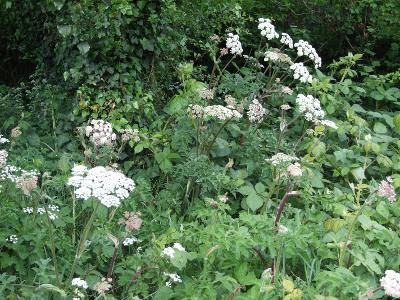
Hogweed
Hogweed

On Sunday May 3rd we should have been welcoming hundreds of visitors to our annual Open Day and celebrating the start of our new season. Luckily the lockdown hasn’t affected the flowers, trees, butterflies, bees, newts and the other creatures that make their home in the Park. The newts may even be relieved to miss being dipped out of the pond every Sunday afternoon.


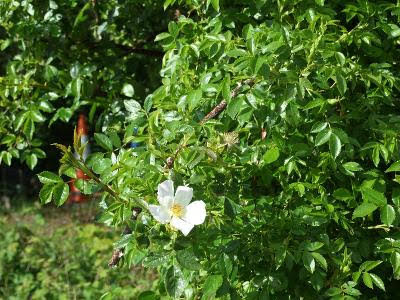
Dog Rose
Dog Rose

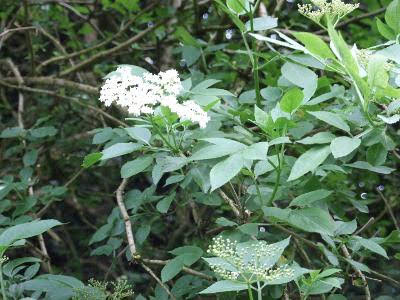
We are lucky that Hilary has been able to take some photographs recently. This spring is running several weeks early! Out in flower on 2 May, when they are usually at least 2 weeks later, were hogweed, dog rose and elder. This means plenty of nectar and pollen now, but what will be flowering come July and August??


Elder
Elder

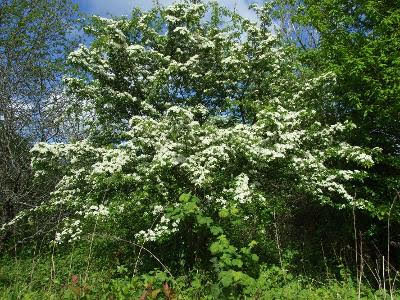
Here are some more photographs from the Park. First is a shot of May-blossom itself – hawthorn.


Hawthorn
Hawthorn

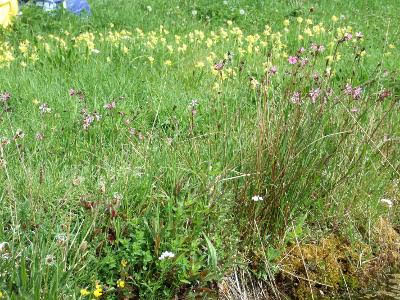
The next shows ragged robin and cuckoo-flower (ladies smock) by the pond. Both were planted as plugs after the pond was re-lined in 2016, and have survived the drought of 2018. There are cowslips in the meadow behind.


Ragged Robin and Cowslips

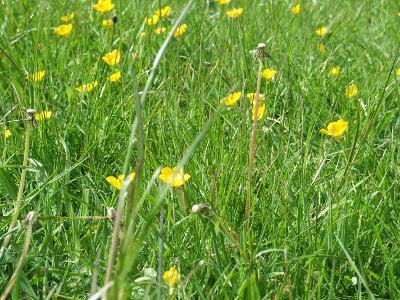
Finally bulbous buttercup in the meadow by the pond – to identify them look for the sepals turned back away from the petals. It has a crocus-sized "bulb" underground and dies back to that around midsummer.


Bulbous Buttercup
Bulbous Buttercup

Check our Facebook pages where we will keep you informed of progress. When we can eventually open again watch out for wardens sporting our new T-shirt.


Linda modelling the new Butterfly Park T-shirt

Monday, 20 April 2020

April Notes on Wildlife-Friendly Gardening


Encourage hedgehogs into your garden. Photo: Gibe, Wikipedia


Hedgehogs

I’m writing this in early April - Hedgehogs are emerging from their winter sleep. There has been a huge decline in hedgehog numbers over the last few decades, driven by loss of habitat, loss of connections between habitats, road traffic and pesticides. Gardens can be good habitat, but a hedgehog needs around 10-20ha of habitat to roam in, so getting between gardens is essential. Make sure your fences have holes near the base to let them move around – a hole the size of a CD case (13cm square) is enough, and will not let any children or dogs through.

Do not use metaldehyde slug pellets, as they leave the dead slugs poisonous to birds and hedgehogs. If you use garden netting (I do when the soft fruit is ripening) then make sure it is checked twice daily, and that it is secured firmly to the ground so hedgehogs do not try to get under it.

If you do hear our prickly friends (they sound like small pigs, of course), then try putting out a small amount of tinned cat food to encourage them to come where you can see them after dusk and maybe photograph them. Do let Cheshire Wildlife Trust or Record (local biological records centre know) – hedgehogs are often not recorded, especially in urban areas.

Growing Food In Wildlife Friendly Ways: Getting Started

My main gardening interest is growing food. I am also lucky enough to have a half-allotment (20 years ago they could be had for the asking). With global climate change escalating, growing even a small amount of your food is good for the planet (no food miles) and for your health (allotment growers stay healthier longer). There is no reason why food-growing cannot be friendly to wildlife, especially on a garden scale. If you are new to food growing, start small: maybe a herb bed in a sunny corner with chives, marjoram, thyme or whatever you like to use in cooking.

Most herbs are good nectar plants when in flower, and the perennial ones are very easy to look after (just a weed and tidy away of dead stems in spring). Also easy to look after are soft and tree fruit, and will yield you far more than you would buy. Some will tolerate light shade e.g. raspberries, gooseberries, red currants. All soft fruits freeze well raw, tree fruits mostly freeze well once cooked. Get stock from a reputable supplier, plant properly, mulch with garden compost and read up about pruning.

Salads and vegetables need a well-lit area and more fertile soil, so choose your spot and spread it well with garden compost. If you don’t have a compost bin, start one! Raise from seed for cheapness, and be prepared to weed and harvest as needed. Easy ones to start with, which give a good yield, include broad beans, tomatoes, lettuce, dwarf beans (known to the allotment world as French beans). Take the chance to plant unusual varieties. And of course – no pesticides, no peat!

Dr Hilary Ash