Showing posts with label newts. Show all posts

Friday, 31 July 2020

The Tale Of The Dipping Pond


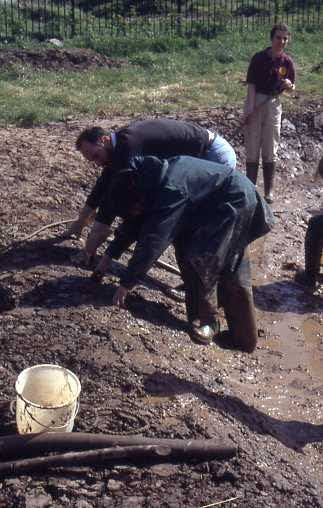
Mel decided we really could do with a pond, mainly for educational use, but also as a water source for wildlife. So in 1995 we got a grant to pay for a JCB to dig the pond. We had done a trial dig and thought the area was simply clay. However, when the JCB got about 4ft down it hit a stone pavement, presumably where the coal merchants’ huts had stood. The current ground level had been made up some time before Mel moved in in 1975, as it was already vegetated when he arrived. We tried to puddle the existing clay to line the pond, having a very wet and muddy afternoon.

Puddling the clay to line the pond

Filling the pond


However only the bottom held water, because of the pavement and the soil tipping above that, so we got another grant and bought a liner, and the pond was filled by hosepipe from Mel’s outside tap in 1996 (no water meters then). This was left running all night - Barbara Roberts remembers trying to sleep with it running. Two buckets of water from a good pond at Willaston brought in some initial mini-beasts, and the beetles, dragonflies and so on flew in. Frogs moved in from a bath-tub pond in Mel’s garden. Some pond plants were bought with grant money and Barry Porter MP “planted” them – actually handed them to Mel, who was standing in the pond in waders, to plant.
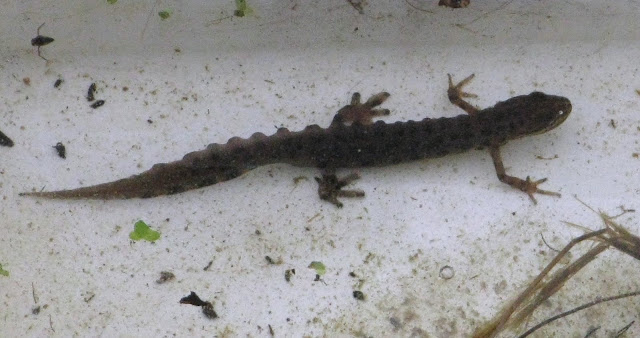

Newt from the pond


In 1998, Mel became aware of 3 ponds about to be filled in, which had small numbers of smooth newts. One was on the sewage works site at New Ferry shore, another in Birkenhead, and there was one more. In total 7 adults and bunch of larvae were put into the pond, so small numbers, but a variety of sources seemingly gave us good genetics, because they bred rapidly, eating out the frogs over a few years. However the newts are a major attraction, and between adults and efts are there to be caught all summer. They are remarkably tolerant of pond-dipping!
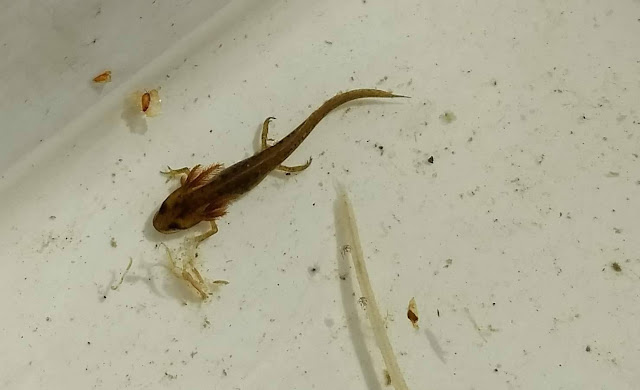

An eft

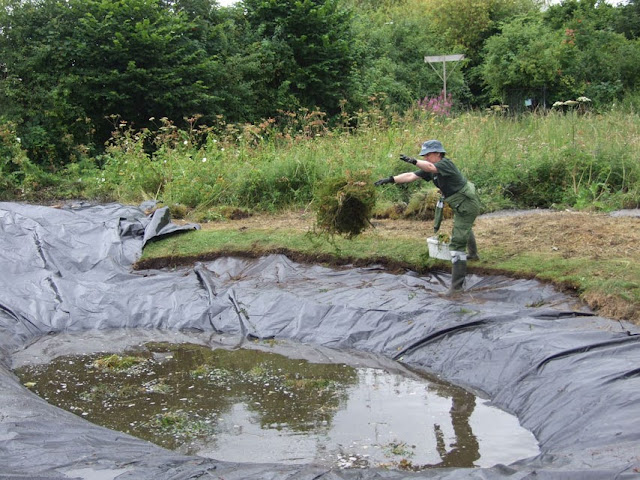
In 2005 the pond developed a leak and the water level fell drastically.


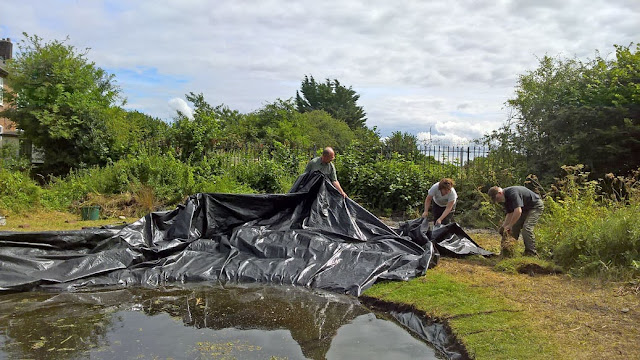
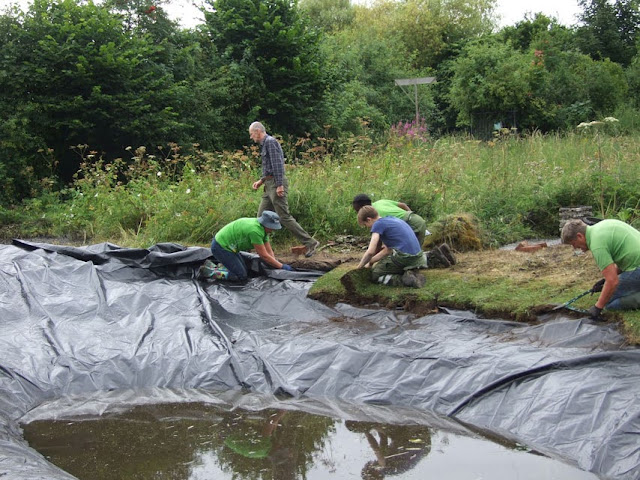
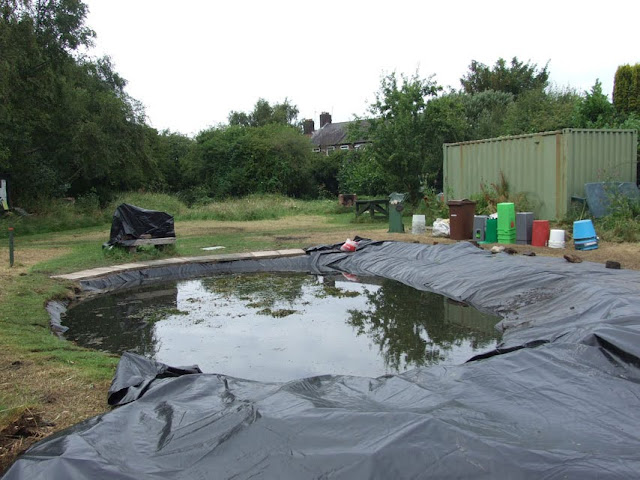
As many as the pond creatures and plants as possible were removed and kept in buckets of water. A new lining was put in place with the help of a work party from Scottish Power.


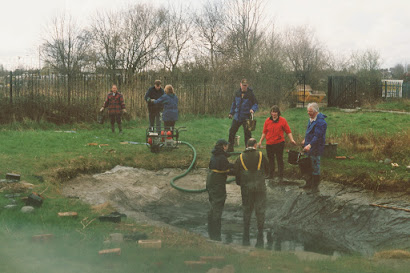
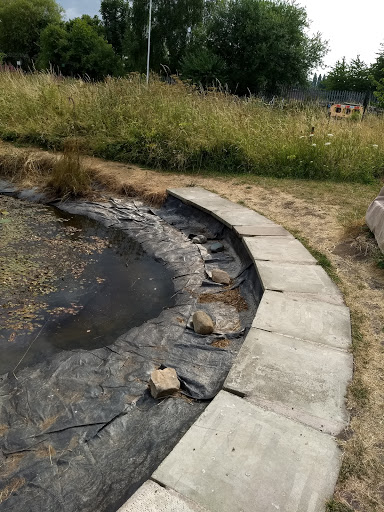
A new dipping edge was cemented into place and then the Fire and Rescue came at 4.30 p.m. to fill the pond. They decided to do it straight away but got called to an emergency so came back an hour later to finish it.
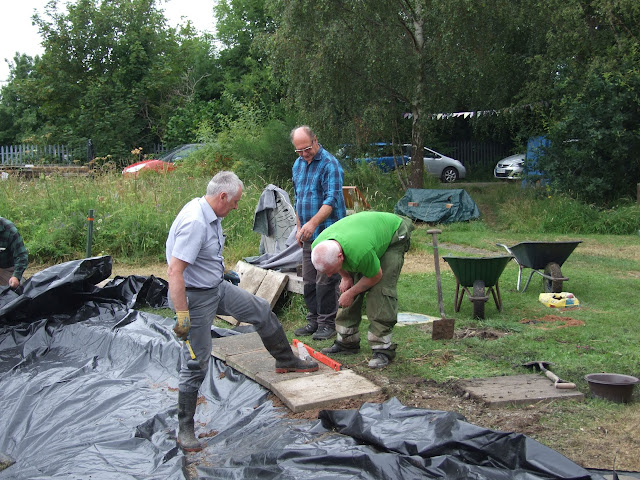
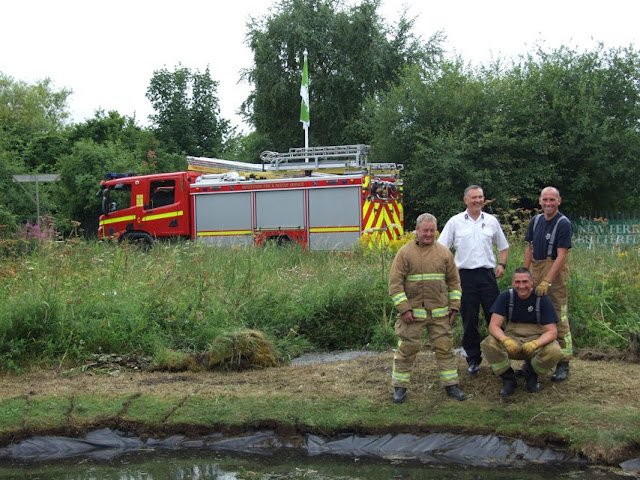
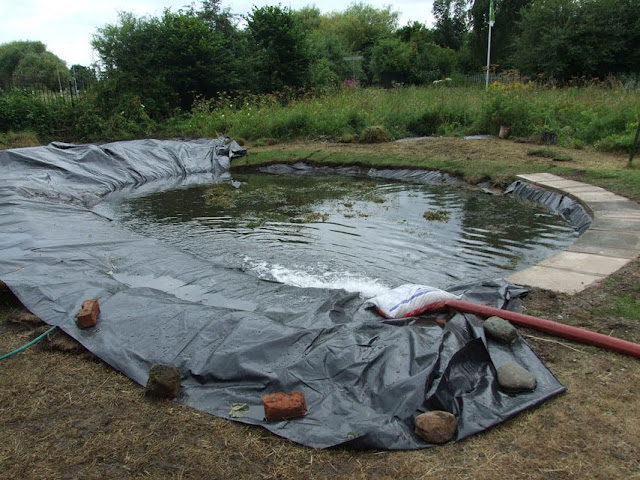
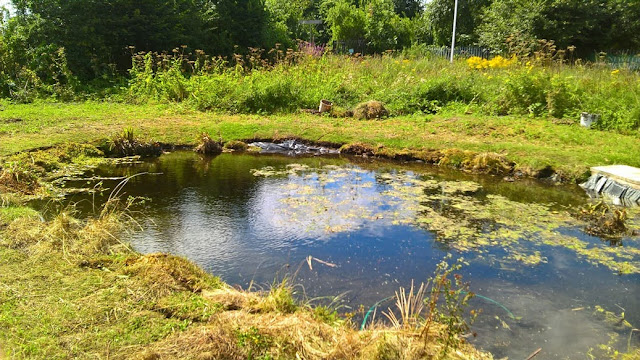

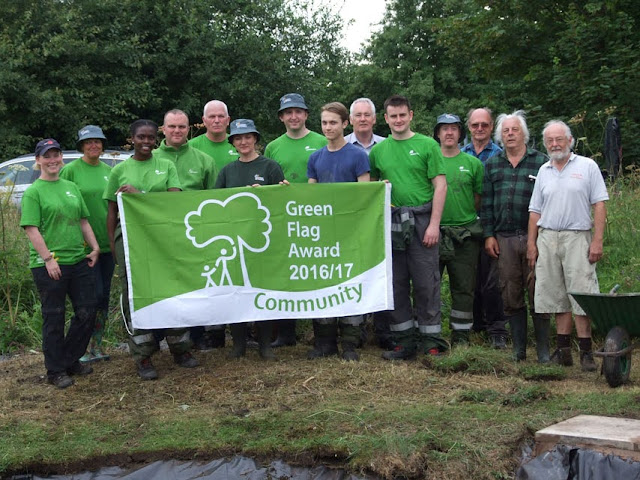
Here is the hard working team.

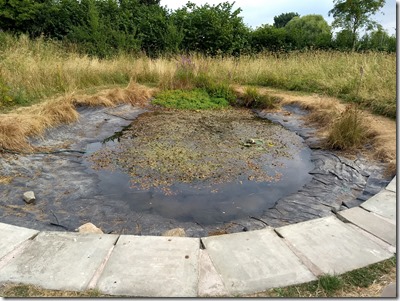
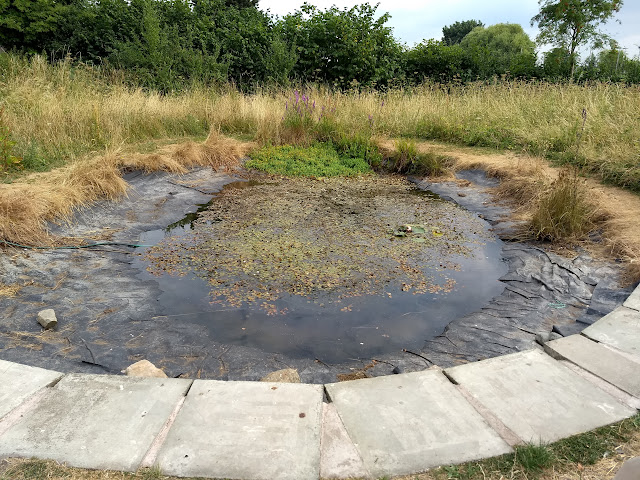
In July 2018 the drought led to an incredible drop in the water level in the pond. It was a summer without pond dipping.


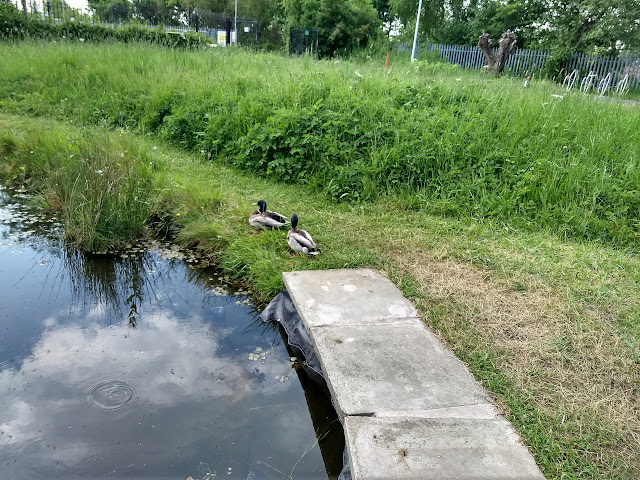
As soon as the rain returned the pond was teeming with life again and attracted a pair of ducks.

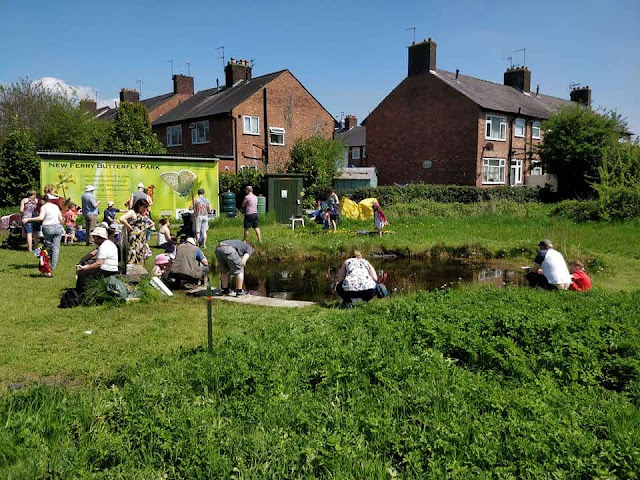
The pond returned to its glory.

Wednesday, 15 May 2019

iNaturalist App For Biological Recording


Taking a photo to upload to the iNaturalist app.

New Ferry Butterfly Park has welcomed students from Liverpool John Moores University every year. Now they have welcomed an intern from LJMU, in partnership with the Lancashire Wildlife Trust and the Merseyside Biobank, for the Greenspace and Biodiversity Challenge to carry out some biological recording using the iNaturalist app!

Smooth newt (Lissotriton vulgaris) found in the pond at the Butterfly Park

It may have been a bit of a grey day on Thursday 9th May but that didn’t stop students from LJMU Conservation Society joining the intern, Vicky Handby, and the volunteers to have an evening BBQ and wildlife recording session. The event started off with a pond dip, to search out the smooth newts and various other aquatic life like water boatmen, mayflies and diving beetle larvae. Once that fun was over we enjoyed a nice sausage or two from the BBQ before heading off on a tour given by Paul Loughnane, honorary secretary of Wirral Countryside Volunteers.

Paul showing the LJMU students around the Butterfly Park

We started the tour with Paul explaining some of the plants found within the acid grassland and around the pond and why these are vital for different species such as sheep sorrel which allows the small copper caterpillars to thrive within the area. Following Paul further into the park we found lots of common species like hawthorn, broom, cowslip, mistletoe and alder buckthorn, to name a few. Checking under the logs for mini beasts it was lovely to see some saproxylic invertebrates like woodlouse and centipedes further the decaying wood which has a vital role in the ecosystem. It was then over to the little herb garden area to guess the various types of herbs that had been planted like lemon balm, rosemary and thyme. In previous years the Conservation Society at LJMU have helped with the making of hedgerows so it was nice to see that hedgerow still thriving with dogwood, field maple and spindle.

Bogbean (Menyanthes trifoliata), found at the edge of the pond at the Butterfly Park 

The tour was a wonderful success at achieving what we set out to do: gain more observations of species and learn more about our local green space. With the help of New Ferry Butterfly Park, the Greenspace and Biodiversity Challenge managed to gain at least 80 more observations on that day. The species seen on this day were all added to the iNaturalist app for biological recording data. This is vital for record keeping, research, protection of our greenspaces and conservation efforts. With this knowledge we can ensure our local wildlife is protected and monitored for future generations to enjoy. Currently there are over 26,000 observations within the Liverpool City Region with 222 individuals adding to this growing number. The Wirral has contributed to over 2,000 of those observations. It is a brilliant opportunity to showcase what Liverpool City Region has to offer!

Columbine (Aquilegia), also found at the Butterfly Park

So, if you want to get involved with the challenge, download the iNaturalist app on your phone, get outside, take a picture of what you see and upload it. Or join us on one of the many events going on in the region which can be found via our Facebook page: https://www.facebook.com/yoebiodiversity/

Link to the iNaturalist app: https://www.inaturalist.org

Vicky Hanby

Monday, 23 July 2018

New Ferry Butterfly Park Pond


Butterfly Park pond 12.7.18

No doubt your gardens are showing the effect of lack of rain and you will have seen the yellow grass verges.

The pond at the Butterfly Park got really low and this was Thursday July 12th. Luckily the centre is about 5 feet deep so there was somewhere for the newts and invertebrates to survive. The recent rain has helped a bit so it is looking better now but still too low to do any pond dipping.

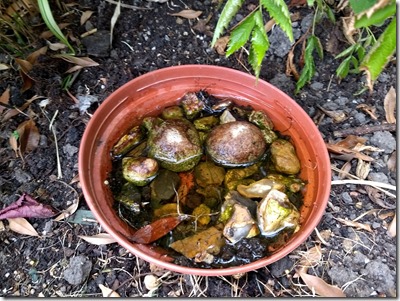
shallow water dish

Don’t forget to put water out in your garden for wildlife. A shallow tray with some pebbles and water helps bees to drink without getting wet.