Showing posts with label winter. Show all posts

Monday, 3 January 2022

Wirral's Wild 50: January Worksheets


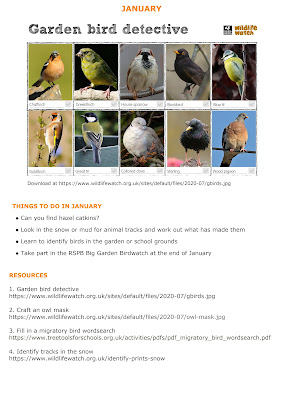
Happy New Year! It may a time for making changes but we hope you will want to carry on with Wirral's Wild 50. In January, become a nature detective by learning to identify birds and spot tracks made by different animals.


January activities

Things to do in January


  • Can you find hazel catkins?
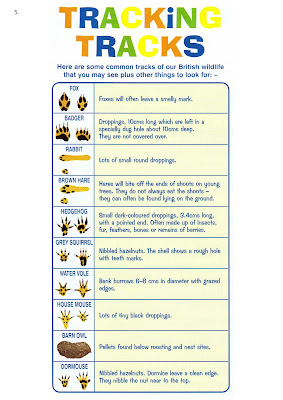
  • Look in the snow or mud for animal tracks and work out what has made them.
  • Learn to identify birds in the garden or school grounds.
  • Take part in the RSPB Big Garden Birdwatch at the end of January.


Common tracks and signs of British wildlife


Resources

1. Garden bird detective
https://www.wildlifewatch.org.uk/sites/default/files/2020-07/gbirds.jpg

2. Craft an owl mask

Thursday, 2 December 2021

Wirral's Wild 50: December Worksheets


Here are this month's Wirral's Wild 50 activity sheets. In December, make your own bird feeder and learn how to identify trees in winter by looking at their twigs.


Download full size instructions and watch a video to help you make the bird feeder:


Things to do in December

Think about how plants and animals survive the winter

Learn how to identify trees when they have no leaves

Make a bird feeder

Look for mistletoe and find out how it survives without roots

Work out how old a tree is


Sunday, 24 January 2021

Winter 2020-21 at Cleaver Heath


Snow on Cleaver Heath


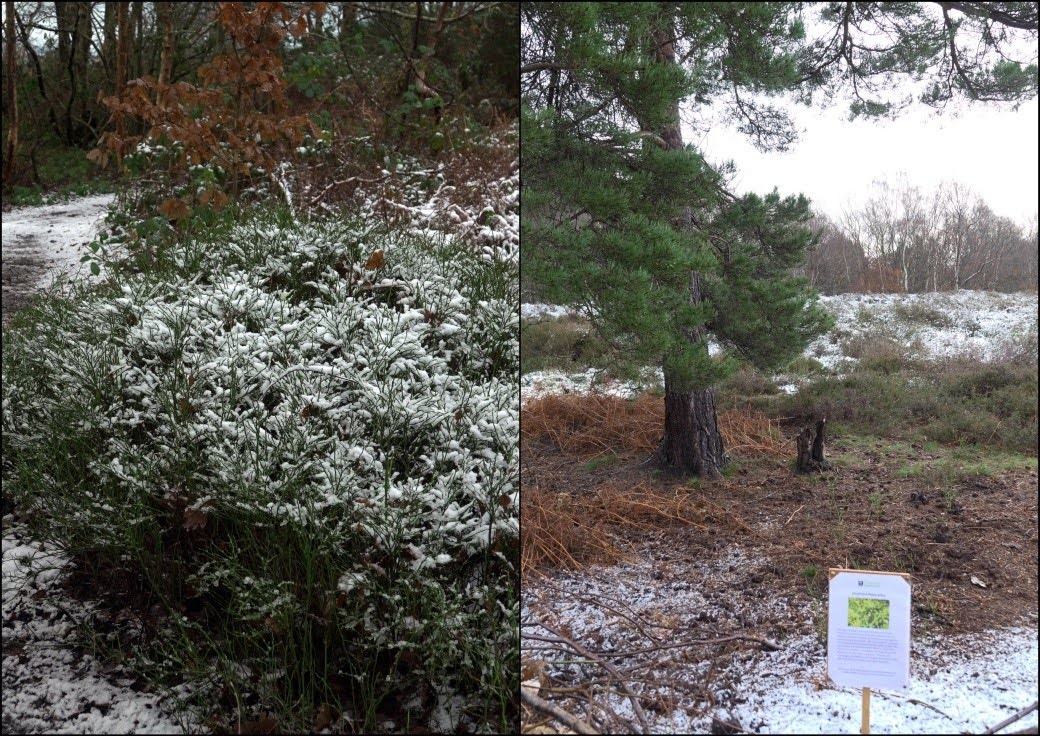
Finally, in January, we had a smattering of snow on Cleaver giving the place a more wintery look.


Bilberry (left) planted in an area which has been cleared of bracken (right)


It has been Covid rather than the weather that has complicated the traditional routine of monthly work days this year. Nevertheless, we have managed to get through much of what we had planned in terms of birch and gorse control within the heather panels and managing the scrub areas. The latter are held in check by coppicing where we cut back the larger of the birch saplings which are trying to develop into full-grown trees. Likewise, we cut back the older European gorse in scrub areas to keep the plants dense and hence of more value to wildlife. Where the gorse on the edge encroaches and shades the heather, we treat the gorse stumps after cutting to prevent/reduce re-growth. Actually, within the managed scrub area, we have a beautiful and expanding group of Bilberry plants. Following a suggestion from our Trust manager, we have used some of the Bilberry shoots starting to move into the main footpath to populate an area we have recently cleared of bracken. This area at the edge of a main heather panel, had suffered from excess footfall by people going off-piste, soil enrichment mainly due to dogs and recolonization by bracken. We think of this as a mini heathland restoration project. The temporary sign put up after our January work day explains what is happening and almost every new person walking past stops to read it!


Green woodpecker
Green woodpecker


In recent weeks there has been quite a lot of Green Woodpecker activity – mainly I hear the calls of a male but just occasionally it perches up on a birch tree so I can get a look at it. Here is a photo of a male taken last year by local resident Frank Burns. I don’t know if it is the same male, but it is on the same pine tree featuring in the above photo of the re-planted Bilberry.  As well as the various tit flocks moving around the reserve, I have been lucky enough to come across the odd Goldcrest whose numbers on Wirral this winter seem to be pretty good.


Goldcrest
Goldcrest 


When compiling the results of the recent botanical survey of Heswall Dales, we came across a vegetation map of Heswall Dales from, we think, 1980.  The areas classified as heather, scrub and birch seem remarkably similar to those identified in 2020 contrary to what local critics may suggest. The birch trees are of course a lot taller now. That got me thinking about what was the corresponding state of ‘The Dales’ in that part now known as Cleaver Heath? So, I tried to dig out photos from when we first moved in during October 1976.


The area now known as Cleaver Heath in 1976


This first photo was taken in December 1976. The figure, included to provide scale and who is sticking nicely to the path, was 2 years old and proudly exhibiting her mother’s sewing and knitting skills. There is little sign of the large birch and gorse stands now present and obscuring the houses. 


The area now known as Cleaver Heath in 1976


The next photo, showing the future volunteer warden’s house, was taken from what we have now earmarked as a potential area for heathland restoration. Clearly bracken was already a problem, but we only see modest amounts of gorse or birch in the area now designated as ‘managed scrub’. I don’t recall any evidence of heathland management ever being carried out by the hospital ‘gardeners’. That only started when Cheshire Wildlife Trust bought and managed the land in the 1990s so I remain puzzled by this.


Flooding at Cleaver Heath


Recent visitors to the reserve have needed wellies following the efforts of storm Christoph and his accomplices. I have never before seen such flooding throughout the reserve. The good news is that the main heathland path which we stoned a couple of years ago has stood up well but will soon need reinforcing if we are to avoid further heather damage as people divert to protect inappropriate footwear.


Winter sunset from Cleaver Heath


On better afternoons, the sunsets over the Dee have been up to their usual winter standard and provided a suitable reward for the many visitors currently taking their exercise here.


Reserve entrance at Cleaver Heath


My usual ‘seasonally-adjusted’ photo of the reserve entrance has benefitted from the earlier brief snowfall. Perhaps we might get another ‘Beast-from-the East’ to feature in my corresponding spring photo.


Alan Irving

Volunteer Reserve Warden for CWT

Cleaver Heath

January 2021


Tuesday, 5 January 2021

Beginning a New Year at the Butterfly Park

We hope everyone enjoyed a peaceful Christmas and New Year. Here are some January photographs from New Ferry Butterfly Park.


Hazel catkins
Hazel catkins

One hazel bush is out in flower already.


Guelder rose berries


Guelder rose berries are still on the bush, a sign that the migratory thrushes like redwing have not found them yet.


Frozen pond at the Butterfly Park


The pond froze over - we have not seen that many times in recent years.

The Butterfly Park is closed to the public until May but we hope these pictures inspire you to keep looking for nature's changes through the winter. It's a great boost to wellbeing while we try to cope with the latest lockdown. As ever we would love to see any photos you take. You can email us or contact us through our Facebook page.


Wednesday, 23 December 2020

Ivy and Mistletoe at the Butterfly Park


Cross section through hawthorn with ivy surrounding the branch


We decided to fell one dying ivy-laden hawthorn, as it hung over the path. The photograph above shows the cross section through the sawn trunk. The hawthorn is the brown wood, the ivy the white wood. So more ivy than hawthorn! Ivy is an excellent plant for wildlife with flowers in autumn that are rich in nectar for insects feeding up before hibernation. Then berries ripen in January for the birds and there is shelter at any time of year for insects and small birds. However, it is possible to have too much of a good thing, and ivy can take advantage of dying trees to develop a large crown which then makes the tree likely to break. So encourage ivy - but in the right place.


Sawn down hawthorn tree


This is also a good time to see mistletoe as the leaves have fallen from the apple trees.


Mistletoe on apple tree


We introduced mistletoe to New Ferry Butterfly Park over a decade ago, partly as an educational plant to talk about parasitism in plants. It is flourishing on our various self-sown apple trees, and has spread to a hawthorn. The berries are not properly ripe till January or February, which is when the blackcaps and mistle thrushes will eat them.


Mistletoe on apple tree


However, for people there is no kissing under it this year - except within your household or Bubble!

Hilary Ash


Wednesday, 19 February 2020

Winter 2019-20 at Cleaver Heath


Flooded paths at Cleaver Heath


So far, at mid-February, there has been no ‘Beast-from-the-East’. The frosts have been few, no snow but plenty of wind and rain, as the pictures above demonstrate.

We have now used up the remaining pile of approved stone to reinforce some more of the main paths. The weather on the monthly work party days has been kind, allowing us to complete our planned birch and gorse control. The birch and selected European gorse within the main heath panels was cut and treated. Our volunteers helped us coppice the taller birch within the manged scrub area and we made a start on further coppicing of European gorse in the lower part of the reserve. The gorse strategy is to prevent further incursion, improve the age structure and hence provide more valuable wildlife cover. 


Birds at Cleaver Heath

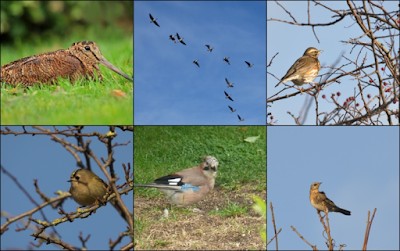
Winter is generally thought of as a quiet time on a nature reserve like Cleaver Heath but here is a list of 20 bird species seen at Cleaver in the last few weeks: Pink-footed Goose, Woodcock, Herring Gull, Woodpigeon, Great Spotted Woodpecker, Jay, Magpie, Carrion Crow, Raven, Coal Tit, Blue Tit, Great Tit, Wren, Blackbird, Fieldfare, Redwing, Robin, Dunnock, Chaffinch, Goldcrest. 


Some, like the Woodcock (top left in the above photo) which is normally hiding in the heather and the Pink-footed Geese flying overhead, are obviously winter visitors. So too are Redwing (top right) and Fieldfare (lower right). Birds such as the Jay (centre lower) and the tiny Goldcrest are here all year round. However the numbers of some resident species including Blackbird and Robin are greatly swollen by visitors from continental Europe. I am told this will still happen after January 2021.

I have again started to record bird sightings more regularly outside of formal surveying activities. The BTO (British Trust for Ornithology) has been promoting the value of ‘complete lists’. In many ways, the information from these is just as, if not more, useful than random casual records of ‘interesting’ sightings. The online resource BirdTrack (www.bto.org/birdtrack) is very simple to use. When you are out for a walk, perhaps along a favourite route, you keep track of how many goldfinches, blackbirds, curlew etc. you have seen or heard. You can enter them on a smartphone app as you go or, as I do, keep them in a handy notebook and enter them back at home. It can be strangely satisfying if you are of that sort of mind and, possibly, a source of intense irritation for your walking companion. I don’t remember hearing as many birds singing in January and February as I have in walks this year. They are as confused as us about the weather patterns.

Cramp-Ball Fungus Weevil

Talking of surveys, Tony Parker of the Liverpool World Museum and rECOrd (http://www.record-lrc.co.uk/) has kindly helped me assemble a list of all the sightings which he and his fellow naturalists accumulated during four field visits to Cleaver this last summer. These are all now publically available as part of the huge wildlife and plant rECOrd database covering Cheshire and its surroundings. The groups made 474 confirmed sightings including over a hundred invertebrate species, 31 birds, 64 plants, 3 mammals as well a frog and 4 sightings of Common Lizard. I had no idea just how many species of hoverfly, wasps and bees there were! The star was probably the ‘first for Cheshire’ finding of this Cramp-Ball Fungus Weevil (Platyrhinus resinosus © Leanna Dixon).


Most of the sightings were well beyond my abilities to identify. However, there were two common species reported which do not appear in my own Cleaver records: a Skylark and a Rabbit!

Common lizard

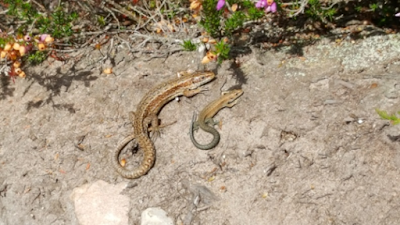
I am looking forward to re-starting the annual butterfly transect surveys at the end of March/beginning of April. Another survey which we hope to start in the spring is for Common Lizard. We have taken advice on how best to do this and, on our March work day, we will be deploying a new set of ‘refugia’ in an orderly manner within the reserve. You may have previously seen small sheets of corrugated iron lying about in Cleaver. These provide cover and indeed basking areas on sunny days.  The lizards shown here were actually photographed in the Dales where the sandstone outcrops provide many basking opportunities. In the planned heathland restoration area in the SW corner of the reserve, we hope to provide bare ground patches on the south facing slope and ‘hibernacula’ for winter refuge.


FAQs - Let me try to answer a couple of questions I often get asked:

Q1: Why is heathland management done only in the autumn and winter months?

A1: Cleaver is of course a SSSI and so its management is regulated by Natural England (NE). NE specifies when we can work in habitats like heathland and woodland. The timing is based on the notional bird-nesting season.  But surely birds nest in trees so you should be able to carry on working in heather and gorse? No, a lot of the birds using Cleaver nest very close to the ground in the cover provided by the heathland. Warblers, for example, are most obvious while singing in the trees but are actually nesting in the gorse and bramble cover. 

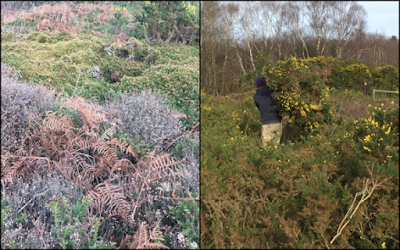
Western and European Gorse at Cleaver Heath

Q2: How can you tell the difference between Western and European Gorse?

A2: The most obvious difference is that the Western Gorse is very compact and rarely grows tall enough to shade the heather. The left photo above shows a carpet of Western with a stand of (flowering) European in its top right. The willing volunteer on the right photo is carrying off some cut European Gorse giving the shaded heather a better chance. On closer inspection, the stalk of the Western is quite densely covered with prickles whereas the barer European stalks can been seen quite clearly.  Most of the Western gorse flowers at the end of summer rather than the beginning. 


Heathland Management


We are working with the Friends of Heswall Dales to run a Wirral Workshop on Lowland Heath Management on February 29. With the cooperation of delegates from Wirral Borough Council, Cheshire Wildlife Trust, the National Trust and Natural England, we are exploring opportunities for greater cooperation in the management of Wirral heathland.  On April 21 there will be a Cheshire Lowland Heath Forum hosted by Heswall Dales. These Forums are an excellent opportunity for conservation people to see each other’s reserves and share good ideas as well have a joint hand-wringing session about how hard it all is. When cattle used Wirral heathland for grazing, the conservation of this resource was ensured. Now, if we wish to keep this habitat, we have to intervene directly. We need volunteers to do the work of the cattle. 


Sunset at Cleaver Heath


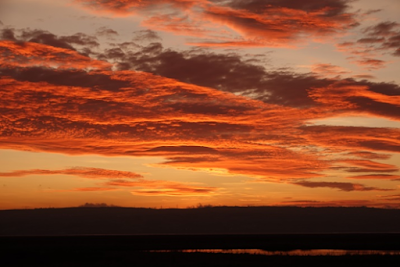
Colleagues at CWT are in the process of updating our reserve websites, including that for Cleaver. Among the attractions listed, is that Cleaver is a ‘perfect reserve for an evening stroll at sunset’.  Indeed, this winter has seen a regular sequence of spectacular sunsets as this recent photo demonstrates.


Cleaver Heath entrance


Alan Irving
Volunteer Reserve Warden for CWT
Cleaver Heath

February 2020

Friday, 31 January 2020

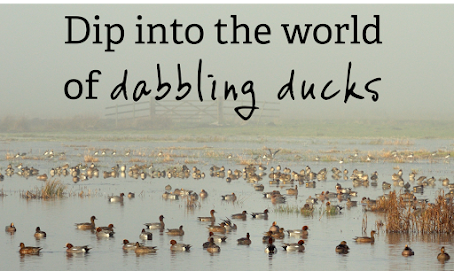
Dip Into The World Of Dabbling Ducks


Cheshire Wildlife Trust's latest newsletter provides help with dabbling duck identification.

Dip Into The World Of Dabbling Ducks

Winter is a wonderful time to see wildlife, particularly for fans of our feathered friends. As the cold grip of the Arctic winter takes hold on the lakes, pools and marshes of Northern Europe and Russia, huge numbers of swans, ducks and geese retreat to the relative warmth of the UK. Our lakes, rivers, reservoirs and coasts are a winter home for an estimated 2.1 million ducks!


Are you a dabbler or a diver?

Ducks can be split into two broad groups: dabblers and divers. As the name suggests, diving ducks feed mainly by diving underwater, using their strong feet (and sometimes their wings) to swim. Dabbling ducks, however, feed predominantly at the surface, sometimes even grazing on land. Many dabblers can often be seen upending, with their heads underwater and their bums in the air.

We’ve pulled together an introduction to the dabbling ducks you’re most likely to see this winter, with a quick guide on how to recognise both males and females. So why not wrap up warm, head to your nearest water body and search for some spinning shovelers, whistling wigeon or pristine pintails.


The dabbling duck ID guide

Top tip: a useful way of identifying ducks (especially females) is to look at the speculum – this is a coloured patch on the secondary flight feathers, which are the feathers at the trailing edge of the wing, close to the body. The speculum is often a distinctive colour and can easily be seen in flight, and regularly seen on swimming or standing birds.


Mallard (male)

Mallard male

The classic duck. Males have a yellow bill and a green head, separated from the brown breast by a thin white collar. The body is mostly grey, with a black rump. The black middle tail feathers curl upwards. The speculum is dark blue with a white border


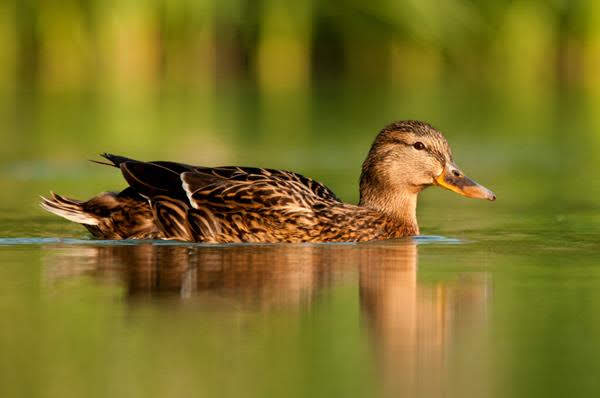
Mallard (female)

Mallard female

Females are a streaky brown all over. They have a patchy orange and black bill (see gadwall for comparison). Like males, they have a dark blue speculum with broad white borders. This is obvious in flight and can sometimes be seen when the duck is on the water or ground.


Gadwall (male)

Gadwall male

Slightly smaller and slimmer than a mallard. Males are mostly grey, with a wavy pattern (known as vermiculations) that is strongest on the breast. They have slightly browner heads, brown feathers on the back and a black rear. The bill is greyish-black and the speculum is small and white.


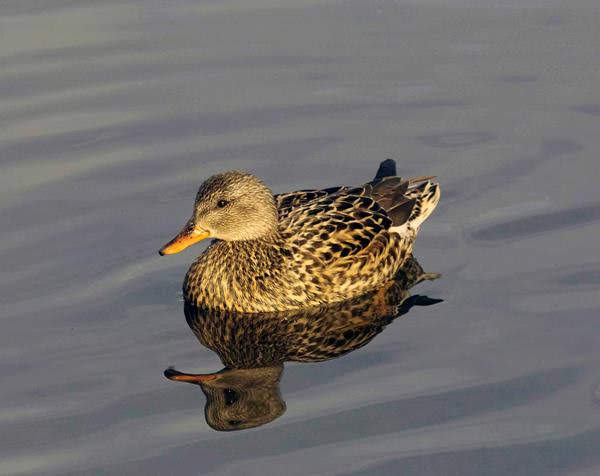
Gadwall (female)

Gadwall female

Females are very similar to female mallards, though slightly smaller and slimmer. The best features to look for are the small white speculum on the wing (much smaller than in male gadwalls) and the bill, which is dark with a neat orange stripe along each side (patchier orange and black in mallard).


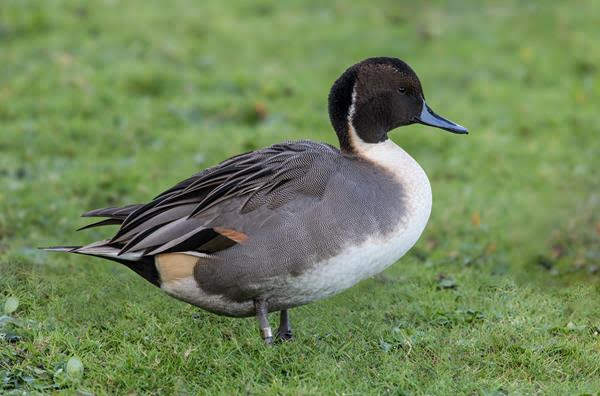
Pintail (male)

Pintail male

An elegant duck, with a small brown head, a long neck that's brown at the back and white at the front, and grey body. The black middle feathers of the tail are very long. The speculum is dark green, with a white border at the back and a rusty border at the front. The bill is black with blue sides.


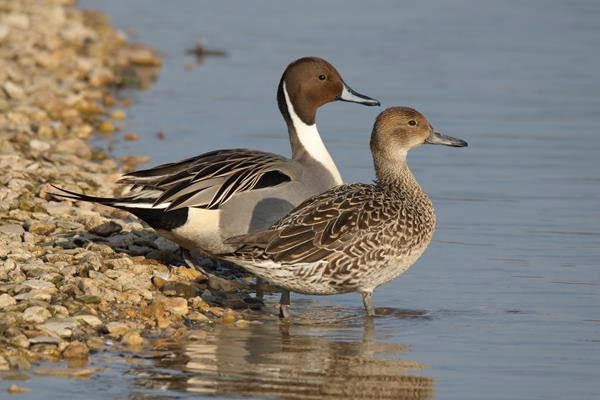
Pintail (female)

Pintail female

Like a slim, elegant mallard, with a long, slender neck and long, pointed tail feathers (not as long as in male). The head is a richer brown than the greyish body, the bill is dark grey and the speculum is bronze-brown with a thick white border at the trailing edge and a narrow white border at the front.


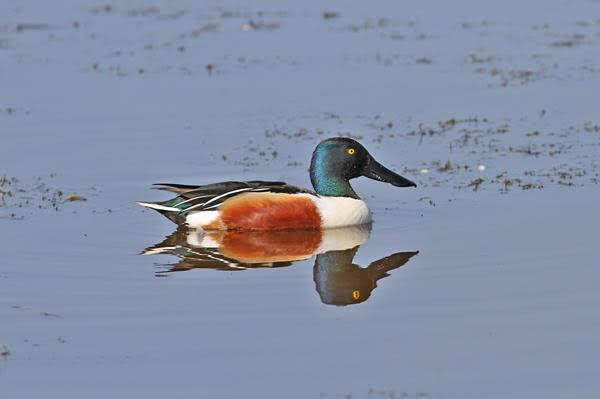
Shoveler (male)

Shoveler male

Similar size to a mallard. Males have a glossy green head, a yellow eye and a huge, broad dark bill. The belly and sides are a rich chestnut brown and the breast is white. The speculum is green, with a white border at the front and a large blue patch on the forewing. Shovelers often feed in pairs or groups, spinning around each other.


Shoveler (female)

Shoveler female

Resembles a female mallard, but with a huge, broad bill (paler than the male's). The speculum is a dull green (blue in mallard), with a white border at the front and no white on the trailing edge (mallard has a white trailing edge).


Teal (male)

Teal male

Our smallest duck (about 2/3 the size of a mallard). The head is chestnut with a yellow-bordered green patch on each side. The body is grey with a horizontal white line running along it, and a yellow patch either side of the rear. The speculum is bright green.


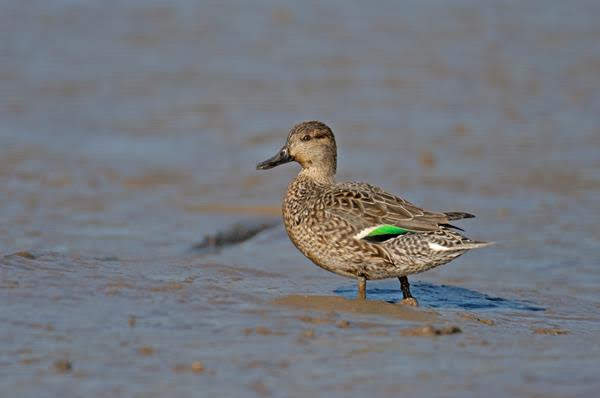
Teal (female)

Teal female

A very small, streaky brown duck, with a small, dark bill that often has orange towards the base. The speculum is bright green, with a broad white bar in front of it and a narrower one at the trailing edge of the wing.


Wigeon (male)

Wigeon male

Smaller than a mallard, with a short neck and small, blue, black-tipped bill. They have a round, chestnut head with a creamy-yellow patch on the forehead. The body is mostly grey, with a white belly, pinkish breast and black rear. The speculum is green with a large white patch in front of it. Often gives a whistling call.


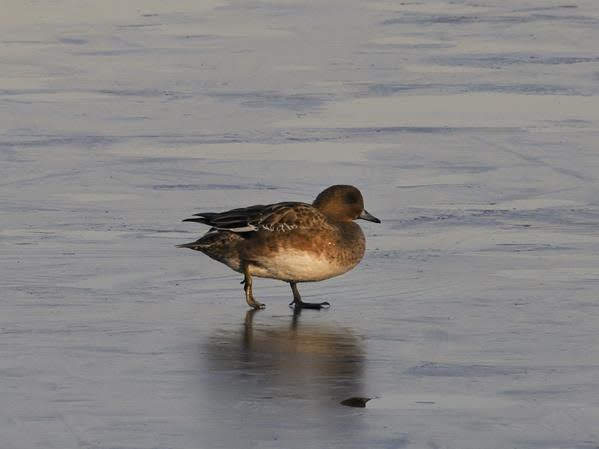
Wigeon (female)

Wigeon female

Females are mostly a mottled brown, though the shades can vary from greyish-brown to a richer red-brown. They have a small, round head and short, blue bill with a black tip. The belly is white and the speculum is dark and they lack the large white patch of the male. Often in large groups, grazing.


See them in action

Dive deeper into the world of dabbling ducks with our video identification guide!


Where to see dabbling ducks

Cheshire Wildlife Trust care for many wetland nature reserves across our region of Cheshire, Halton, Stockport, Tameside, Trafford, Warringon and Wirral. Here are some of best wild places for dabbling ducks.

Compstall Nature Reserve, Etherow Country Park
Gowy Meadows, Thornton-le-Moors
Hatchmere, Frodsham
Marbury Reedbed, Northwich
Trentabank Reservoir, Macclesfield Forest


Let us know how you get on!

Sunday, 10 February 2019

Winter 2018-19 at Cleaver Heath


Cleaver Heath sunset

Visitors continue to come to Cleaver Heath in all weathers. Many come regularly to exercise their dogs and others stumble across it while exploring the rural delights of west Wirral. All enjoy the stunning views which vary according to the weather, light conditions and tides in the Dee Estuary. The sunset photo here is just as it came out of my camera – no funny business, I swear.

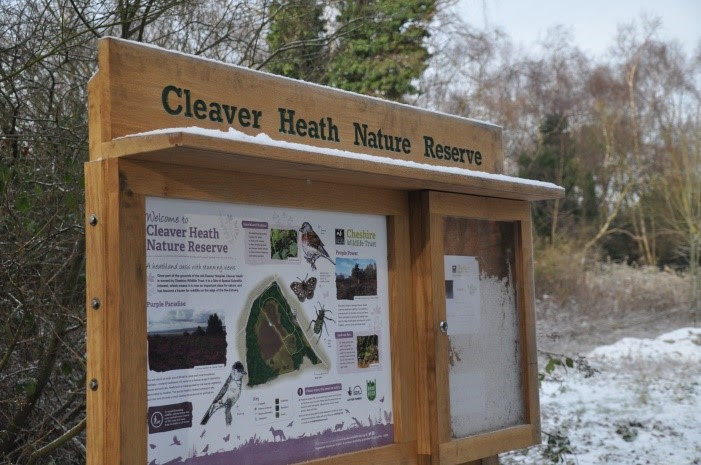
The fine new interpretation board, whose installation I highlighted in the Autumn Newsletter, has been joined by strategically placed arrowed way markers.

Cleaver Heath noticeboard

Waymarker

As you can see, the noticeboard has now been baptised with snow as well as rain.

Reassuringly, the newly stoned path has stood up very well to rain/sleet/snow and heavy usage. This was another key part of the Tesco Bags of Help scheme (more later).

Path on Cleaver Heath

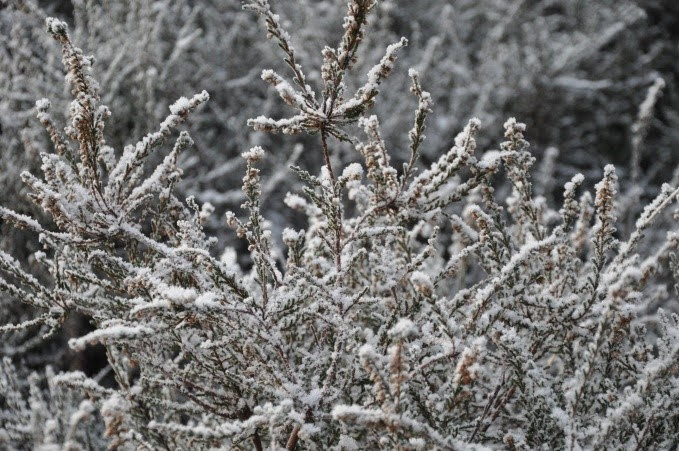
Snow on heather

Fewer visitors are finding it necessary to deviate from the main path. The close-up photo of the heather covered in snow was taken from the official path now signed through the north-east section of the heather panel. Likewise, the sunset view photo was taken from the path without resort to trampling across the heather.

Nevertheless, we do have to venture off-piste when carrying out our main conservation work.

Woodcock. Photo: Mark Hamblin/2020VISION

This year, I have to confess to disturbing a Woodcock on 3 occasions this winter. Two were down in the lower heathland panel - labelled B in the habitat/working area map shown below. These lovely winter visitors resemble a snipe in general shape and come from Eastern Europe. They lie low during daylight and feed after dusk. The third occasion on which I disturbed one was when collecting piles of dog waste in the woodland edge of area G. It shot out on its typical 20° flight path, weaving between the trees until it got to Oldfield Road where it swerved sharply and shot up the road. You can easily see that this fine photo is not one of mine, as usually featured in these newsletters, but is a professional one from the Wildlife Trust’s stock (c. Mark Hamblin/2020VISION).

On the topic of dog waste, the presence on the main noticeboard of a sign about keeping dogs on a lead has been very helpful, but there are still regular users failing to pick up. In an 8-day period last week I collected an unbelievable 34 piles. I have put up a temporary notice drawing dog owners’ attention to the nearness of a regularly emptied litter bin just outside the new northern entrance. My volunteers deserve to have clear paths and verges from which to work and the heather deserves a quiet life on unenriched soil.

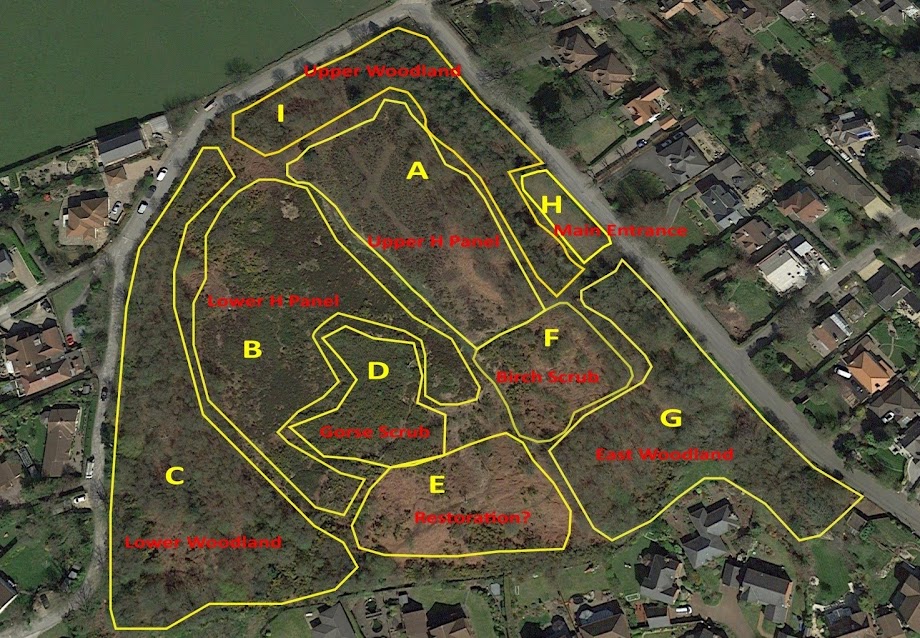
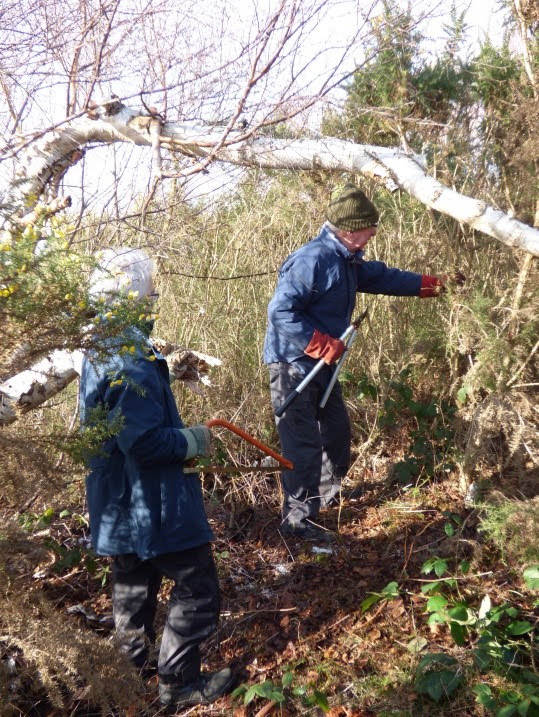
Winter work parties have gone well this year. I like to think that the systematic cutting and stump treatment really is having an effect. In years gone, by it took us until the end of the cutting season to complete our work. This season we had completed it before Christmas. The regrowth was much reduced. This was a direct benefit of the Trust’s Natural Futures programme which paid for herbicide training and the purchase of related equipment. As a result, we have been able to make use of volunteer effort on more varied tasks! People who want to get a better idea of what work is done where may find the following map helpful.

Map of Cleaver Heath

The main manual work removing birch, bramble, bracken and European gorse is in the heathland panels labelled A and B. In these areas saplings are pulled (sometimes with the ‘Tree Poppers’) or cut and painted with glyphosate. The ‘scrub’ areas such as D and F are coppiced selectively i.e. we cut the older/taller birch and gorse. The aim is to hinder the natural succession which would take place in this small heathland area while keeping good low-level shelter for wildlife. The nest boxes in the woodland areas C, I and G have now been given a final clear-out ready for spring. We hope to get help again this year with removing the bracken litter from area E (listed as ‘Restoration?’. This has been sprayed twice and raked twice. It would be a shame if we don’t manage to keep on top of it. Natural England has been very keen that we try to extend the heathland areas. We know from the soil sampling that this is feasible - in principle.

Volunteers at Cleaver Heath

Finally, I should offer a big thank you to Tesco for their ‘Bags of Help’ scheme and to all of you Tesco shoppers who put their blue tokens in the correct box. The Trust’s Living Landscape Officer Kevin Feeney, in particular, put a lot of effort into leading multiple bids to the Bags of Help Scheme for several Trust reserves and then leading the installation.

Tesco Bags of Help

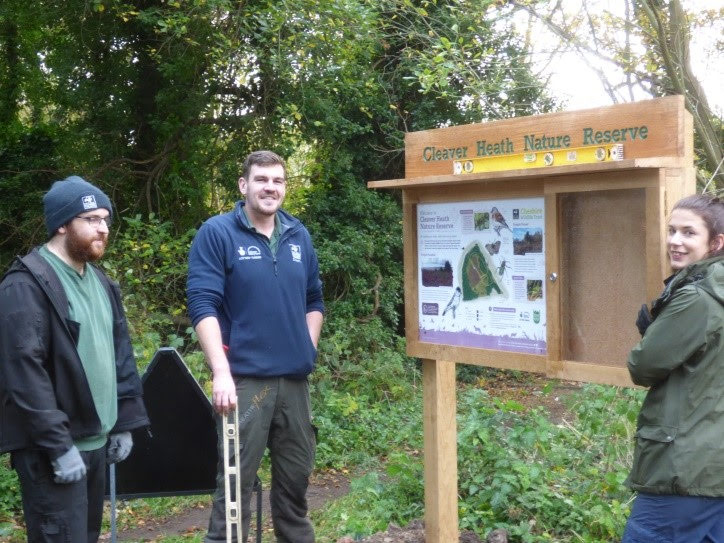
Putting the noticeboard in place at Cleaver Heath

Notice the attention to detail here – not just one spirit level but two. Community Conservation Coordinator Fiona Megarrell (on the right here) will be back later in February to welcome some staff from Tesco to check out the reserve and perhaps also help with some suitable practical work.

Cleaver Heath sign

Alan Irving
Volunteer Reserve Warden for CWT
Cleaver Heath
February 2019