Showing posts with label pollinators. Show all posts

Monday, 23 June 2025

A Special Midsummer Walk at Roman Road Sandhills

One of the larger sandhills at the site off Roman Road in Meols

Roman Road Sandhills is 7 acre site in Meols which is managed by the Friends of Roman Road SandhillsOn Midsummer morning, Saturday 21st June, 32 people enjoyed our guided walk around the area. They saw the work done this year to remove invasive, non-native shrubs and restore the dune grasslands for pollinators.

The Roman Road Sandhills is fortunate to be one of the 15 sites across Wirral to receive funding for grassland restoration, as part of Wirral Council’s Pollinator Strategy. Earlier this year, four areas of invasive shrub were scraped and reseeded with a coastal wildflower mix. Volunteers also planted 1,300 dune wildflower plugs in a depleted grassland area.

An area where invasive scrub had been removed and the soil scraped away to reveal the underlying sand, before seeding with a wild flower mix

A large number of butterflies and other invertebrates have been recorded at the Sandhills and many depend on the dune grassland flora.

Highlights seen during the walk included mating Small White butterflies, Small Skipper and Large Skipper butterflies and the first sighting on this site of a Ringlet butterfly, bringing the total butterfly species seen on site to 20.

Ringlet butterfly sighted at Roman Road Sandhills for the first time

The hole of a Sandpit Mining Bee (zoom in and you might just be able to see the bee's behind!)
The hole of a Sandpit Mining Bee (zoom in and you might just be able to see the bee's behind!) 


Many plants were flowering.

Lady's Bedstraw
Lady's Bedstraw

Fumitory
Fumitory


Sea Rocket
Sea Rocket

Mallow
Mallow

Evening Primrose
Evening Primrose

Some plants, like the tree lupin, were covered in aphids - but that was a feast for the ladybirds.

One of the many ladybirds attracted to the aphid buffet on this tree lupin

Thank you to the committee members of Friends of Roman Road Sandhills who showed us around the site!

Poplar
Poplar

If you would like to visit and explore Roman Road Sandhills yourself, start at the lectern alongside Roman Road, Meols (halfway down Roman Road, CH47 6AG)

What3Words: ///result.cheeks.donor

For more information see the Friends of Roman Road Facebook page

Or email romanroadsandhills@btinternet.com


(Photos by David and Laura Higginbottom)


Monday, 26 September 2022

Eco Art at the Butterfly Park


Some of the flower sculptures outside the container at the Butterfly Park


For two Sundays in September, we were pleased to welcome some giant flower sculptures to New Ferry Butterfly Park. They were loaned from the Eco Art In the Park project, a collaboration between Wirral Environmental Network, artist Alison Bailey Smith, Wirral Unplugged and Wirral Council’s Eco Schools programme to highlight the importance of pollinator food plants.


White clover (left), dandelion (middle) and spear thistle (right) sculptures made by Alison Bailey Smith from repurposed materials
White clover (left), dandelion (middle) and spear thistle (right) sculptures
made by Alison Bailey Smith from repurposed materials

Alison Bailey Smith has created nine giant sculptures of plants made using repurposed materials such as garden hose, food packaging, yoga mats, light fittings and toothpaste tubes. The eight wildflowers and one grass depicted by the sculptures are all found in Wirral. Alison was supported in making the flower bases and welding them by Wirral Met Engineering and Construction Departments.


Sculptures of marram grass (left), creeping buttercup (middle) and bluebell (right)
Sculptures of marram grass (left), poppy (middle) and bluebell (right)

Wirral Unplugged designed a Pollinator Passport, a free activity booklet to encourage learning and play around Wirral’s local plants and the fascinating insects that pollinate them. Students from the University of Liverpool worked on the look of the passport and produced social media posts and newspaper articles to publicise the project.


Devil's bit scabious (left), rosebay willowherb (middle) and creeping buttercup (right)
Devil's-bit scabious (left), rosebay willowherb (middle) and creeping buttercup (right)

Find out more about the artworks and view the Pollinator Passport on the Wirral Environmental Network website. The flower sculptures can also be booked via the website for visits to schools, parks and local organisations, whether for public or private events.

https://wirralenvironmentalnetwork.org.uk/eco-art-in-the-park


Detail of a leaf and petals revealing the source materials


Thursday, 26 March 2020

Wildlife-Friendly Gardening Notes


In these unsettling times you may be able to spend more time in your garden. Why not make it more wildlife friendly with these tips from Dr Hilary Ash.

White-faced darter dragonfly. Photo: John Balcombe


Peat

Have you bought your potting compost for spring sowings? Remember to buy only bags labelled “peat-free”. Peat bogs are marvellous places. They store lots of carbon, indefinitely. They store rainwater, lessening flooding downstream. And they support some unusual wildlife such as sundew and butterwort, both insect-eating plants. Ponds in peat support white-faced darter dragonflies, which Cheshire Wildlife Trust recently re-introduced to Delamere. Digging up peat releases all that stored carbon and water, as well as destroying the wildlife. So only buy compost labelled as “peat-free” – these days compost is just as good as peat-based brands. And if you buy plants, ask for ones grown in peat-free compost.


Bumblebee on pussy willow catkins. Photo: Linda Moving Ahead, Flickr


Pollen and Nectar – Spring

Insects coming out of hibernation need food. For many that food is nectar for energy and pollen for protein to make their eggs and feed their young. Look around your garden and neighbourhood: are there flowers around to supply their food? If not, maybe you could plant suitable flowers in your garden. Good early spring ones are pussy willow, creeping comfrey and bulbs such as daffodils. Follow on with primroses and cowslips, tree and soft fruit, and spring-flowering shrubs such as hawthorn and cotoneasters. Remember to avoid double flowered varieties, which often lack pollen.


Cocksfoot grass. Photo: Ian Alexander, obsessedbynature.com


Shelter

Our climate is famously variable. Most invertebrates need somewhere to hibernate in winter. Even in June a wet day can mean butterflies, bees, hoverflies and other creatures need somewhere to hide from the rain. Look round your garden – are there places to shelter? Maybe a dense hedge or group of shrubs, a loose pile of large stones or bricks, or a”log-pile” of larger prunings. Dead leaves heaped in a corner are useful to some species, as are tussocks of unmown grasses such as cocksfoot. If space is limited, how about an evergreen climber up a wall or fence.

Friday, 9 March 2018

Plant Pots for Pollinators


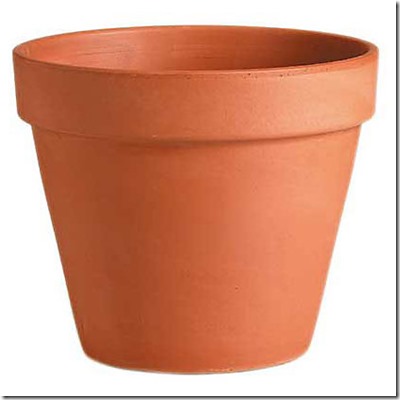
plant pot

New Ferry Butterfly Park Open Day is on Sunday 6th May, 11 a.m. – 4 p.m.

This will a fun day to mark the start of the Sunday afternoon opening season with wildlife themed stalls, activities, nature trails, pond dipping, Wirral Wildlife’s fabulous plant sale, homemade cakes, cycle smoothie, BBQ, face painting and May pole dancing.

If you have plants to donate for our plant stall, perennials, annuals, herbs or rockery, let us know in advance or bring them on the day.

Marjoram. Photo: wildflowerfinder.org.uk

Also we will be creating a display of pots containing plants to attract butterflies as suggested by Butterfly Conservation’s ‘Pots for Pollinators’ scheme. Would you or your children like to create one and bring it along?

For help with this see these internet pages: