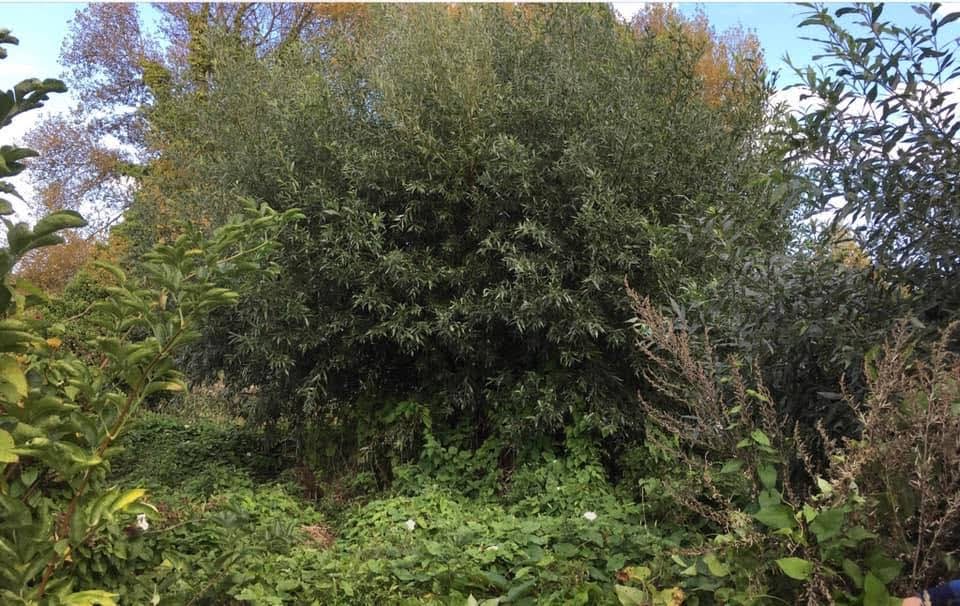
Sally Scott is one the brains behind the idea to rewild an area in Hoylake that was cleared last year. The transformation since then has been amazing to see and learn about. Below we share information from the Hoylake Willows progress report that Sally has produced.
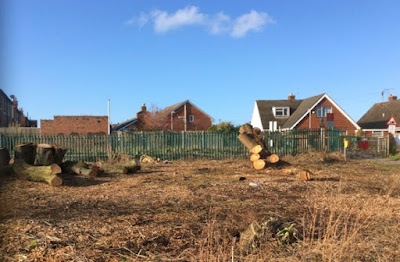 |
| The cleared land in Hoylake in February 2020 |
 |
| The site plan |
In February 2020 three willow trees near to Hoylake’s Manor Road Station were pollarded – the site was heavily covered with sawdust and woodchip and the 3 stumps presented a forlorn image.
Gradually plants began to colonise the space, but until the 3 stumps first produced new leaves it seemed very slow, however an idea emerged that this space could be protected and monitored for nature.
The site was considered too small an area to have much status, but in August 2020 a botanical survey was undertaken by Dr Hilary Ash, as a result 88 newly emerged plants species were recorded.
At this point we saw another opportunity… That wildflower species could enrich the rough grass edge of the lane that goes to the Hoylake Allotment site providing another source of pollen – and an informal ‘green corridor’.
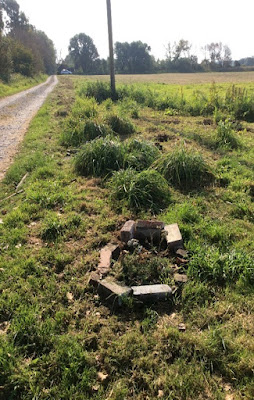 |
| Early days at the rewilding area of Hoylake Willows |
 |
The wildflower
area was given No Mow signs by Wirral Borough Council |
Initial Project Plan
Monitoring of the Rewilding area would continue. This area would have a ‘light touch’ management, with no new planting and the only very limited removal of those plants that risked taking over the site.
Paths would be established, to ease working, to minimise trampling and to increase access to members of the community, many of whom enjoyed spending time in the area during lockdown in 2020.
A Wildflower area (since renamed the Triangle) was prepared, and consideration given to what should be planted and how it was to be best managed.
Our commitment to work with Wirral Borough Council was seen as vital, with the hoped-for increase in Biodiversity and contribution to Green Corridors and Green Space in line with Council policies.
Progress though the year, across all seasons
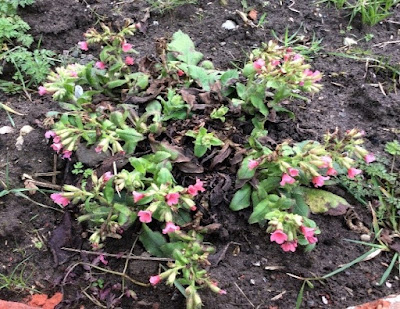 |
The
earliest flowers in January - Lungwort |
 |
Meadowsweet
– blossoms and seed |
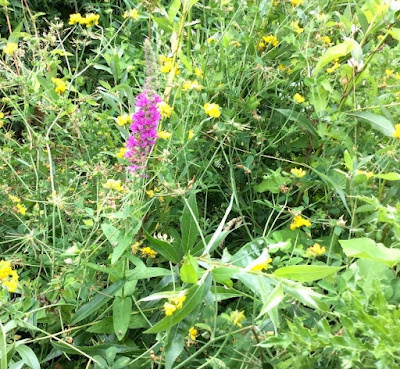 |
Tangle
of flowers including relocated Purple Loosestrife |
Rewilding Area
It appears that a few species have been lost, eg Hop Trefoil, whilst about 20 newly emerged species have been seen, most recently Common Vetch. We have seen some large swathes of flowering plants, eg Lesser Celandine, Greater Birds-foot-trefoil and Meadowsweet as well as significant clumps of Hedge wound-wort, Mugwort and White Campion, and of course the expected Great Willowherb.
A magnificent stand of Purple Loosestrife has not only reappeared this summer, but the species has spread to new locations on the site.
The botanical survey of a year ago recorded a patch of Himalayan Balsam. However, despite frequent checking only a few small shoots have reappeared. Ongoing close monitoring will be necessary.
Though not initially seen/recorded, a line of Japanese Knotweed appeared close to the railway boundary fence, during the year. Wirral BC and Network Rail have been informed, and this part of the site is registered as needing annual treatment by the Council.
As well as the 2 Elder trees, other very young trees have appeared - an Oak and an Ash, 2 Horse chestnuts, 2 Sycamores and numerous Hawthorns. A Norway Maple a few years old has been recognised, but lies just outside the area originally surveyed.
Dr Ash’s survey commented that an Ash tree, also outside the site area, had some signs of Ash Dieback, the visibly affected branches were disposed of, and to date, there is no visible sign of further Dieback.
The paths have been managed with the help of WBC, who provided woodchip to ensure greater visibility and to help maintain these paths.
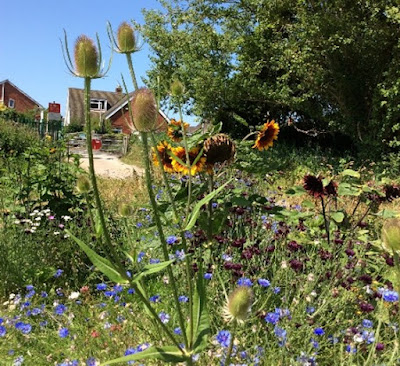 |
| Teasels and sunflowers |
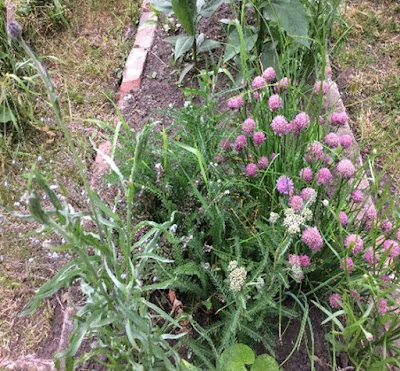 |
| Chives and yarrow |
This wildflower area has provided interest and delight from Allotment plot holders and members of the community taking walks on nearby paths. An amazing show of flowering plants has replaced some of the rough grass.
About 30 types of wildflower plants were grown from seed, or donated by well-wishers. Experiments to tackle the dominant species, such as course grass and ground elder, were carried out, using Yellow Rattle, rather than chemicals. The results are yet to be seen.
Some so called ‘garden’ flowers were planted if they are ‘native’, pollen rich and locally grown.
 |
| View across the fields from The Willows |
In conclusion
All this has been, and still is, an ongoing a source of learning! The focus for both parts of the work has mainly been on flora, but as we gain more experience and hopefully will be less undermined by Covid-19, more attention will be given to our better recognition and monitoring pollinators and other fauna.
A ‘private’ Facebook group has been set up to provide a space for information about, and photos of, the site. It is an informal ‘blog’. Group members can comment and it's a resource for anyone interested in rewilding and wild flower policy.
Join Hoylake Willows Facebook group here: