Here is the latest newsletter from Cheshire Wildlife Trust…
By Donal Griffin, Living Seas Officer
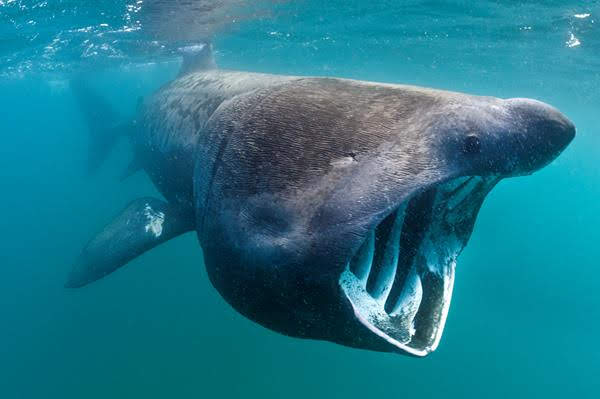
Amazing marine wildlife experiences are sought after the world over. Be it swimming with great white sharks in South Africa or snorkelling with jellyfish in the Lakes of Palau, people flock to marvel at all the weird and wonderful creatures living in our seas. But these experiences are not just limited to distant, exotic countries with an endless supply of sunshine. From stunning blue-rayed limpets and velvet swimming crabs found on our shores, to the world’s second biggest fish, the basking shark, sieving our coastal waters for plankton, our productive seas are home to a beautiful array of marine wildlife.
In recent years, we’ve seen more and more people in the UK recognise the importance of our marine environment and eager to protect it. Our seas supply us with a wealth of resource: photosynthesising plankton in the oceans provide nearly half of the world’s oxygen! The need to keep our seas healthy is clear – we literally rely on the oceans for the air we breathe.
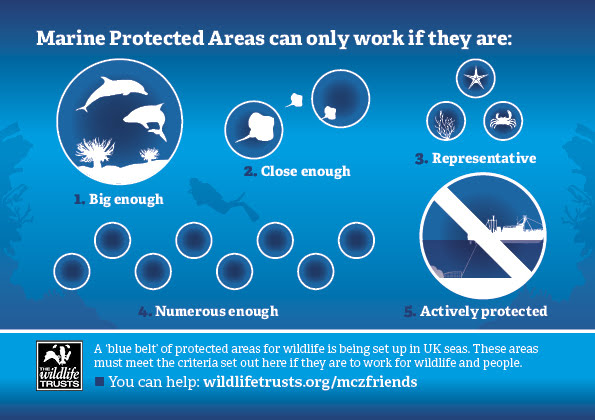
While humans have exploited the marine environment for centuries, in recent decades the ever-growing demand for resources is putting some species and habitats at risk of local, national and even global extinction. As we’ve come to better understand the impact of our activities in recent decades, it has become clear that to improve the overall health of our seas, we need an ecologically coherent network of Marine Protected Areas.
Fast forward to today – and after much campaigning work by The Wildlife Trusts and friends – we are in an incredible position with respect to a UK-wide marine protected network. In May, the Government announced 41 new Marine Conservation Zones. Taken together with the previous 50 designations in 2013 and 2016, the total comes to 89 in English waters, 10 of which are in our very own Irish Sea.
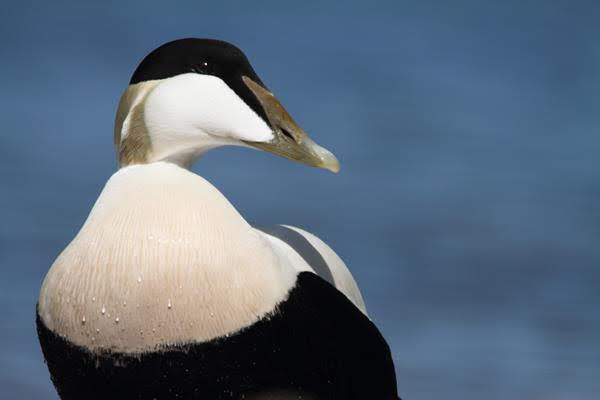
There are seven more in Northern Ireland's waters, one in Welsh waters, and 31 Nature Conservation Marine Protected Areas in Scottish waters. All are put in place to conserve rare, threatened and nationally important habitats and species for future generations. Stretching along much of the Northumberland coast for example, the newly designated Berwick to St Mary’s Marine Conservation Zone will help protect a threatened sea duck, the common eider. While off the coast of Cornwall, the Cape Bank site hosts a diverse range of marine life including granite reefs covered in sponges and algal communities. This is a huge success story for the marine environment and follows a long-fought journey of evidence collection, consultation and lobbying supported by thousands of people.
Thank you to all those that lobbied for our seas!
Whilst some suggest the designations are simply ‘lines on a map’, it is a starting point. Trying to implement useful management measures in these areas without ‘lines on a map’, would prove a much more difficult task. However, given that the designation of broad swathes of our seas will not in itself return these areas to the bountiful and healthy state they once were, the next step must be to ensure suitable management and monitoring of these areas. While there has been some progress on that already, we need to ensure each zone has fully implemented bespoke management, truly benefiting the wildlife and habitats which live there.
As climate change, unsustainable fishing and marine litter (to name only a few) present themselves as some of the greatest risks to the environment in the 21st century, the good news is that protecting nature has never mattered so much to so many. The long-fought journey to care for our environment is not over, but with your help we can act together for the air we breathe, the food that we eat, and the wonderfully diverse range of wildlife and habitats found on our shores and in our seas.
Do you live, work or play on the coast?
Whether it’s walking your dog along the beach, bird-watching or a family day out, we’d love to know how you feel about your local coast.
Our Dee Coastliners project is designed to inspire coastal communities along the Dee Estuary and we want to hear your stories. As we develop the project we’re keen to know more about how people identify with the River Dee coastline; what do you call the area? what are your favourite places to visit? Get in touch and share your stories!
Dee Coastliners is a Tidal Dee Catchment Partnership project led by Cheshire Wildlife Trust and supported by The National Lottery Heritage Fund.