Showing posts with label gardens. Show all posts

Tuesday, 25 January 2022

Wirral's Wild 50: February Worksheets


Here are the Wirral's Wild 50 activity sheets for February to help you plan activities for the month ahead. Build a mini wildlife pond, look for some early signs of spring and learn to use a key to identify twigs.


February activities


Things to do in February

Look out for buds on trees and blackthorn blossom

Look out for frog spawn

Learn about amphibian life cycles and metamorphosis

Build a mini wildlife pond

Collect some twigs and use a twig key to identify them

Build a nest box

Learn to use a key to identify twigs


Sunday, 15 August 2021

A Simple Pleasure, Well Enjoyed


Tucking into afternoon tea at Poulton Hall Garden


Last month, Wirral Wildlife were fortunate enough to be offered Poulton Hall Parkland and Walled Garden for a fund and awareness raising event. Entrance to the wildflower meadow area required you to pass through a passage way of hedges excellently laid by Wirral Countryside Volunteers. The Countryside Volunteers were offering ‘have a go at hedge laying’ mock up on a fresh upright willow branch hedge, to be cut and laid between hedging stakes. Several guests relished the opportunity to pick up a billhook and slice part way through the willow stem and weave the stem to build a hedge.


Have a go at hedge laying


Along the mown path through the meadow you pass Scirard’s pillar where the inscription says in Latin “Scirard de Launcelyn flourished here in the year 1093”. Entering over the ha-ha you leave the wild area and enter the formal gardens in front of the hall. Continuing on through the shady garden you were able to check out the creatures that live in the shady pond with a bit of pond dipping, progressing through the fragrant rose garden where you could take in the perfume. At the end of the rose garden you were met by a witch who guided you into a wardrobe, from where you come out into the world of Narnia, the enchanted walled garden.

In the walled garden, there are so many features to take in, from triffids, to the smoking Jabberwock, to the Singing Rose. Every half an hour the chimes of the carillon bells play a different piece of music, and the end of the recital heralds the story teller to commence a tale. There were volunteer marshals to guide you around the one-way Covid secure system which also made sure you have a chance to see everything.

Being National Meadow Day there were tours of the meadow and hedgerow by Dr Hilary Ash. The meadow here was potato field until 1993 before being converted to a wildflower meadow. After many years of work, it was looking colourful with the yellow and red of buttercup and sorrel flowers, interspersed with the pink spikes of marsh orchids and blue saucers of meadow cranesbill. Above fluttered meadow brown butterflies. It now looks like a proper Cheshire hay meadow, a habitat that has been almost completely destroyed in the last 70 years. Hopefully it will become more species-rich over time, naturally or with some human help.


Is it a bird?
Is it a bird?


Scirard was asked what the feature behind the Dalek was? A guest thought it was an art feature. Scirard simply replied it was the top of a cut monkey puzzle tree (see photo above). It shows you how this garden puts you in the world of imagination and fantasy.

Despite the pouring rain in the morning the weather brightened for our guests. If it had been a little wet we were prepared with space in the conservatory and under gazebos. Seventy cream teas were consumed!

If Wirral Wildlife were afforded this opportunity again, they would jump at the chance, not only is it a fund and awareness raising event; it is also a chance of a social where members and friends can meet each other in a convivial and relaxing setting. It provided a wonderful occasion to reconnect with friends as for many it was the first time had actually seen their friends in 18 months.

Many thanks to our supportive hosts, to the 20 plus volunteers involved in running the event and to our friends at New Ferry Village Hall who lent the tables and robust market style gazebos.

Saturday, 19 June 2021

Poulton Hall Garden Opening - 3rd July


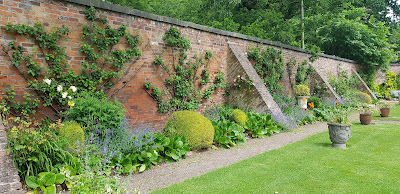
Fruit trees in the Walled Garden at Poulton Hall

On Saturday 3rd July, from 2pm, we have kindly been offered the use of Poulton Hall Walled Gardens to raise awareness and funds for Wirral Wildlife and New Ferry Butterfly Park. Poulton Hall is situated just north of where the valley of the Clatter Brook joins the River Dibbin.

Caroline and Scirard Lancelyn Green, our hosts, are fervent wildlife supporters. Cheshire Wildlife Trust manage three of the Poulton Estate’s woodlands, namely Foxes Wood, Thornton Wood and Intake wood, which are all part of Dibbindale SSSI and are being the finest examples of ancient woodland in Merseyside. Cheshire Wildlife Trust also manages a small wildflower area for the Estate known as Tom’s Paddock which acts as woodland glade for Foxes Wood.


Hedgerows and trees in the Poulton Hall gardens


Wirral Countryside Volunteers have used the hall grounds to host four very enjoyable and successful hedge laying training days when a mixed hedge of nine shrub species was laid and an example of each species left as a standard tree. Although some of the species do not normally form standard trees, this has been achieved. Why nine species of shrub? One species of shrub for every century the family have resided here. This 400metre hedge is hand trimmed with secateurs by staff at the hall. This dedication to detail and aftercare much impressed the Wirral Countryside Volunteers, no split ends here.
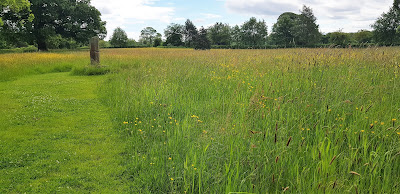

Wildflower meadow at Poulton Hall gardens


Adjacent to this species rich hedge bedecked with a diverse species of standard trees lies a colourful wildflower meadow with some notable species such as early purple orchids. Guided tours of this area will be given as well as a self-guided trail being available. Have a go hedge-laying mock ups will be available as well as have a go with a scythe. You can make a newspaper pot and sow a seed to take home to nurture. All this wildlife to enjoy even before you have crossed the ha-ha and walked into the more formal gardens.


Classical Garden at Poulton Hall


The series of gardens are an eclectic mixture of themes with literary connotations from Greek mythology, Beowulf, Arthurian legends, Shakespeare, Alice in Wonderland to a Dalek. There are over 40 interesting artistic features to view in the garden with four new features to spot this year.


Spot the Viking head


There's a witch in the garden

The shrub and flower collections are colourful, impressive and inspirational. There will be various activities such as pond dipping and a costume jewellery sale. There will be story telling every half an hour following the chimes from the set of the 32 bells at the hall.


Fountain and willows


To walk around the garden and meadow taking in all these fascinating features is about one mile and will take about two hours, but you may like to take the opportunity to sit down and enjoy a cream tea and soak up the atmosphere before heading round to view more of the gardens. There is a children’s themed garden inspired by nursery rhymes.
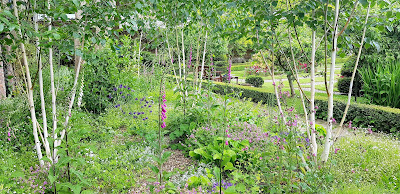

Narnia themed garden at Poulton Hall


For entrance to the gardens and to make sure there is a cream tea waiting for you and your friends book online. Admission £6 for entrance, £9.50 for entrance and cream tea, under 16s free.  

http://www.poultonhall.co.uk/GardenOpenings.html


Pergolas in the garden at Poulton Hall

We look forward to welcoming you to these wonderful gardens.


Sunday, 3 May 2020

Hedgehog Awareness Week


Thank you to Steph for sharing this video of a hedgehog in her garden in Irby.

Steph has a wildlife blog on Instagram: www.instagram.com/nessiesnaturenotebook/

She will be giving a talk about hedgehogs on Instagram Live at 4.30pm on Tuesday 5th May for Hedgehog Awareness Week.

Steph has also created a video to show how to find out if there are hedgehogs in your garden.


Wednesday, 8 April 2020

Garden Mammals on My Patch


RECORD's theme for this weeks My Patch campaign is garden mammals.


Hedgehog


MY PATCH Week 3 - Mammal Theme
These are often the most elusive garden visitors and we usually only know they're around because we notice signs, like poo or footprints. There are 108 UK species of mammal, from field voles (most numerous with ~60 million) to the Greater Mouse Eared Bat (only 1 individual!).
1 in 5 mammal species face a high risk of extinction in the UK and some have declined by up to 66% in the last 20 years! Recording garden mammals can help scientists understand what's happening to their populations which informs decisions on how to protect them.
Owl Pellets: has anyone ever tried dissecting owl pellets? You can find the answers to some of the most frequently asked questions about owl pellets here.
Mammal poo - not everyone's favourite topic, but its often the main evidence that mammals have been visiting a garden. If you know any young mammal detectives with a particular interest, we have a downloadable activity here perfect for them. They might also enjoy learning the basics of mammal detecting here.

QUIZ of the WEEK: Mammals
Sadly no prizes but email info@record-lrc.co.uk with your answers!
1) How many mammal species do we hold Cheshire records for from the last 10 years?
2) What is our most commonly recorded mammal in the last 10 years?
3) What was our most commonly recorded bat species in the last 10 years?
4) Can you name these mammal footprints?

Mammal footprints

5) Can you name these mammal faeces?
Mammal faeces


A reminder of how to join in My Patch

Upload your garden wildlife sightings here OR email info@record-lrc.co.uk if you'd prefer

You can find resources and useful links on this page of our website.
Where you can, we'd love you to share our posts, news etc. about the campaign with your contacts and encourage as many people as possible to get involved. You can also post your own sightings with the hashtag #MyPatch to help spread the word and share with others what you've been up to.

Wednesday, 1 April 2020

Birds on My Patch


For just over a week RECORD have been encouraging people to connect with nature at home, through recording garden wildlife as part of the My Patch campaign. The theme for last week was 'Becoming a Wildlife Recorder' and this week's theme is.....BIRDS!


Female House Sparrow
Female House Sparrow, Passer domesticus.
Did you know... a group of sparrows is called a 'Quarrel'.
We think it's the perfect name for these noisy garden visitors!

Observations

So far, we have over 100 Garden Wildlife observations on our iNaturalist page, which is brilliant! Thank you to everyone who's joined in and please keep your records coming in.

Add your Garden Wildlife Sightings here:
https://www.inaturalist.org/projects/my-patch-from-record-lrc


Online Resources

We're trying to make it easier for those people who might not regularly record wildlife to get involved (as well, of course, as those of you who are already pros!). This includes young wildlife enthusiasts and their families. Take a look at our online resources page for some helpful guides, tips and activities and feel free to share these with anyone you think might be interested. Perhaps you know someone who is looking for homeschooling ideas or similar?

INCLUDING:

Garden Explorers Collection - activities for young wildlife recorders great for ages 5+

What makes up a Wildlife Record? - learn about what information is needed to make your records as useful as possible

Out and about recording sheet - useful to note down what you've seen whilst out in the garden, all ages

AND MORE...


This week is BIRDS. We'll be adding more bird-related resources and links and would love you all to get involved by telling us about the birds you see in your garden.


QUIZ of the week... Bird Records!

Sadly there are no prizes, but we thought this might be a fun addition to our weekly email, reply to info@record-lrc.co.uk with your answers.

1) How many Cheshire bird records in total do we hold from the last 10 years?

2) Which bird species do we hold the most records for in Cheshire (in the last 10 years)?

3) How many different species of bird do we hold Cheshire records of (within the last 10 years, including sub-species)?


A reminder of how to join in My Patch

Upload your garden wildlife sightings here: https://www.inaturalist.org/projects/my-patch-from-record-lrc

You can find resources and useful links on this page of our website.

Follow us on facebook or twitter for the latest updates.


Where you can, we'd love you to share our posts, news etc. about the campaign with your contacts and encourage as many people as possible to get involved. You can also post your own sightings with the hashtag #MyPatch to help spread the word and share with others what you've been up to.

Monday, 30 March 2020

RECORD My Patch


Last week RECORD launched a new campaign called ‘My Patch’ and would love you to join in…


We’re challenging you to keep enjoying nature, whilst staying at home. Explore your garden and appreciate the amazing diversity of wildlife found there. We’re aiming to gain an insight into the species found across Cheshire’s garden habitats and would love you to join us through recording the wildlife you see in your patch.


Throughout the next few weeks we’ll show you how easy it is for ANYONE to contribute to conservation through biological recording at home. Gardens provide crucial habitat for many of our, often threatened, UK species. Yet these mini-ecosystems right on our doorstep are often ignored when it comes to wildlife recording. The more we understand about what lives there, the better we can help and protect it.

Each week, we’ll share tips, guides, resources and activities for all ages to get involved with. This is all about working together (whilst keeping apart) to get as many good quality biological records as we can whilst having fun and enjoying the outdoors.

Please remember to follow government advice at all times whilst recording wildlife.

Follow us on social media keep an eye on your emails to stay up to date.


How Do We Join In?

Upload your garden wildlife records to our new iNaturalist Page

We'll be uploading resources and useful links to this page on our website.

Where you can, we'd love you to share our posts, news etc. about the campaign with your contacts and encourage as many people as possible to get involved. You can also post your own sightings with the hashtag #MyPatch to help spread the word and share with others what you've been up to.

Sunday, 18 March 2018

Hedgehog Rescue


Hedgehog rescue. Photo: Les Roberts

The return of ‘beast from the east’ reminds me that we also had some very cold weather in early December last year. On one particularly frosty Friday night we opened our front door to check no shoes had been left out under the porch. To our astonishment a small hedgehog was, quite literally, sitting on our front step and, we felt, looking rather sorry for itself.

Given the temperature, conditions and the time of year we realised this youngster was in trouble. A thick cardboard box was quickly found and we lined it with scrunched up newspaper, something which we hoped would retain the animal’s own heat and create some warmth. Into the box also went a plastic tub filled with water but we didn’t think we had any suitable food – we needed advice.

Given the hour it was not surprising that we could not contact the Hedgehog Rescue numbers we phoned but we did get through to RSPCA HQ. They asked us to weigh our guest which we did using kitchen scales and plastic container. Unfortunately, this showed that the little creature was underweight and would not survive hibernation even if it could induce that state. We were advised to go to our nearest supermarket and buy cat food, perfectly acceptable to hedgehogs apparently. We were also told to keep the animal warm overnight and find a rescue centre next day.

Finding an accommodating centre proved difficult. Not because the volunteers who ran them were unwilling, they were simply unable because of the numbers of such young, underweight or injured hedgehogs they were already housing – a winter long commitment. Thankfully a Wirral veterinary practice did offer to add our now very perky and endearing guest to those they were currently caring for. Why such numbers of these delightful creatures fail to reach the optimum weight and size to hibernate is worrying and sad. We presume it is down to changing land use and shrinking natural habitat. Gardens may be the salvation, especially if they offer ‘wilder’ areas, however small and are devoid of slug pellets. Well done the long-term rescuers who are giving their own time and money to help maintain the population of such charming animals.

Les Roberts

Friday, 22 December 2017

RHS Plants for Bugs Project


Suction Sampler
Suction sampler being used to collect insects from the plants

Since 2009 the Royal horticultural Society (RHS) has been carrying out research to find out there was any difference in abundance of animals in native only and non-native garden plots.

36 test plots were set up at RHS Garden Wisley, each with 14 plant species and managed like real gardens. The invertebrates they supported were regularly sampled.
The first report found little difference between the number of pollinators visiting native and non-native plants, in fact some exotics provided pollen later in the season.

The second study found that the more plants there were the more invertebrates were collected. Native plants were better than non-native, but not by much. Non UK northern hemisphere plants supported about 10% fewer invertebrates.

Recommendations for wildlife gardeners:

1. Put in plenty of plants and let them fill the space.

2. The more nectar rich flowers you have the more pollinators you will attract and support.

3. You will get more invertebrates if you have native British plants and related ones from the northern hemisphere.

4. Plant natives such as hemp agrimony, primrose, foxglove, honeysuckle, heather and purple loosestrife.

5. Extend the flower season for pollinators with late flowering exotic species, especially if they are densely planted and flower strongly.

Sunday, 19 March 2017

More Notes From A Wirral Garden


Photo: Les Roberts


Writing an occasional blog about the wildlife seen in our garden may give the impression that the garden is large. It isn’t. But of course we connect to our neighbours' plots and, seen from the air, a substantial  green area emerges which even has links to the Wirral Way, the Dee marshland and local farms.

This area must provide quite a varied habitat of crops, trees, shrubbery, grass, flowers and ponds. Alongside this the Dee runs through an open and sizeable saltwater estuary and, most notably, is home to thousands of birds – and plenty of rodents. No surprise then that foxes, hedgehogs, squirrels, frogs, newts and, of course, birds, find their way into our patch from time to time.

March has seen the pond once again occupied by a good population of tadpoles. But our impression is that the spawning this year has been less prolific than in the past. A youngish fox is starting to make daily appearances and, if left undisturbed, spends considerable time hoovering up sunflower seeds dropped from the birdfeeders. On a very sunny Wednesday we managed to take some long distant photos.

Photo: Les Roberts


This reminds me that last year we were surprised to see a sparrowhawk sitting in the corner of the lawn making no move to fly away even when we went to the windows to peep at it. We had time to fetch the camera and take a few slightly out of focus shots. I noticed that the bird had what we thought was an injured talon. It looked blobby red and was not being moved. As our thoughts turned to how we were to help, the hawk lifted the ‘damaged’ leg to reveal that it was holding, very firmly, the carcass of a small bird. Such is nature.

Photo: Les Roberts


We hope you enjoy the pictures of the fox.........and forgive the sparrowhawk.

Les Roberts

Monday, 4 July 2016

Open Garden at Fieldcrest


Paul Wallington has kindly sent us some photographs that he took at Fieldcrest on June 19th, when the Gardens were open to raise funds for Cheshire Wildlife Trust.


Saturday, 28 May 2016

Friends of Hoylake and Meols in Bloom


The Friends of Hoylake and Meols in Bloom are hosting their annual garden party on 25th June from 12 to 4 p.m.

It will be held at Dane Cottage, 11 Ethelbert Lane, Meols.

There will be entertainment by local artists, stalls and a raffle.

Entrance is £2.50, which includes drinks and cakes.

For more information see www.hoylakeinbloom.co.uk

Wednesday, 10 February 2016

Notes From A Wirral Garden


Goldfinch. Photo: Les Roberts


Les Roberts has contributed before to our blog and newsletter. Here he updates us about the wildlife in his garden.

I noticed the first 2016 frogspawn in our small pond on the 29 January. Another mass appeared two days later. It seemed early to me but maybe the relatively mild weather and heavy rainfall have encouraged spawning. I wish I had given more attention to such things over the years or even kept records as do many people.

When it comes to garden birds I don’t need records to signal that changes have occurred - and are still occurring.

Growing up in the suburbs of Liverpool, over 50 years ago, Blackbirds and House Sparrows were numerous. I can remember them nesting in a broken airbrick high up on our house. Blue Tits were plentiful, often pecking through the foil of milk bottle tops for the cream below and Starlings flocked in large numbers. I don’t recall ever seeing the ‘exotics’ such as Goldfinches and Greenfinches, although Chaffinches were common and seem still to be.


Chaffinch. Photo: Les Roberts


In recent years, here on the Wirral, Goldfinches have arrived at my feeding station in groups of up to a dozen at a time and continue to do so. Until about a year ago Greenfinches also came in ‘gangs’. In recent months though I am not sure I have seen any. Have they succumbed to the infection that is proving deadly to them right around the country? Small groups of Starlings visit only very occasionally, House Sparrows now never and Blue Tits have been hard to spot, but two appear now as I look.

However, in consolation, a solitary Nuthatch is starting to be a regular visitor to the sunflower seeds. Wood Pigeon numbers are almost at a nuisance level, I count seven as I write this, perfectly detailed, dusty imprints are left when they fly into our windows after being spooked by a Sparrowhawk.  Blackbirds still chase each other and nest regularly in the Firethorn. Great Tits, Chaffinches, shy Collared Doves and Marsh Tits also attend. Very rarely a Spotted Woodpecker has browsed the Hawthorn trees and a male Bullfinch has, a few times, made a fleeting raid on the feeder, as have some Long Tailed Tits.

Blackcap. Photo: Les Roberts


I wonder how representative of other small gardens this all is, especially for those who feed birds daily. I also wonder whether it is too late to get the House Sparrow back but I do hope Greenfinch numbers recover and the secretive Wrens make themselves more visible once again. Maybe my photos will give some cheer.

Les Roberts


Don't forget you too can send us stories or photos for our blog. Just put them in an email.