Showing posts with label Paul Loughnane. Show all posts

Thursday, 3 April 2025

The Woodland Inspectors Call


Bluebells in Entrance coppice in Thornton Wood

The Cheshire Wildlife Trust reserves of Foxes Wood and Thornton Wood are both units that lie within Dibbinsdale Site of Special Scientific Interest (SSSI) and as such are inspected by Natural England to assess their condition. The lowest point of these woods converges at the hump backed bridge at the bottom of Thornton Common Road, near Raby Mere.

They are designated as part of an SSSI because they are classed as an ancient woodland and the question is do they still match this criteria? Do they match up to the natural communities of species that one would expect in a semi-natural woodland? Two Officers from Natural England, came to carry out a condition survey. I was delighted to be invited to take part in the survey to understand the process. Pre-determined quadrats were taken, five in Thornton Wood and four in Foxes Wood. 
(See map for the locations of the quadrats and woods.)

Location of quadrats in Thornton Wood and Foxes Wood

Once in the centre of the 
100m2 quadrat, the following measurements were recorded:

  • percentage of canopy cover and species composition
  • extent and species composition of under storey
  • spread of age and classes of trees
  • presence of over mature trees
  • extent of dead wood, standing and fallen

The sapling species composition arising is also recorded and the regeneration of Sycamore. This has to be less than 50% and Beech, Laurel and Rhododendron have to be less than 10% of the quadrat to pass. The species of plants on the woodland floor were also assessed with 95% of the coverage needing to be native species to pass.

A packed lunch was enjoyed in the freshly cut Entrance Coppice where the woodland inspectors were impressed by the dense bluebell display and the several
butterflies fluttering in the coppice. This survey was in mid-May when the days are getting warmer but just before the canopy opens and shades and cools the coppice floor. Wirral Wildlife spring walks are held in the woods in late April to catch the primrose and wood anemone in flower. However, it is too early to catch the woodland butterflies. Sadly, none of the four coppice areas in Thornton Wood were included in these predetermined quadrats. Luckily one clump of wood anemone was picked up in the survey, which is one of the largest clumps in Thornton Wood, approximately 2m diameter. The extensive area of Variegated Yellow Archangel in the southern tip of Thornton Wood could hardly be missed and was picked up in the survey.

Foxes Wood passed on 14 of the 16 criteria, failing due to Ash die back affecting more than 20% of the canopy and the presence of Invasive Non-Native Species (INNS).
 In Foxes Wood the INNS are Himalayan Balsam, Pink Purslane, Yellow Archangel, Fringe Cups, Sycamore, Beech and Scots Pine. Thornton Wood passed on 13 of the 16 criteria, failing due to Ash dieback affecting more than 20 % of the canopy and INNS such as Himalayan Balsam, Variegated Yellow Archangel, Pink Purslane, Sycamore and failed a further criteria because in one quadrat 60% of the regeneration of the trees in the quadrat were Sycamores. Very few ancient woodlands in England are in favourable condition, largely because of INNS and Sycamore.

Although the official results for both woods were “declining unfavourable”, the part of Foxes Wood managed by Cheshire Wildlife Trust and local volunteer, Tom McCullough, was in good condition and one quadrat passed all the categories. It did not even fail due to Ash die back as there are no Ash trees in that part of Foxes Wood, this area being dominated by oak.
 However, most of Foxes Wood which is not under CWT management was in an unfavourable declining condition. There are a few honey pots of biodiversity in Thornton Wood, in particular the coppice areas where Primrose, Greater Stitchwort, Barren Strawberry, Wood Anemone and Wood Sorrel occur. It is hoped that these areas are improving as nutrients are cropped at each coppice cut. 

Some of these favourable areas within the woods can be viewed on a guided spring walk with the Wirral Countryside Volunteers on Saturday 26th April at 9.30 am. Places are limited so booking is essential via the Ticket Tailor link below:
https://www.tickettailor.com/events/wirralcountrysidevolunteers/1468284

Note: there are no defined paths in the wood and it is steep in parts so stout footwear is required.


Paul Loughnane
Thornton Wood Reserves Manager and Secretary of Wirral Countryside Volunteers


Tuesday, 9 August 2022

Look Back at National Meadow Day at Poulton Hall


Enjoying cream teas on the lawn at Poulton Hall


The first Saturday in July has been nominated as National Meadow Day by Plantlife. To celebrate this, Wirral Wildlife was fortunate to be invited to host a cream tea event at Poulton Hall Walled Gardens and Parkland. Poulton Hall lies just above the dip at Dibbinsdale Road, Bebington.

One hundred and forty cream teas were created by Wirral Wildlife volunteers, that is the maximum number of cream teas that can be served from the walled garden hatchery. Caroline Lancelyn Green of Poulton Hall was impressed by the number of visitors attracted to the event and complimented the Wirral Wildlife publicity team.

The day before the event, the Wirral Countryside Volunteers (WCV) gathered materials from New Ferry Butterfly Park to create a mock up hedge in the parkland, for a ‘have a go at hedge laying’ stall. This stall also provided opportunities to try scything and tool sharpening, and make a 
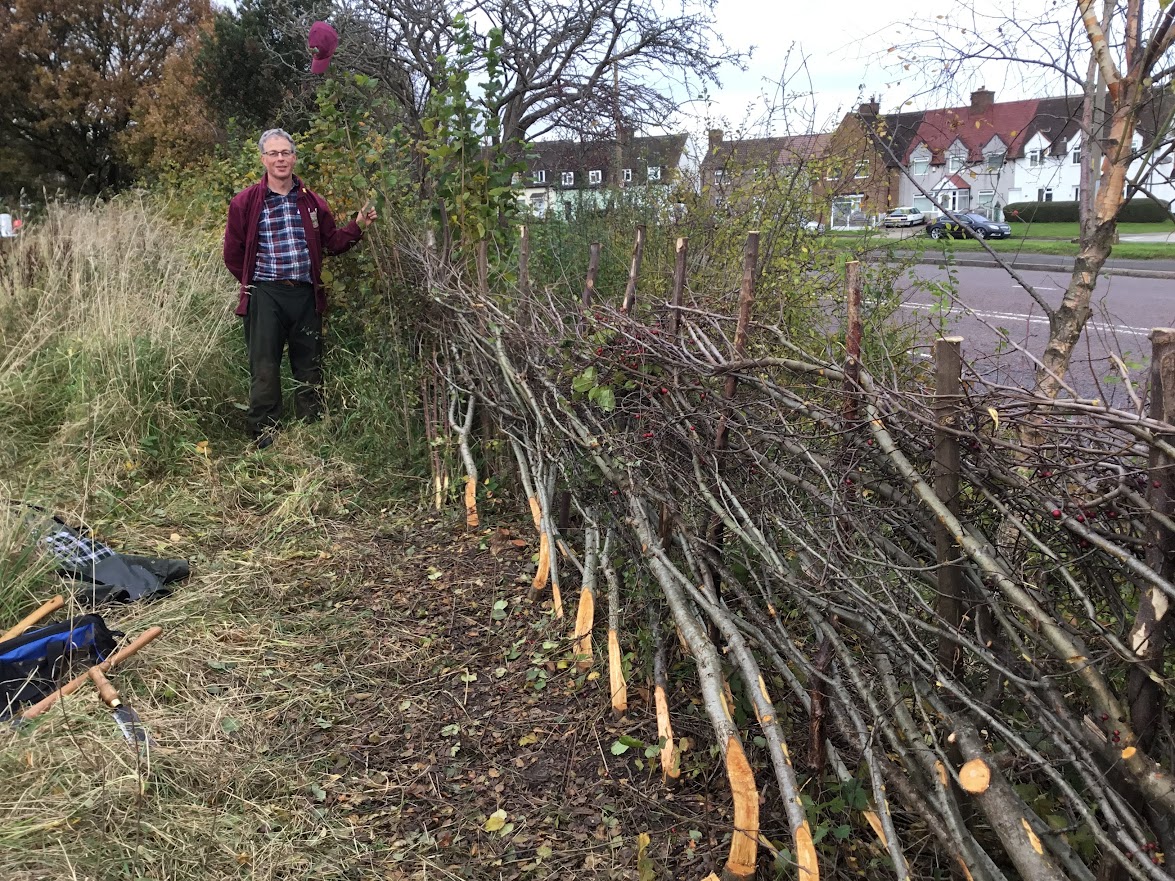
newspaper pot to plant a seed in. On the day WCV met at New Ferry Village Hall at 7.45am to pick up the gazebos. The volunteers then went for a breakfast break and arrived at Poulton Hall at 10.30am to put up the gazebos and displays, and sort out tables and chairs.

The cream tea making team!


At 10.30am more volunteers arrived to start making the centre piece of the day - the cream teas. This involved slicing the scones, spreading the butter, adding the jam, and finally crowning the arrangement with clotted cream. There were also many sandwiches to be sliced.

At 12 noon stall holders arrived to set up a butterfly craft stall, Wirral Wildlife display, spider stall and costume jewellery stall. At 1pm the entrance team and car parking team arrived. Crowds gathered at the entrance over the ha-ha for the 2pm opening. The gardens were looking good, with the Red Queen’s Garden looking particularly striking in its vivid red colours.

This the second year that Wirral Wildlife group has hosted such an event. As well as the story telling, the Samaritan’s plant sale, and wildlife stalls already mentioned there were musicians, roving archers and a beehive demonstration. Interestingly the 'classic' beehive as represented in pictures and paintings, with an external housing that splays out towards the bottom of each frame was designed by William Broughton Carr in 1890 who once lived in Higher Bebington.

Dr Hilary Ash giving a tour of the wildflower meadow at Poulton Hall

In celebration of National Meadow Day, Dr Hilary Ash gave two tours of the wildflower grassland. The area was used for growing potatoes until 1993. Since then it has been mown annually in late August or early September, with occasional aftermath grazing. The grassland’s fertility has been gradually lost and the grass sward height and density reduced. Grasses have become finer which has allowed space for marsh orchids to get in and for plants such as hairy tare to colonise the grassland. Hay rattle could be rattled, and seeds scattered. There were many meadow brown butterflies on the wing. This area is looking like a classic Cheshire meadow.

Soldier beetles on hogweed flowers in the meadow


The day is a wonderful team effort requiring various roles, including being a witch at the entrance to the walled garden! Thank you to the nineteen volunteers who made this event possible. Thanks also to Roger and Lynn for serving the cream teas, and Scirard and Caroline Lancelyn Green and the hall staff for all their support to make it a successful day. On Sunday afternoon the WCV returned to pick up the gazebos which were left for the Samaritan’s fund-raising day and then returned on Monday to clear away the mock laid hedge. This successful event is well worth the effort, an enjoyable day for all and a great fund raising and awareness day for Wirral Wildlife and New Ferry Butterfly Park. The total amount raised was £1,760, so Wirral Wildlife and the New Ferry Butterfly Park each received £880.

Paul Loughnane


Thursday, 15 July 2021

The Gates Are Coming Home


Gates to be constructed at New Ferry Butterfly Park


A lot has happened since New Ferry Butterfly Park’s Silver Jubilee Gates design was drawn up in January 2020 by Edd Snell of Above Zero Landscape Architecture.


Being an ambitious project, it has taken nearly 18 months, involving several funding applications three of which were unsuccessful but others were winners. Due to Covid the gate costs have risen and the Park’s income has fallen. So with support from several funding sources - New Ferry and Port Sunlight Community Fund, Wirral Wildlife, The Duchy of Lancaster, Wirral Farmers’ Market Community Fund, Poulton Hall Walled Garden Trust and the recent online public Crowdfunder appeal, our goal his finally been achieved. The first physical steps in realising this project have started this week with the post’s foundations being dug out and strengthened and a start made on the brick pillars by Dunkil Developments Ltd.


There is still a way to go. Once the brick pillars are constructed they will be left for five weeks to allow the pillars to set. Whilst this happens, the final measurements will be taken by Flintshire Fabrications Ltd to make sure the bespoke gates will fit perfectly. Also accurate measurements can be taken for the three decorative tiles inset into each of the brick pillars. These tiles will reflect six separate features you can find in the park. The dimensions of the ceramic tiles need confirming, so that they fit in with the mortar in the brick work in an aesthetically pleasing manner. These bespoke tiles will be fired by Neil Glendinning of Canal Warehouse Workshops Chester and will be painted by Pam Sullivan who created our wonderful Welcome Board. This team of talented people has been carefully coordinated by Edd Snell.


Presently, there are temporary gates at the Park entrance and the Park will remain open as usual throughout the works. It is hoped the gates will be up by the end of the Butterfly Park open season in mid-September ready for a grand opening on Sunday 1st May 2022. Thanks to all our sponsors big and small who have enabled this project to go ahead.


Paul Loughnane


Thursday, 20 February 2020

Powering Through Nature


SP Energy Networks Team by Steve Lyus

The SP Energy Networks team based in Prenton wanted to organise a corporate work day at New Ferry Butterfly Park.  As honorary secretary/ reserve manager, I normally take a day’s annual leave for this, but for the first time in 15 years, I took a ‘volunteer day’, taking advantage of the Liverpool University’s Staff Volunteering Framework, which now allows you three days volunteering for charities.

New Ferry Butterfly Park is a post industrial habitat, a classic brownfield site with a diverse number of grassland types; acidic, nutrient poor and calcareous grassland reflecting the former coal staithes, railway track beds and water softening plant from the days of steam power. These open mosaic habitats are a great benefit to butterflies and other insects.

Eight eager volunteers came from SP Energy Networks. They were greeted with a hot drink, a briefing and signed the risk assessment which they had been sent prior to their visit. No escaping from risk assessments even on a volunteering day, our safety co-ordinator would be proud!

Clearing over grown garden spreading onto the path. Photo: Paul Loughnane

Then they split into four groups, one putting in fence posts, another creating a large dead wood habitat pile from a clump of large birches cut for safety reasons. The third was removing some unwanted shrubs which were taking over the path and the fourth group removed turf and birch trees over laying the railway track beds. The turf removal process is a rapid way of a creating wildflower patch by re-starting natural succession and allowing carpets of bird’s-foot trefoil to develop which is both the larval and adult food plant for the common blue butterfly.

The volunteers all got a good work out, knocking in posts using a post driver, swinging mattocks, sawing, wheel barrowing turf and other unwanted materials, using loppers and muscles they never knew they had. Justin, the team leader, surprised himself with the ease he could remove the sizeable birch saplings just using a mattock. In his report he had to put some figures in, such as how much material had been removed. I reckoned 400kg of turf was removed.

Justin triumphs over the birch tree. Photo: Paul Loughnane

For ‘elevenses’ the volunteers were supplied with tea and homemade cakes delivered to them in a wheelbarrow. Following lunch they had a tour of the park, and its varied habitats and to see each other’s projects. They needed a recovery break anyway! After the tour, they eagerly went back to their projects again for another hour to complete them. The mixed teams of office workers and onsite engineers, who they rarely meet up with, had a chance to interact with each other in an enjoyable setting.

This corporate group of physically fit and keen young people enabled the park’s project to move forward with many jobs that never get started being completed. Other groups of volunteers are welcome to come to the park for a one off event. I would suggest September/October better than a cold January. Please contact me on jpl@liv.ac.uk for further details.

Paul Loughnane BEM

Monday, 9 December 2019

Growing To New Heights


Re-growth you can hang your hat on. Photo: David Casement

Wirral Countryside Volunteers (WCV) are growing in stature and confidence. The volunteers’ chair Steve Yandell was described as being a “supervolunteer” in Cheshire Wildlife Trust’s Go Wild Magazine and Tim Gannicliffe, a longtime volunteer, was recognised by Cheshire Wildlife Trust for his broad range of volunteer roles over 27 years. Congratulations to them both.
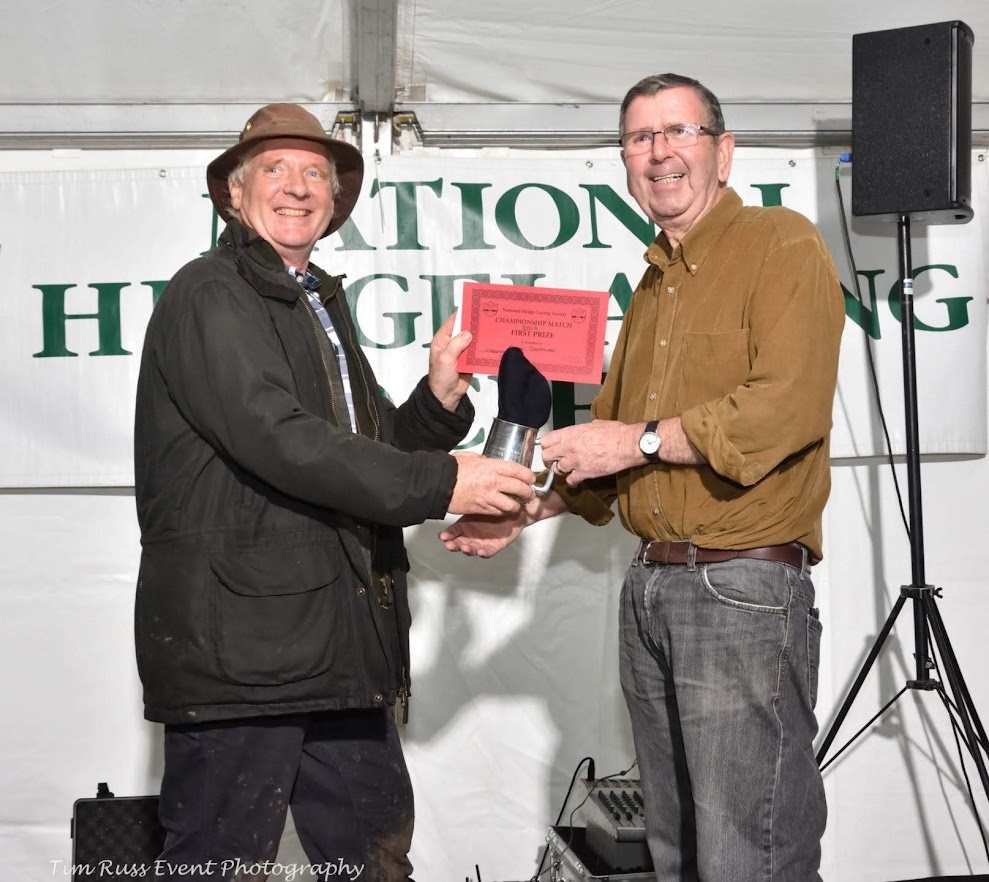
One of the volunteers’ favourite projects is hedgerow restoration and the volunteers made up seven of the nine cutters at the local Cheshire hedge laying match at Shotlach near Malpas, winning both the open and novice classes.

Colin Chapman being presented first place in the Cheshire Open Class at the National Competition. Photo: Tim Russ

Three WCV cutters took part in the National Hedge Laying Competition, Pewsey in Wiltshire. New heights were reached by the WCV as Colin Chapman won the Cheshire Open Class. Arnold Plumley, the Cheshire judge, was delighted that everyone cut their 10m length in good time and said it was some of the most difficult judging he had done. Colin won by one point, achieving 77 points out of 100.

The extensive lengths of hedge laid recently have required an increased number of hedge stakes. Fortunately there are several local sources of stakes such as sycamore stakes from Job’s Ferry at Eastham Country Park, hazel stakes (our favourite material) from Kingsbrook Way, Lower Bebington and hazel from Hogs Head Coppice from the WCV base at New Ferry Butterfly Park.

Alex and James gained a paying hedge laying job from this photo, a great result.  Photo: Dave Edwards
Alex and James gained a paying hedge laying job from this photo, a great result.
Photo: Dave Edwards

At our recent hedge laying training day on Woodchurch Road, Landican, there were 25 participants, one person travelling from the Isle of Man for the day to join us. Arnold Pumley of the Cheshire Ploughing Hedgecutting Society was very pleased with all the trainees and spotted two that should be cutting in the Cheshire Ploughing and Hedgecutting Society competitions, surely the best thank you we can give Arnold for all his support and encouragement he gives us. Trainees and trainers had a great day hedge laying a suitable beginner’s hedge, in addition there were wheelbarrow loads of tea and cake supplied down the hedge line and leek and potato soup and roll served for lunch. Four under 26 year olds received a £25 payment from the National Hedge Laying Society.

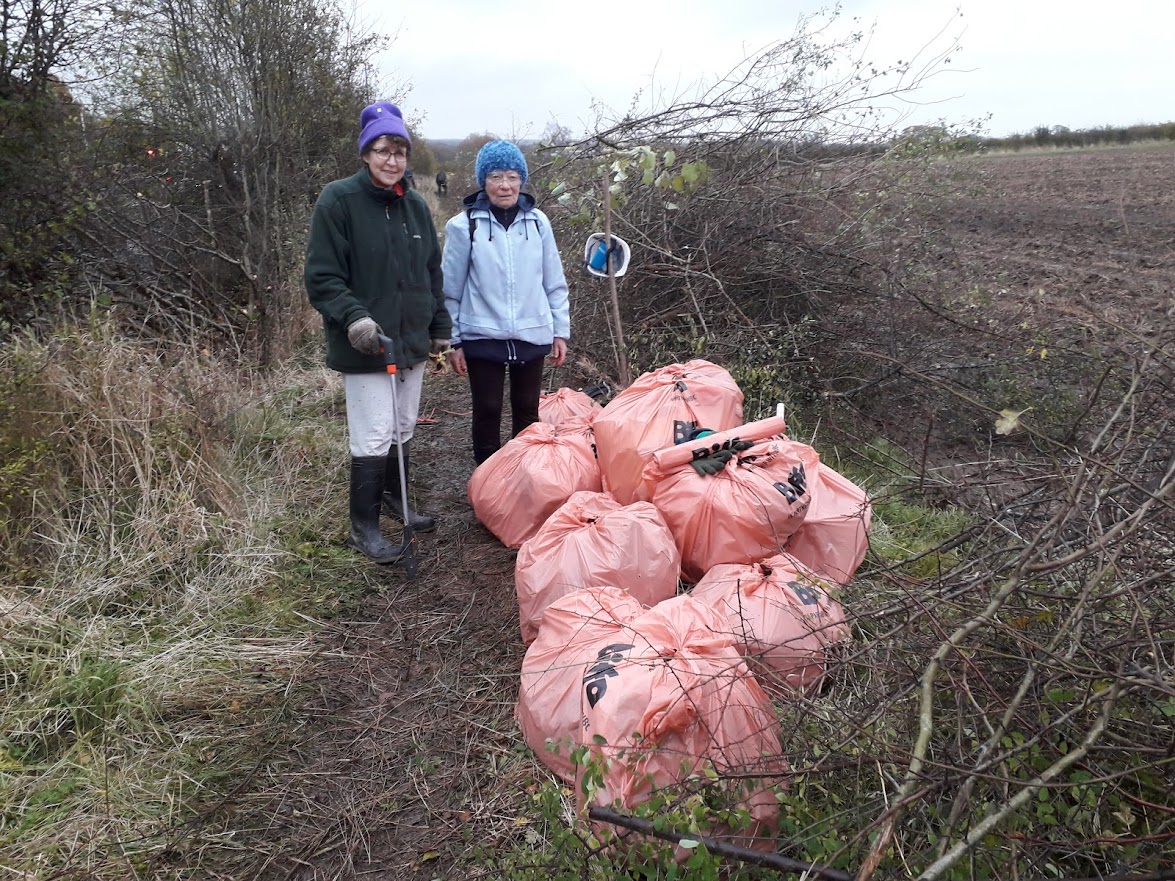
Last year’s sections of the hedge demonstrated the best re-growth that has ever been in one season on a WCV hedge laying project, 5ft for hawthorn and 8ft for hazel from the base of the hedge. One other record broken on the hedge laying training day was the amount of litter collected from the hedgerow, 16 Biffa bags.

Bags of hedgerow litter. Photo: Paul Loughnane

Monday, 10 December 2018

Renewing Hedgerows and Renewing the Hedge Layers


Hedge laying en masse. Photo: Paul Loughnane

The Wirral Society, who preserve Wirral’s natural and built environment, celebrated their 90th birthday by sponsoring a hedge laying training day organised by Wirral Countryside Volunteers. The Wirral Society sponsored the purchasing of ten samurai pruning saws and nine wild pear trees to be planted into the hedgerow to form hedgerow trees of the future and to celebrate the nine decades of the society.

Young hedge layers. Photo: Paul Loughnane

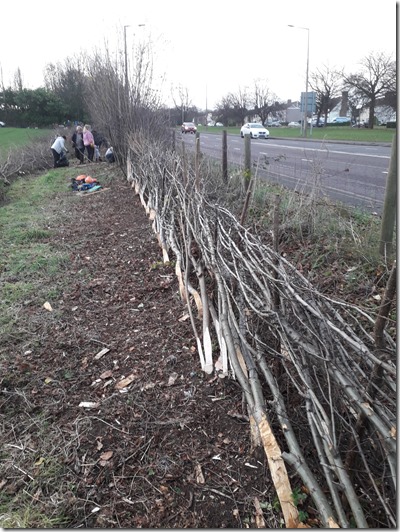
It was a great event with 58 participants, 40 of whom were new to hedge laying. An impressive 150 metres of hedge were laid along Woodchurch Road between Arrowe Park and the M53. This is most the volunteers have ever laid in a single day. More importantly there were 24 youngsters involved. They will each receive a young hedge layer award of £25 for taking part in the event. Wirral Countryside Volunteers' Secretary Paul Loughnane enthused, “Hedge layers need renewing as well as the hedgerows. It is great to see so many youngsters getting actively involved. Laid hedges are good for wildlife as they retain some of their flowers which provide nectar and pollen sources for insects and winter berries for birds. Flailed hedges have most of the flower buds on the second year's growth removed.’’

Hedge cleaned out for hedge laying. Photo: Paul Loughnane

“Thanks to the teachers of Woodchurch High who encouraged the pupils to come along on a Sunday. We were supported by Arnold Plumley of Cheshire Ploughing and Hedge cutting Society who demonstrated the local Cheshire style and by the National Hedge Laying Society who run the young hedge layer award scheme which is sponsored by HRH the Prince of Wales. It was a great collective effort.”

The Volunteers provided tea and homemade cake and soup for the participants. Paul added, “I was very much surprised and delighted by the large turnout of youngsters, perhaps it was because hedge laying was featured on the BBC's Countryfile programme the week before or that the hedge is on the edge of the Woodchurch Estate where many of them live or an inspirational ‘eco’ teacher."

Hedge layers lunch. Photo: Paul Loughnane

Miles Duncan, the farmer from Home Farm Landican said, “The volunteers have done a truly fantastic job - their fine work will be seen for many years. Landican is at the geographical centre of the Wirral, and it’s farming for all to see, as the farms are bounded by motorway and busy roads and visible from most of Prenton. Thank you!”

Robin Dutfield, a member of staff from of Woodchurch High, declared that, “the pupils really enjoyed the event and the fact that they were so whacked out at the end of the day meant some learned what hard work is all about!”

Finished hedge. Photo: Paul Loughnane

Rodd Tann, Chair of The Wirral Society stated, "It was wonderful for the Wirral Society to celebrate its 90th birthday with practical protection of Wirral's natural environment. Wirral’s hedgerow stock is gradually declining through poor management. This freshly laid hedge will resprout from the base and will form an impenetrable boundary to livestock, a wonderful wildlife habitat and a great landscape feature.”

Tuesday, 23 October 2018

Volunteer Press Gangs at Butterfly Park


Liverpool John Moores Conservation Society. Photo: Paul Loughnane

I was once asked by an officer the Cheshire Wildlife Trust did I allow volunteers to take rest breaks, as if I was running press gangs! Well one recent weekend we had two press gangs. Firstly on Saturday Dave Elwand and the Wirral Tree Wardens and then on Sunday a press gang imported from Liverpool John Moores University Conservation Society.

Wirral Tree Wardens. Photo: Paul Loughnane

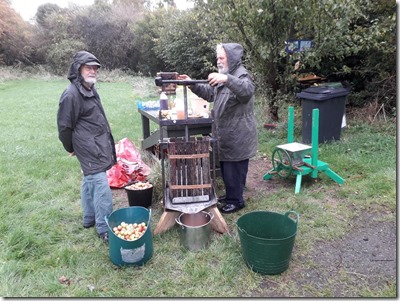
We were making use of the fallen apples from New Ferry Butterfly Park as well as apple donations from Burton Walled Garden, Upton Hall School Orchard, Brimstage Orchard and private gardens. Approximately 3.5 gallons of apple juice was produced with a mix of dessert and cooking apples for a sweet apple juice for Wirral Pomona to ferment into a cider. For fresh apple juice to drink crab apples were added to the mix to take away the sweetness. Some students asked why they should not eat the crab apples. I said “Take a bite and you will soon realize why!” A wincing face is a sure test it is a crab. With the team of eager students quartering, scratting and pressing apples it did not take much time at all to fill the press and they were all excited to see the juice rush out of the press as the apple mash was squashed.

After making the apple juice the students enjoyed sampling the juice alongside the BBQ put on for them. In fact the juice, BBQ, homemade cakes and tea gave some of the students’ energy to work on Embankment Coppice until 5pm in the afternoon, the longest a student group has ever stayed. We hope to entice them back again with an après task cider sometimes soon. Look after your volunteers and they will come back again, no press gangs required.

Paul Loughnane

Friday, 8 June 2018

Catwoman and Potter take up residence at Butterfly Park


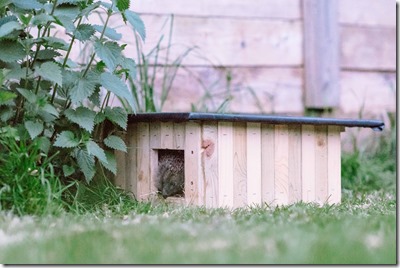
Hedgehog house. Photo: flyingcanadianphotography.com

Who are Catwoman and Potter? They sound like Batman’s archenemies. Well Catwoman is a 1,200g female hedgehog and Potter an 800g male hedgehog. They are rescue hedgehogs from Wirral Animal Rescue Centre based near Hoylake Station. Their names were pulled out of a jar when they arrived at the centre.

Hedgehog. Photo: flyingcanadianphotography.com

They were released on a fine summer evening at New Ferry Butterfly Park. They have been given their own hog house and bespoke hog feeding station just to help them get started off in their new natural habitat. Both the hog house and the hog feeder were expertly made by Martin Sharp of Wirral Animal Rescue Centre. Martin thought that the habitat at New Ferry Butterfly Park superb for hedgehogs. There are lots of mature dead wood habitat piles which they like and extensive woodland edge habitat as well as 400 metres of native laid hedgerow with dense bases. I was surprised at their limited lifespan of only two years in the wild. Martin brought leaflets about the danger of rubbish and litter causes to hedgehogs. It is good to be reminded.

Dusk at the Butterfly Park. Photo: flyingcanadianphotography.com

At dusk with hushed excitement, we put the hogs into the hog house. We left the newly arrived hogs snuffling in the hog house and occasionally sticking their noses out to sniff the new surroundings. We will monitor them closely but it is expected that they will leave the hog house and make their own arrangements.

Martin gruesomely warned us about the increasingly cunning foxes who play the long game and lay in wait behind the curled hedgehog and until it unfurls and catches the unsuspecting hedgehog by the hind leg as it moves off.

The centre rescues about 400 hedgehogs a year! If you see a hedgehog in the day it is it definitely in trouble. They are always looking for further support, financial, volunteer time, names for the hedgehogs and welcome visitors to the centre. In spring time they are looking for suitable sites to house the rescued hedgehogs. Please get in touch with them:

Paul Loughnane

For more photographs of Potter and Catwoman and their release, take a look at the Flying Canadian Photography blog:
flyingcanadianphotography.blog/a-day-in-the-life-of-wirral-animal-sanctuarys-hedgehog-centre/

Wednesday, 9 May 2018

A New Welcome Awaits You at New Ferry Butterfly Park


Pam Brown MBE, Her Majesty’s Deputy Lieutenant of Merseyside, unveiled a new interactive and exciting educational welcome board at New Ferry Butterfly Park. This was part of New Ferry Butterfly Park’s Opening Day. The event, which attracted 870 visitors, marked the start of the Sunday afternoon opening season which goes on until Wirral Heritage week in September. 

The Welcome Board. Photo Pam Sullivan

The welcome board has been fashioned with all the familiar elements such as secret doors, the creepy crawly bucket and the newt pond, but also has some new features. Centre stage is a new bee jigsaw, asking important questions like, can bees dance?  

The Bee Jigsaw.  Photo : Pam Sullivan

There are lots of new facts to learn about the insects in the park and an important message about recycling and not leaving rubbish lying around. The board has been designed and painted by artist Pamela Sullivan with thanks to Graham Smillie and Frank Moore for their help with the build and installation of the board and support with the more fiddly elements of the design. 

An earlier version of this welcome board was created by Pam Sullivan in 2013. It was a great focus for many of the beaver and cubs groups who visited the park in the last five years. Streams of 15 or so excited cubs and beavers all having a go at the board took their toll, wearing it out by their enthusiasm and love of it. This new improved version has more interaction components and is in a more robust and weather proof format which can be enjoyed by visitors over an extended number of years.

The welcome board is a brilliant addition to the park, and a great hit with children and adults. Being near the entrance, the welcome board sets the tone of the park as somewhere to explore nature thoroughly.  It will be wonderful when assembling visiting beaver/cub groups; a good starter for them to interact with before starting their nature sessions. 

The record breaking warm bank holiday weather meant there was a record breaking number of butterflies on the wing for the opening day. There was an increased number of stalls this year spread further round the park. There was a BBQ, cake stand, plant stall and the healthy cycle smoothie stand. There was Flourish promoting honeybees, a spider stand, local artists demonstrating their talents, spoon carving and, being the May Day bank holiday weekend, May Pole dancing was enjoyed too.  

Pond Dipping on Open Day

Do come and visit on quieter days when there is more nature to see as the summer season progresses. 

Paul Loughnane

Wednesday, 18 April 2018

Primrose Day


Primroses at Embankment Coppice 17th March

Tomorrow, 19th April, is Primrose Day. This is when primroses are placed by Disraeli’s statue outside Westminster Abbey. This is to commemorate the death of Prime Minister Benjamin Disraeli, 1st Earl of Beaconsfield, in 1881. Primroses were his favorite flower.

The name Primrose comes from the Latin meaning “first rose”; they herald in the spring season. At New Ferry Butterfly Park spring is well on its way, with primroses in full flower amongst the coppice stools in Embankment Coppice. There are approximately 45 primroses in flower. 50 primroses were plug planted into the embankment using money from a Love Wirral Grant in 2014. Nearly all of the primroses have survived and there are many small immature primroses coming up too. This planting has been very successful and they are starting to spread of their own accord. This location on thin skeletal soils in amongst the coppice stools with summer shade has proved to be ideal habitat for them.

The early nectar source provided by the primrose flowers is appreciated by early flying butterflies with long proboscises (tongues) such as Brimstone and Small Tortoiseshell. Long tongues are required to reach down the 10mm long corolla (flower tube) to reach the nectar at the bottom of the flower. The early flying queen bumble bees, especially the common carder and the hairy-footed flower bee, a recent arrival at the park in 2014, will also make use of the primrose flowers.

Following this successful project, it is hope to extend this primrose area by further planting along the embankment. En masse they will produce a wonderful floral display. This area lies in the sanctuary area of the park, so the pale yellow flowers with the egg yolk centres will be enjoyed undisturbed by the wildlife and by Merseyrail passengers as the trains coast slowly past the railway embankment decelerating towards Bebington Station.

Paul Loughnane

Friday, 6 April 2018

Grafters


Apple grafting in the cold with David Ellwand. Photo: Paul Loughane

Hedge laying spectators are often surprised how much wood is cut through to bend down the stems. The hawthorn stem should be cut 80% through so that the upright stem can be bent over. There is enough of the cambium layer left for the bent stem to survive and give maximum regrowth from the stool. Even more of a miracle for them would be apple grafting, cutting an apple variety stem, the scion, completely and then grafting it on to a root stock. Wirral Countryside Volunteers and Wirral Tree Wardens held an apple grafting day at New Ferry Butterfly Park with an impressive total of 18 varieties of scions which came from orchards in Malpas, Willaston and Chester.
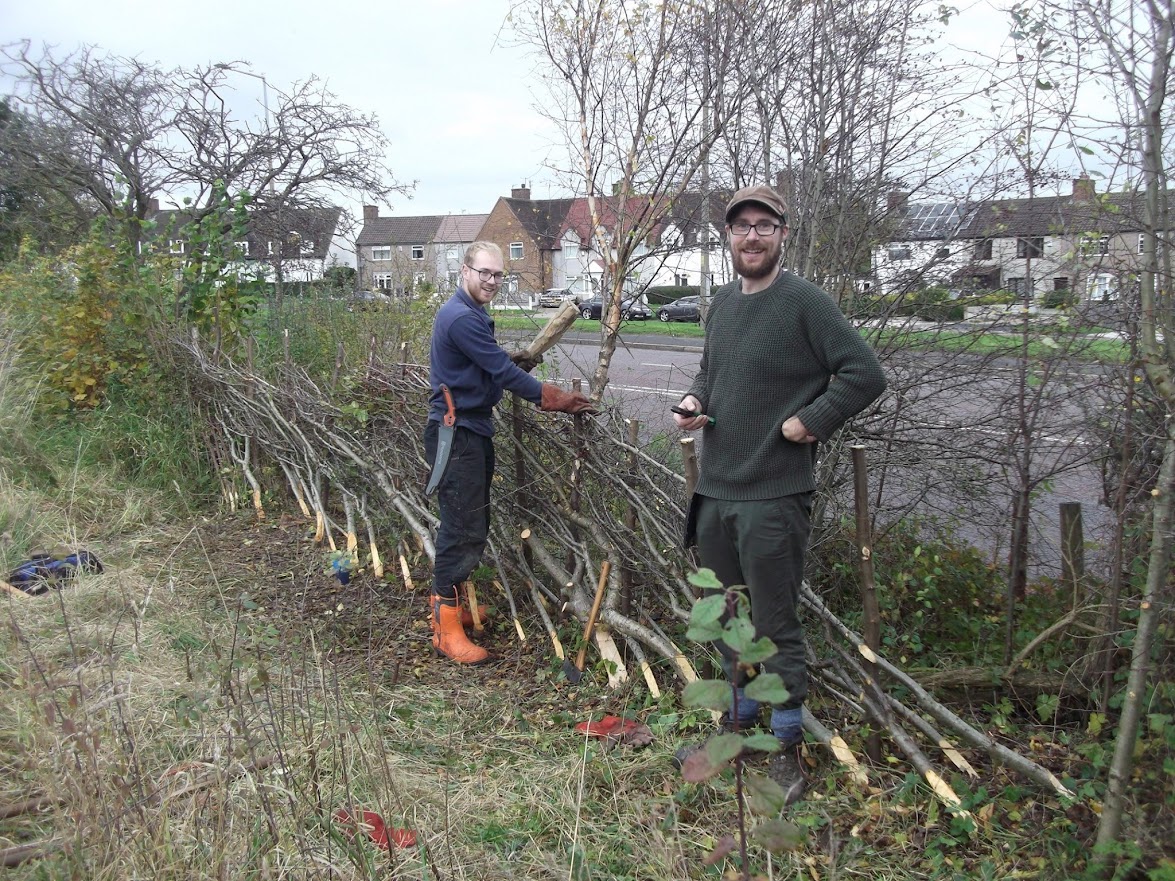
Apple Grafting - the cut. Photo: Paul Loughnane

Despite the cold, 3oC with snow and wind which made the fingers numb and stiff, under the gentle tutelage of David Ellwand 36 apple scions were grafted to either dwarfing or semi-dwarfing stocks. This was achieved using the whip-and-tongue groove method and then firmly bound with tape. Lining up the scion can be difficult and if the rootstock is larger than the scion you have to graft the scion to one side for the graft to be successful, making sure the cambium layers of both knit together so there is a free flow of sap.

Whip-and-tongue grafting sequence

Several Cheshire varieties of apple were grafted. There are no named Wirral apple varieties. The nearest name variety is the Elton Beauty, raised at Ince Nursery in 1954. However, one apple seedling at the park was thought worthy of grafting the “Adam and Eve tree” which produces a crisp dessert apple, with a good, sweet flavour. This was christened the “Adam and Eve” tree by raconteur Mel Roberts, the Park’s founder. The story goes the tree arose following a domestic argument; when the green grocer’s wife dumped the green grocer’s produce including apples in the park when it was abandoned land.

David Elwand took a tour of the park assessing the apple trees growing there. They were bought as wild crab apple trees but turned out to be varieties of apple trees. He gave us advice on pruning them. Right at the north end of the park up the steep embankment, David was rewarded; identifying a golden hornet crab tree, the apples of which would be very useful for his Pomona cider project.

Potted up grafted trees. Photo: Paul Loughnane

The grafted trees are well-labelled, potted up and placed in a shady corner in the park to slow growth just in time for the union to take before the scion comes into full leaf and draws on the rootstock. In addition to cloning the apple varieties, the dwarfing rootstocks were propagated by both coppice stooling and trench layering.

Paul Loughnane

Thursday, 15 February 2018

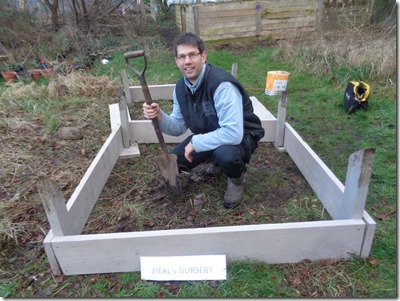
Neal’s Nursery


Neal's nursery. Photo: Paul Loughnane

At the Wirral Countryside Volunteer’s 32nd AGM in January, although the group is the biggest it has ever been, I made an appeal that we should encourage some more youngsters to be volunteers. The next day our youngest volunteer Ken was in contact say he has taken up a job with the National Trust in Devon and could no longer be our tool officer!

Ken Neal arrived on the scene in autumn 2011 just as we were coppicing the Embankment Coppice at New Ferry Butterfly Park. “Dr Ken” was a breath of fresh air being in his 30s with enthusiasm, backed up with a PhD and lots of nature conservation experience working as an ecological consultant carrying out a broad range of ecological surveys. Ken has been a regular and very energetic volunteer, a great driver for getting the roof of the container repaired and the tool container organised. He is the only volunteer I know who can step on to the container roof. One step on the lock protector on the door and the next up on to the roof. I wonder if it is anything to do with the spider tattoo he sports? Ken’s newly acquired chainsaw skills were especially useful at Alford when we were battling in February 2017 at 6pm with the fading light to get the final lengths of difficult hedge laid, those that were unsuitable for the national hedge laying match in October 2016.

Goodbye Ken. Photo: Elizabeth Woloschin

Ken gave two talks to Wirral Wildlife Group, one on “Sharks, Snakes, Spiders & Science” and the other on “The Ecology of Offshore Wind farms”. Both talks were honest, funny and illuminating accounts of these topics. Ken carried out systematic bird Surveys at Thornton Wood and New Ferry Butterfly Park. He organised some moth trapping nights at New Ferry Butterfly Park with the volunteers and wrote a blog of his findings. Ken surveyed the oak regrowth in Thornton Wood using GPS. Conclusions: those areas of oak regrowth often correlated with Wirral Countryside Volunteers activity! Confirming scientifically what we already knew. Thanks Ken.
Ken’s new position is working for the National Trust on an exciting project to increase the biodiversity of the farmland that they own by encouraging tenant farmers to modify their agriculture methods to benefit wildlife. Agriculture covers a large area meaning Ken’s work will benefit more wildlife than just volunteering with the WCV. Ken has often measured decline of the state of nature or the environmental impacts of industrial projects. Now he will be driving projects and measuring their environmental benefits.

Ken cutting his cake with a billhook. Photo: Paul Loughnane

On his last day with the volunteers Ken constructed a raised bed as a revamp of the volunteer’s tree nursery or should we call it Neal’s Nursery? There was a little presentation with his favourite coconut and apricot cake in the shape of a large K which he cut in good volunteer tradition with a Yorkshire billhook and was presented with a book on Devon hedges. Ken said the experience with the volunteers helped him clinch the job.
Paul Loughnane

Wednesday, 27 September 2017

Butterfly Park Visitor Numbers At All Time High


Below is a graph showing the number of visitors to the  park from  2002-2017.
  
3250 visitors was a substantial  increase this  year  due to  increasing general popularity  of the park (seven  Sundays  with over  100  visitors), the  very successful  Open Day (1,059  visitors)  and the increased number of  visiting groups (20  groups).


Total butterfly record counts have been compiled over the period 2002 to 2017. This gives a  good picture of how the butterflies are faring at the Park. Unfortunately it was a mediocre to  poor 2017 season for most of our butterflies, except the Red Admiral and the Holly Blue  who have had their best year to date.

Thanks to all the volunteers who have helped in this success. 

Paul Loughnane