Showing posts with label John McGaw. Show all posts

Friday, 26 June 2026

Cleaver Heath Update

John McGaw is the Volunteer Warden at our Cleaver Heath nature reserve in Heswall and passed on some good news.

He has seen significant growth of new heather seedlings across the burnt areas of Cleaver recently, following the fire in August last year.

https://wirralwildlife.blogspot.com/2025/09/green-shoots-at-cleaver-heath-following.html
Heather seedlings on burnt ground

There is also some new heather growth within the experimental regeneration area that was cleared by contractors last year (reported on February 4th).

Heather regeneration

Let's hope the new heather can compete successfully with the birch and gorse seedlings which are unfortunately also growing vigorously!

Cleaver Heath was also a focal point at Cool Heswall in May. John had a selection of plants that grow at Cleaver Heath to show visitors. 

Heathland plants found on the reserve, as seen at Cool Heswall

He also took some Cleaver Heath spiders along!


Sunday, 16 February 2025

Cleaver Heath Regeneration Project

Nationally, lowland heathland is a well known type of habitat occurring on acid sandy or peaty soils of low fertility. It is characterised by the presence of a range of plant species such as heather, gorse and bracken together with scattered trees such as birch, oak and pine and mosses, lichens and grasses. In prime condition it is also home to a wide range of both vertebrate and invertebrate animals.

Heathland is one of our most threatened habitats and by 1997 Britain had lost 60% of it's lowland heath, mainly to agriculture and construction. Locally on Wirral, heathland is restricted to areas such as Cleaver Heath, Heswall Dales and Thurstaston Common.

Lowland heathland habitats are typically relatively fragile and susceptible to succession by woodland trees or bracken which out compete and smother plants such as heather. At Cleaver Heath, this situation is exacerbated by the fact that the open lowland heathland habitat is surrounded by silver/downy birch dominated woodland with a ground flora dominated by bracken. Management work at Cleaver carried out mainly by volunteers, involves controlling birch, gorse and bracken growth in the areas dominated by heather, so preventing succession to dense scrub and woodland.

The site at Cleaver Heath before the gorse, bracken and birch were cleared (photo: Ben Patterson)
The site at Cleaver Heath before the gorse, bracken and birch were cleared
(photo: Ben Patterson)

In 2019 the possibility of carrying out a heathland regeneration project at Cleaver was discussed with the aim of increasing the overall amount of lowland heath habitat within the reserve. A site of approximately 0.25 hectares in area, covered in gorse, bracken and some birch and with some heather also present was selected for clearing. The plan was to employ specialized contractors to clear gorse, bracken and birch to ground level with machinery within the experimental site and then monitor the regeneration of the heather over time whilst controlling any regrowth of gorse, bracken and birch. To encourage the regrowth of heather after clearing, the additional application of fresh heather seed or heather litter from within the site containing seed would be carried out.

Although at the time, the project was supported by Cheshire Wildlife Trust and Natural England, the onset of the pandemic, together with funding issues, prevented the project from going ahead. However, Wirral Wildlife received a very generous financial gift from Woodchurch High School which has now been used to help fund the project. This was carried out by experienced habitat management contractors at the beginning of February.

The work in progress at Cleaver Heath (photo: Ben Patterson)
The work in progress at Cleaver Heath
(photo: Ben Patterson)

After clearing existing vegetation from the selected site, any unwanted regrowth of bracken and gorse occurring during the Spring and Summer will be removed and heather seed from within other areas of the reserve will be collected and applied to the new site during the coming Autumn and Winter months. Regeneration of the heather will be closely monitored and managed by Cheshire Wildlife Trust and Wirral Wildlife volunteer teams.

More work in progress (photo: Ben Patterson)


If successful this project will result in a significant increase in important heath habitat within the reserve.

John McGaw (Honorary reserve manager) 


Saturday, 2 March 2024

Autumn/Winter Activity at Cleaver Heath (2023/24)


In October the volunteers cleared grass, bramble and bracken which was growing in an area of sloping heath that was cut close to ground level in 2022 as part of a long term plan to increase the age range of heather across the reserve by rotational cutting of specific areas over a twenty year period. This unwanted vegetation was threatening to outgrow and shade out the small regenerating heather plants.


cleared grass, bramble and bracken
Clearing grass, bramble and bracken


Managing the heathland to create space for regenerating heather plants


During this work some interesting insects were observed in the thin surface soil and leaf litter. Several parasitoid ichneumon wasps were possibly looking for moth pupae to lay their eggs in and the very characteristically shaped bishop's mitre shield bug was running at the base of some grass tussocks. This bug has been previously recorded in several coastal dune locations across Wirral in recent years.

Ichneumon sarcitorius - female

Bishop's mitre shield bug (Aelia acuminata)

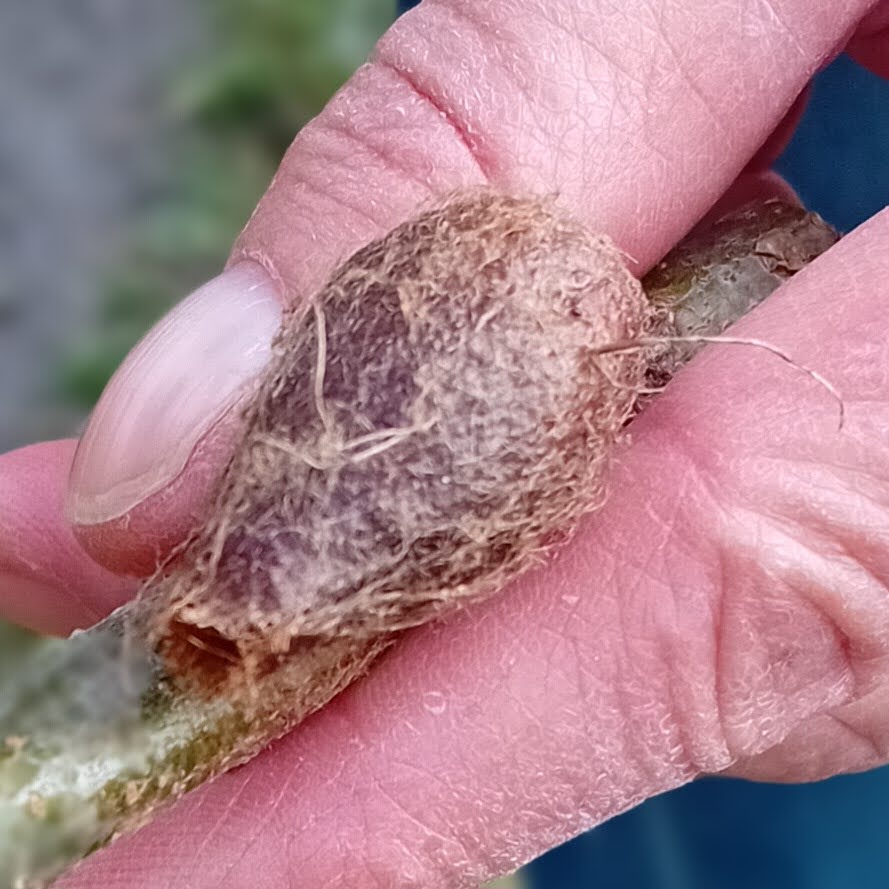
During November and December we worked hard on a range of tasks despite some very wet and cold weather. Overly tall birch was coppiced in the 'managed scrub' area to provide improved habitat conditions for nesting birds and, working with Graham from Cheshire Wildlife Trust, we removed and stump treated a section of unwanted tall birch and gorse from within the central heather panel. While dragging away cut birch, one of our volunteers observed an empty cocoon of an emperor moth attached to a small oak sapling, hopefully we will see some adult moths flying in the reserve in Spring.

The empty cocoon of an emperor moth found at Cleaver Heath

Some interesting fungi were also observed at this time, thriving during the very wet conditions.

Clockwise from top left: birch polypore, common earthball on the woodland floor, turkey-tail fungus and oyster mushroom.
Clockwise from top left: birch polypore, common earthball on the woodland floor,
turkey-tail fungus and oyster mushroom.

Tiny bonnet mushrooms on dead bramble stem - Mycena sp. ?

More wet and cold task days in December and January saw us carrying out widening of some narrow overgrown sections of the public access pathways close to the main entrance. We also continued to cut back vegetation that had overgrown through the iron railings onto Oldfield Road.

Widening a narrow section of the path


Cutting back vegetation that had grown through the railings onto Oldfield Road

During January and February, working with Graham from CWT, we cleared and stump treated invasive birch within the lower sloping heath and cut back and dug out many of the roots of a very large rhododendron that was growing within the woodland area.

The planned contractor-led heathland regeneration project should be going ahead shortly and we will be topping up the recently widened public paths with stone in March so plenty to do in hopefully much improved weather conditions as Spring approaches.


John McGaw
Volunteer Warden Cleaver Heath


Monday, 18 September 2023

Late Summer Activity at Cleaver Heath


The main heather panel at Cleaver Heath

During late August and early September two volunteer task days were organized at Cleaver Heath to deal with the annual problem of bracken re-growth within the upper heather panel. Bracken fronds were removed by stem pulling - rewarding work but laborious, especially in the recent very warm weather! After the main panel was cleared, we concentrated on clearing bracken and pruning overhanging trees along the edge of the Eastern woodland to allow more light to fall onto the nearby heather and encourage fresh growth.


The woodland edge after bracken pulling

While working we took the opportunity to look out for any interesting wildlife especially as the weather was warm and sunny.

Gall wasps had been busy during the year and young oaks along the woodland edge displayed a variety of galls.

Clock-wise from top left : Marble Gall, Artichoke Gall, Cola-nut Gall, Spangle Gall, Knopper Gall
Galls on oak trees.
Clockwise from top left:
Marble Gall, Artichoke Gall, Cola-nut Gall, Spangle Gall, Knopper Gall

The young oaks were also providing shelter and home to some spiders.


Lesser Garden spider (Metellina sp.)
Lesser Garden spider (Metellina sp.)

The 'Sputnik spider' (Paidiscura pallens) so-called because of the spiky shape of its eggsac which is attached to the underside of an oak leaf
The 'Sputnik spider' (Paidiscura pallens)
so-called because of the spiky shape of its eggsac
which is attached to the underside of an oak leaf

By far the most interesting 'find' during the day was the Heather Ladybird (Chilocorus bipustulatus).


Heather Ladybird (Chilocorus bipustulatus)

This very small ladybird was found on mature heather close to where we were working along the woodland edge. It is black and shiny with two or three red spots, sometimes fused, running in a line across the body. It is more likely to be found on mature heather on heathland as at Cleaver, but has been occasionally recorded on coastal dunes. It was recorded in the Wallasey sand dunes in 1991. Nationally it is classed as local and declining so we are very fortunate to have it with us! It feeds on aphids and scale insects and overwinters in litter at the base of heather and gorse.

Future work at Cleaver before the end of the year includes the regeneration project next month, birch cutting and stump treatment with Graham from Cheshire Wildlife Trust and coppicing within the managed scrub area. A lot to keep us busy.


John McGaw
Volunteer Warden, Cleaver Heath