Showing posts with label hedges. Show all posts

Friday, 6 September 2019

Wildlife Exchange Session


Here is information about this month’s RECORD event, held at Chester Zoo.
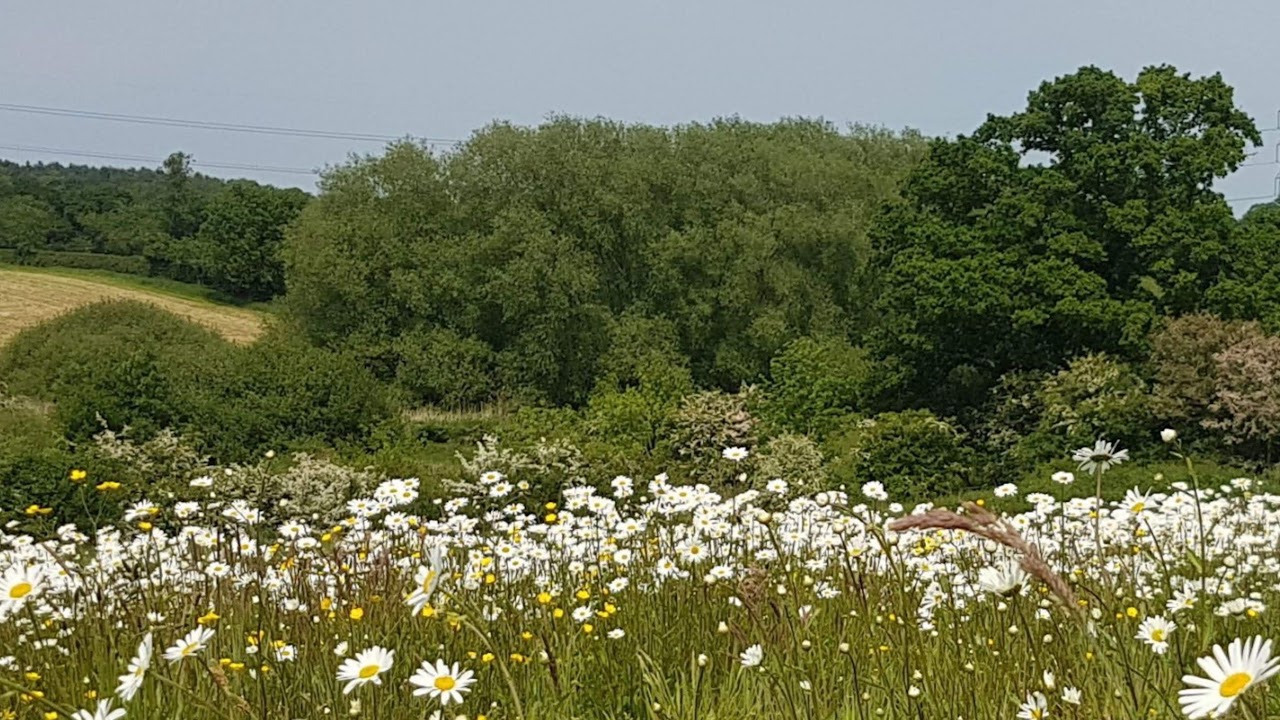
Meadow and Hedgerow

We would like to invite you to our upcoming Wildlife Exchange Session, book your place on eventbrite here.

Join us on our September Wildlife Exchange Session as we welcome back Dr Hilary Ash, who will take us through the whys and wherefores of hedgerow recording; detailing how recording hedges can make a vital contribution to conservation. Not only does hedgerow recording identify important habitats within our landscape, but it ensures these wildlife-rich havens are conserved.

Hedges perform vital functions within our environment, from preventing soil erosion, retaining livestock and providing valuable connectivity for wildlife to commute into the wider environment. However, if you’ll excuse the pun, our hedges are often overlooked and underappreciated! In 1946 the UK had an estimated 500,000 miles of hedgerow, over half of which was lost by 1993; when only 236,000 miles remained (figures from PTES).

Join us to find out how you can get involved in hedgerow recording and help prevent further loss of these important wildlife highways.

These evenings provide an opportunity for wildlife recorders, conservationists and anyone with an interest in local wildlife to get together in a relaxed environment and find out about our natural environment and how it is changing. The ‘exchange’ sessions also allow sharing of ideas, knowledge, experience and views on Cheshire’s natural history and how we can monitor and conserve it.

Tea/coffee and snacks will be provided.
Hosted by RECORD and Chester Zoo.

Please note photos may be taken at this event for use in RECORD publications.

If you would like to sign up to the RECORD mailing list to hear about future events please click here

Kind regards,
The RECORD Team
Tel: 01244 383749
RECORD LRC, Cedar House, Chester Zoo, Caughall Road, Upton, CH2 1LH.

Sunday, 17 March 2019

Love Where You Live, Hail To The Grafters


Laid hedge. Photo: Steve Yandel


Thanks to a grant from the Wirral South ‘Love Where You Live’ fund, Wirral Countryside Volunteers have laid 400m of hedgerow at New Ferry Butterfly Park. These hedges are dense for smaller birds whilst retaining a fair proportion of flowers for insect and later berries for birds. The volunteers have gone one step further by increasing the biodiversity of the hedge bank of the recently laid hedges by plug planting 50 each of primrose, greater switchwort, hedge bedstraw and foxglove into the hedge banks.

Paul plug planting. Photo: Kerry Loughnane


Paul Loughnane, honorary secretary of Wirral Countryside Volunteers, said “These flowers, whilst adding colour and interest to the bottom of hedgerow, will be useful for wildlife. “In the coming years the primrose will produce an early nectar source for early emerging butterflies such as the brimstone and later in the season orange tip butterflies will nectar on the greater stitchwort flowers. Hedge bedstraw is the larval food of the common carpet moth and bumble bees will climb right into the purple spikes of foxglove flowers in search of nectar. So many hedge banks have become dull with low biodiversity, but not here.”


The grant also enabled the Volunteers to host on the same day an apple grafting workshop at the park, in conjunction with David Ellwand of Wirral Tree Wardens. Here participants could make their own apple tree of a defined final size with a variety of their choice, which is not the case by growing from seed.

David talked about explained the about the 40 or more local Cheshire and Lancashire apple varieties on offer, whether the variety was cooker, desert or dual, its appearance, its flavour, storage properties and whether it was an early or late cropper. Pencil size diameter tree cuttings called scions were collected in November. David you must have a big fridge! Then David explained about the different dwarfing root stock you can use to determine the final size of the fruit tree.


Despite the weather with vicious hail, 13 people under the shelter of a gazebo grafted apple and pear trees, and about 40 trees were grafted on the day. First we practiced on hazel sticks and then on to grafting scions to the root stocks. Grafting of the scions to the root stock was achieved using the whip-and-tongue groove method and then firmly bound with tape making sure the cambium layers of both knit together so there is a free flow of sap.

The newly created fruit trees will be planted at the park, in local gardens, a new community orchard at Claremont Farm, Clatterbridge and at Christ Church Higher Bebington where they are making the church grounds more ecological. The south Wirral area will be brightened up in a few years time with apple blossom in May. The blossom is good for honeybees and maintains local apple varieties. With 25 participants in total there was certainly a buzz about the park that day.

Wednesday, 7 June 2017

Early Summer at Cleaver Heath


Birds

The breeding season has now reached its climax. To date, late May, we have conducted 7 Common Bird Census (CBC) surveys and will probably finish with 2 more.  The idea of the CBC is to build up a picture of the main territories of birds which are present during the breeding season. This is done species by species. While I am walking round the reserve over a standard route, I am marking on a large scale map what I am seeing and hearing. Below is what my scruffy map looks like.  The codes tell us what the identified bird is, where it is and what it is doing. This takes about one and a half hours and I try to do it before the roar of commuter traffic builds up, the garden and building machinery springs into action and the early morning dog walkers arrive. There is one map for each visit. And now for the exciting bit. Some rainy day(s) at the end of the season, I will create a new map for each species (maybe 15 of those?!) showing the history of where and when birds of that species have been active over the breeding period. This information can then can inform us when we come to our habitat management strategy.


The order of arrival of the warblers has been Chiffchaff, Blackcap, Willow Warbler then, after a gap, Whitethroat.

So far, we know about at least 4 Chiffchaff and 3 Willow Warbler territories in what is, after all, quite a small reserve (7.4  acres).  I have seen Linnets on more than one survey including a pair diving promisingly in and out of the gorse. Of course, the frustrating thing is seing other interesting birds and bird behaviour around the reserve but NOT during the official survey time window. These ones don’t count - still great to watch though!

Whitethroat


Maintenance

While the breeding season reaches its conclusion we have restricted reserve maintenance to essential path work.  

View from Cleaver Heath


The view over the Dee is so enticing that many visitors think they may get an even better view by walking ‘off-piste’  into the heather, quite often while following an inquisitive dog. We have scratched our heads over how to deal with this. There is a similar problem when the main path gets muddy and those anxious to complete their dog walk without getting their shoes dirty take to the grass and heather thus creating a network of new unwanted paths. We don’t want to introduce barrier rails, barbed-wire fences, no-entry signs or whatever. So, here are some stop gaps measures we are currently taking.

We have transplanted a couple of bramble plants which should quickly grow and discourage use of the nascent paths while the heather recovers behind them. Dogs tend to avoid bramble. Also, while we await approval to continue the successful stoning of the wetter parts of the main path, we have tried to indicate the correct route with some birch limbs across extra routes awaiting recovery.

Newly planted brambles
Birch across the incorrect path


Natural Futures Project

Some good news for the Reserve is that our bid to The Natural Futures Small Grant Scheme has been successful.  The scheme is administered by the Cheshire Wildlife Trust as part of its major Natural Futures programme funded by the Heritage Lottery. The £1000 grant made to Wirral Wildlife helps provide us with some kit to improve Cleaver Heath for both its human and avian users. Constant re-cutting of the invasive birch and non-native plants/bushes/trees can soak up a lot of volunteer effort but only to modest long-term effect. We now have some Tree Poppers which allow us to remove saplings complete with their root systems with minimal disturbance to the surrounding precious Lowland Heath plants. 

Tree Poppers


We also now have the wherewithal to store securely, and apply safely, herbicides. We can use these to stop regrowth of stumps and, via local spraying, deal with invasive plants which have crept into the Reserve over its boundaries.

Chemsafe


Cleaver Heath has a modest amount of woodland fringe which, together with the managed scrub areas, provides cover and nesting opportunities for birds, both resident and visiting. As yet, we have provided no nesting boxes.

 The new grant has allowed us to acquire some new low-maintenance ‘Woodcrete’ boxes. Our volunteers will help us install these next winter ready for the next nesting season. The plan is to see what difference this makes to the woodland bird population which of course is being monitored annually via the Common Bird Census.

Bird box


The Natural Futures programme had already provided funding for me to get the necessary chemicals certification for working with the herbicides. One main motivation for this was to have quicker, on-site, access to stump treatment following the painstaking cutting activities of our volunteers.  In following seasons, they can move on to new areas without having to re-visit last year’s work.


Signs of growth

We have been encouraging a small, but spreading, Bilberry stand in one of the managed scrub areas. It looked particularly attractive a few weeks ago as it came into bloom.

Bilberry


Also growing apace is the natural hedge which we planted in February 2014.

Hedge planting February 2014


In May 2017 it now looks as shown below.

Hedge May 2017


Note the Oxeye Daisies thriving in the ex-carpark area along with a veritable jungle of potential nectar-source plants. I foresee a new maintenance task coming as the hedge starts to entangle passing pedestrians on Oldfield Road.

Our summer plans, once the nesting season is over will include bracken spraying; cutting back the path edges which are starting to grow vigorously; completion of a survey of all plant life in the reserve. Most of the latter was carried out last year by our team of botanical experts – another area where I am on a steep learning curve. A small region of dense scrub at the North West end of the reserve remains to be checked out. The birds are currently, and quite rightly, showing indignation at any intruders who might wish to trample though their territories.

The bracken is already starting to encroach on the heather as shown here.

Bracken


There are other areas where it has over the years totally dominated the other Lowland Heath plants. It has been previously sprayed in recent years but will need re-spraying to complete the suppression process if heathland regeneration is to be successful there.

Alan Irving
Warden Cleaver Heath