Showing posts with label survey. Show all posts

Thursday, 19 October 2023

Your Views Wanted on Local Nature Recovery Strategy


A favourite Wirral view for many, looking over the Dee Estuary.
Photo: Tim Jokl, Flickr


How can we all encourage nature to recover in Wirral?

The first phase of public engagement for the Local Nature Recovery Strategy (LNRS) for the Liverpool City Region has begun.

The LNRS is a new plan designed to support and improve nature and biodiversity in the Liverpool City Region (Halton, Knowsley, Liverpool, Sefton, St Helens & Wirral). It will use key evidence and the views of local people. The LNRS will act as a blueprint for protecting and enhancing nature, and will:
  • Map our most important habitats
  • Map opportunities for nature recovery
  • List the priorities for reversing the decline in plant and animal species
In order to create this strategy, everyone can share their views on the nature, the places and the species that they value most.

A survey is live now and continuing until November 15th.

Please find the link to the survey here:
https://lcrlistens.liverpoolcityregion-ca.gov.uk/engagement/local-nature-recovery-strategy

Monday, 21 November 2022

Cleaver Heath Invertebrate Survey


Cleaver Heath and some of the invertebrates recorded on 6th July. Photos: The Tanyptera Trust
Cleaver Heath and some of the invertebrates recorded on 6th July.
Photos: The Tanyptera Trust

The Tanyptera Trust is funding a 7.5 year project to promote the study and conservation of insects and other invertebrates in the Lancashire and Cheshire region of NW England. This project is hosted by National Museums Liverpool. Every year, the Trust runs an invertebrate recording day programme to bring together the invert recording community and increase the coverage of invert records on selected important and under-recorded sites.

On July 6th this year, the Trust organised a recording day at Cleaver Heath on the Wirral and a detailed species list obtained has recently been published and can be viewed on their website.

https://www.northwestinvertebrates.org.uk/cleaver-heath/


Summary of number of species by invertebrate order

48 species of spider (Araneae)

51 species of beetle (Coleoptera)

92 species of fly (Diptera)

38 species of true bug (Hemiptera)

18 species of bee/wasp/ant (Hymenoptera)

15 species of butterfly/moth (Lepidoptera)

2 species of centipede (Lithobiomorpha)

2 species of lacewing (Neuroptera)

1 species of harvestman (Opiliones)

1 species of grasshopper(Orthoptera)

1 species of booklouse (Psocoptera)


Notable records in terms of scarcity

Two flies, Helina ciliatocosta and Dolichopus virgultorum - New to VC58 (Cheshire)

A spider, Cheiracanthium virescens - Nationally scarce, only 3rd record for VC58 (Cheshire). On heathland, favours areas with short heather growth.

A true bug Alydus calcaratus  - Nationally scarce.  Very local distribution in the North West, only 3rd record for VC 58 (Cheshire),  one previous Wirral record on Thurstaston Common and  recorded on Cleaver this year prior to this event. Nymphs are ant-mimics and are often found in ant nests.

There were also six separate records of the impressive Emperor moth caterpillars (Saturnia pavonia) on heather and other plants.


Overall a very impressive list of species for a single recording day. Looking through the list, inverts associated with all the main vegetation types such as heather, gorse, wild flowers and birch/oak are evident as well as those found in the ground/litter layer. The former car park, now a nectar-rich wildflower area, was of particular interest for hoverflies and butterflies.

As a general rule regarding the management of lowland heathland for invertebrates, structural diversity across all the vegetation is important to support the greatest range of species and included in this would be the need to create and maintain a range of different age structures within the dominant plant species. These objectives are well accounted for within the Cleaver management plan and are also reflected practically in the work day tasks carried out by the volunteers.


John McGaw, Cleaver Heath Reserve Manager

Monday, 19 July 2021

Become a River Guardian


Help Mersey Rivers Trust by becoming a River Guardian


As part of water quality improvement projects on Rivacre Brook, Mersey Rivers Trust are looking to train ‘River Guardians’ to monitor water quality in Rivacre Brook and Dibbinsdale Brook. River Guardians are volunteers. They are vital to the work done by Mersey Rivers Trust as the information they collect allows for ongoing monitoring of local watercourses to identify issues and evaluate the effectiveness of interventions. The sampling will be a combination of chemical analysis using simple test kits and invertebrate ‘kick’ sampling.


Rivacre Brook. Photo: Sue Adair


You can find out more about the River Guardian programme on the Mersey Rivers Trust website:

https://www.merseyriverstrust.org/index.php/projects/river-guardians


Volunteers will be required to attend a training session and then sample a spot on the river roughly once a month.


The training day will consist of theory and practical sessions:


    Date: Saturday 4th September

    Time: 10am (until approximately 2:30pm)
      Location: Rivacre Valley Country Park (TBC)
        All equipment and lunch will be provided.


        If you wish to attend this training or have any questions, please email Rebecca Howard (rebecca@merseyrivers.org) and Paul Corner (paulc@merseyrivers.org). Please note places are limited.


        Friday, 27 November 2020

        Help Wanted To Plan Our Wildlife Survey Programme


        A quadrat at Thurstaston Common, one of the sites we survey
        A quadrat at Thurstaston Common, one of the sites we survey.


        Help needed! One of the key activities of local naturalists is the surveying and monitoring of local wildlife. Here in Wirral some of this is undertaken and managed by the Wirral Wildlife group. We are lucky to have many sites of special wildlife interest in the Wirral and need to monitor how they are doing over the years. This lets us spot any changes including new species and losses of biological diversity in our area.

        We need someone to help our team with the planning and management of our ongoing program of surveys and recording. All our records contribute to national wildlife recording databases which are key to preserving our wildlife for future generations. The task is not onerous but does require some basic computing skill, as records are now all held electronically. Most of the work is January - March each year as the surveys are planned.

        If you think you may be able to help us with this important aspect of our work for local wildlife please contact Hilary, Margaret and Ron via email info@wirralwildlife.org.uk or ring Hilary on 0151 327 5923.


        Thursday, 20 August 2020

        Surveying Heswall Dales


        Hilary Ash surveying the heathland at Heswall Dales
        Hilary Ash surveying the heathland at Heswall Dales

        Recording teams from Wirral Wildlife, led by Dr Hilary Ash, have just spent three, mostly enjoyable, days on a major botanical survey of Heswall Dales. The recording group make a point of surveying all SSSI sites on Wirral on a 10-year cycle. The idea is to keep track of all species growing there, with particular attention to the features listed in the SSSI citation. In the case of Heswall Dales, the main features relate to its Lowland Heath characteristics.

        At this time of year one sees a beautiful palette of colours: the light pink is the Common Heather, the yellow is Western Gorse in bloom and the deep purples and browns are the Bell Heather now moving into the seeding stage. This was a real treat for us. The weather was wonderful on the first day, so the only real hardship was cutting our way through encroaching scrub to reveal these lovely panels and wading through the mostly healthy and vigorous heather and compact western gorse.


        Part of our duties was to assess the level of scrub encroachment and so identify scrub control priorities to help with site management. For reporting purposes, the entire site of some 50 acres or so of heathland was divided up into compartments where complete lists of species were recorded along with estimates of relative abundance.  In the case of the heather we also noted the condition and age structure, again with a view to site management. The data and associated notes will be made available to the land owner, in this case Wirral Borough Council, as well as Natural England who are entrusted with monitoring the status of sites with special designations.


        Interesting finds at Heswall Dales
        Interesting finds at Heswall Dales

        The woodland areas will be surveyed next spring when the bracken has died back and the woodland plants start to bloom making identification easier. While on the heathland survey, we also noted down anything interesting we happened to come across, for example: birds, bees, dragonflies, butterflies, lizards, lichens and fungi. The young lizard pictured above was discovered hiding in a bag the day after the survey was completed when bracken pulling restarted in the Dales. There seems be lots of interesting stuff around in Heswall Dales just waiting to be discovered. Overall, the impression of the heathland was that quite a lot of it is in a very healthy state but a lot of management effort is needed both to protect these areas and to reduce the rate of further succession into scrub of the heathland fringes.


        Monday, 27 July 2020

        What You Might See At The Butterfly Park


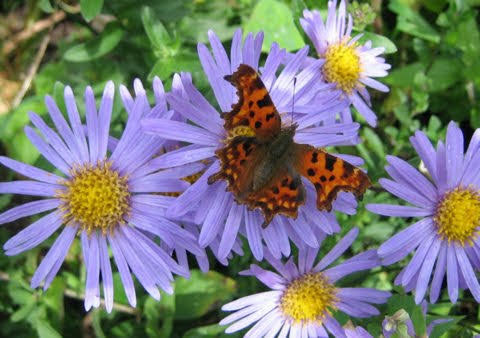
        Comma on michaelmas daisies
        Comma on michaelmas daisies

        Surveys of the wildlife started with Mel’s butterfly records and photos. It appears from Mel's booklet (1991) that Barbara Greenwood, then Hon Recording Officer for Wirral Group of Cheshire Wildlife Trust, carried out a survey of the Park in 1984.  So there was some early conservation interest from what became Wirral Wildlife.


        Small tortoiseshell
        Small tortoiseshell

        Hilary did a further plant species list in 1991 and Mel got Liverpool Botanical Society to visit to do a fuller one. By 1998, we had decided roughly how to manage the main parts of the Park, and Hilary wrote the first formal management plan. From 2002 we started the detailed butterfly records which still continue. Various other records arrived as we got specialists to visit.

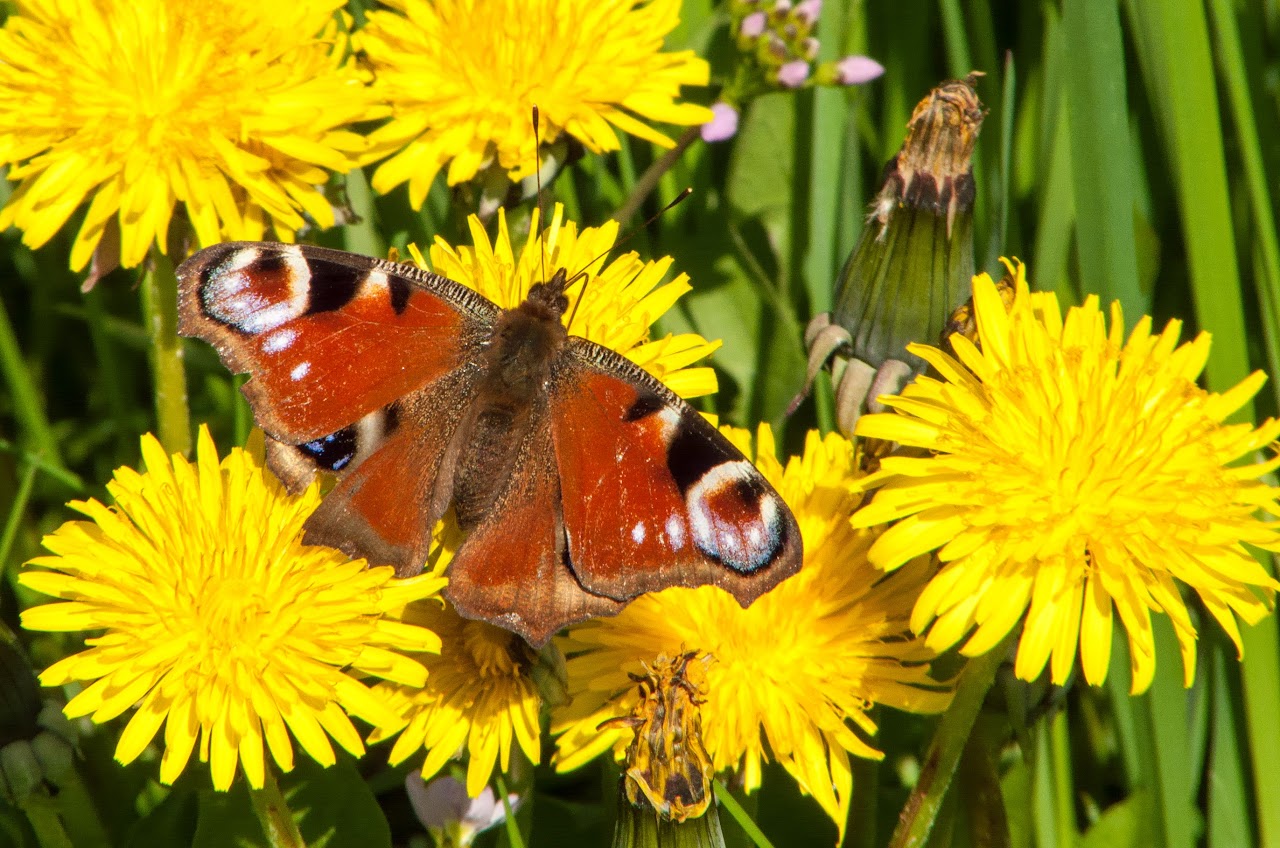
        Peacock on dandelions
        Peacock on dandelions

        Paul Loughnane organised and led the practical workdays, which became monthly from September to April once we had the Park in reasonable order. Paul is also secretary of Wirral Countryside Volunteers (WCV) and the relationship between the two organisations became closer in 2003 when the group relocated their tools to the park. 

        WCV's tree nursery
        WCV's tree nursery

        The WCV have a small tree nursery on site, and the Park benefits from their expert work coppicing, hedge-laying and scything, and training others in these skills.

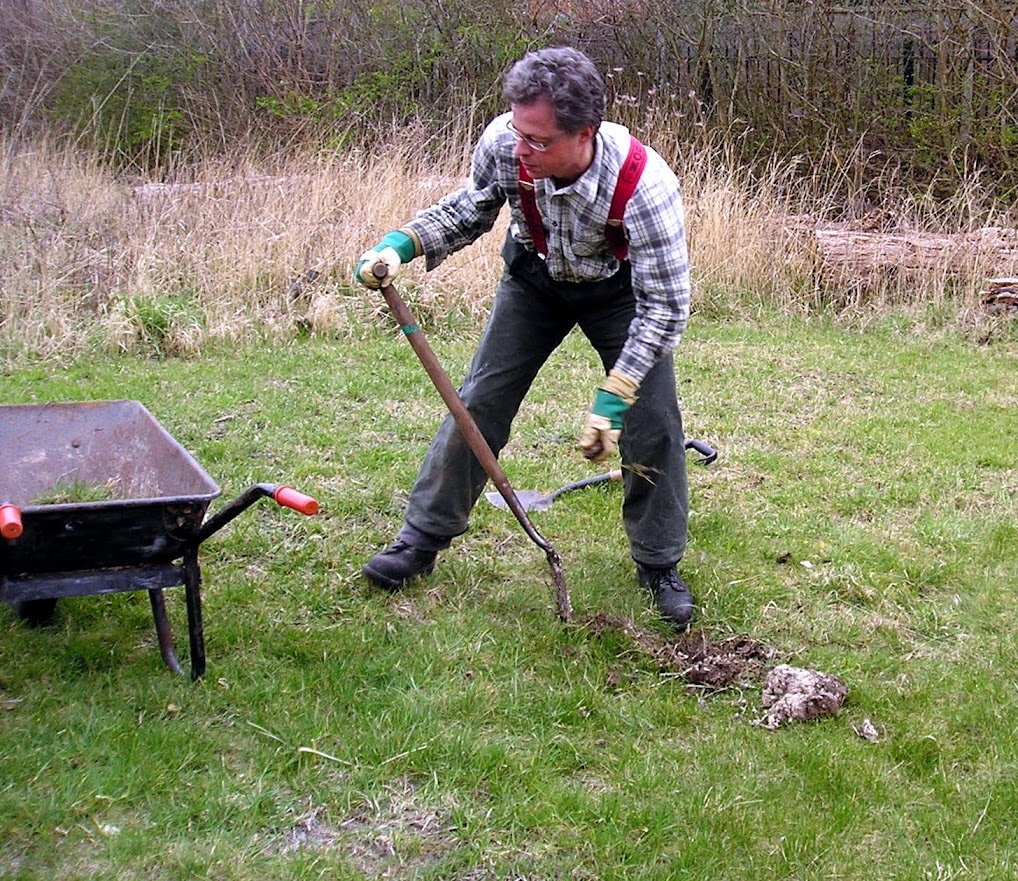
        Paul Loughnane, secretary of Wirral Countryside Volunteers (WCV)
        Paul Loughnane, secretary of Wirral Countryside Volunteers (WCV)

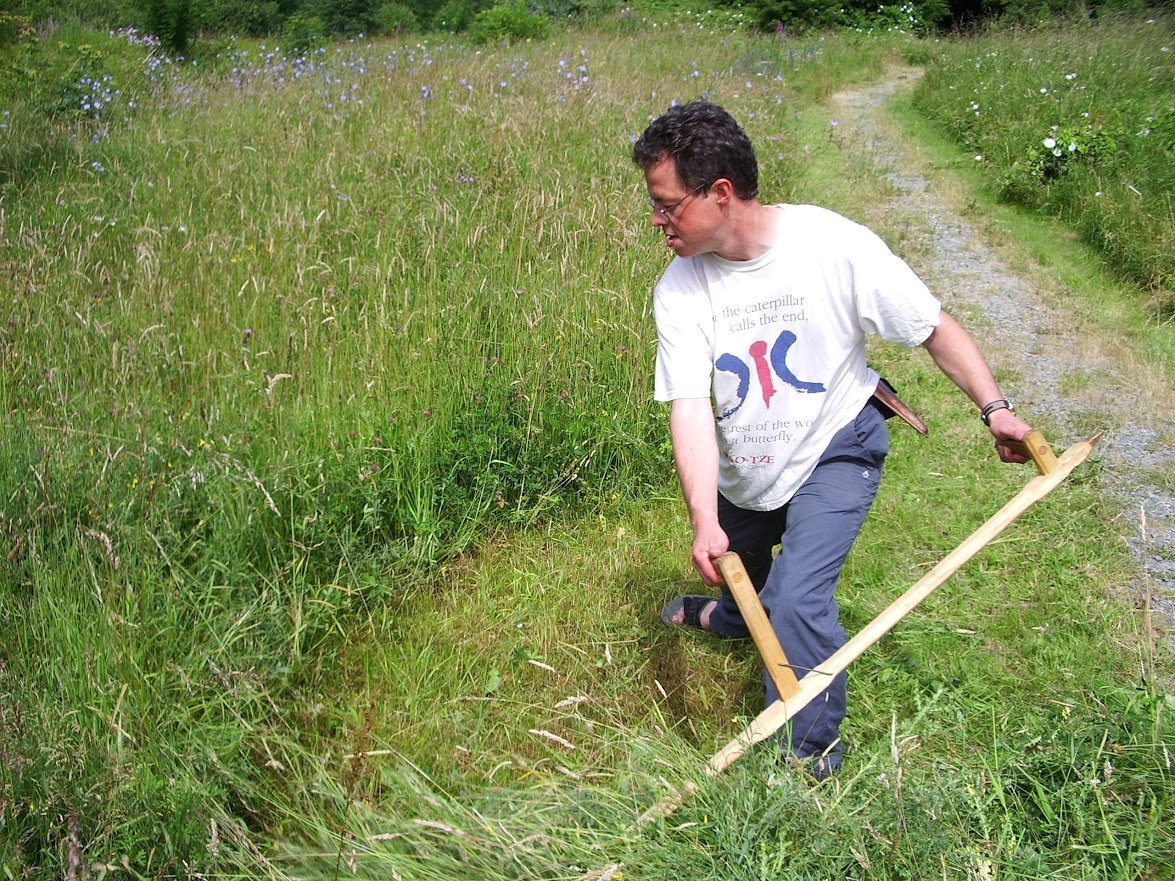
        Paul scything at the Butterfly Park
        Paul scything at the Butterfly Park

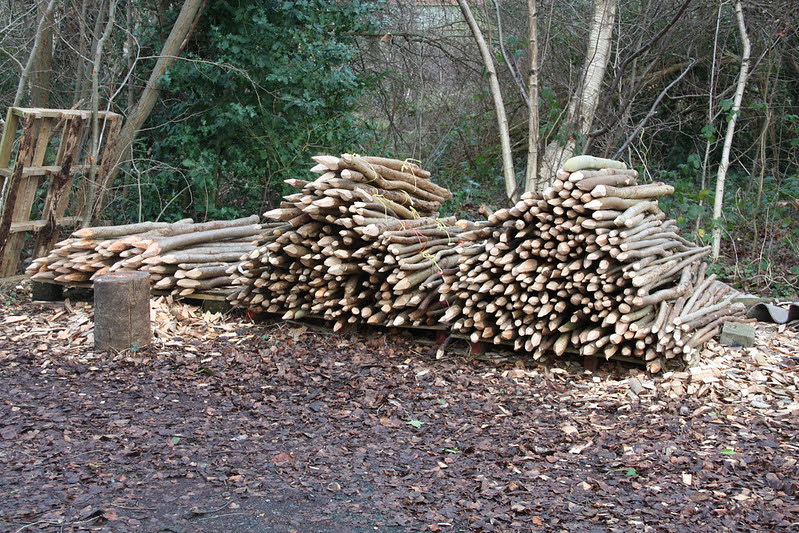
        Coppiced poles
        Coppiced poles

        Other training courses developed e.g. Hilary’s on grasses and later on wildflowers, ones on bees led by Carl Clee and Tony Parker, ones on butterflies joint with Butterfly Conservation.  Since March 2018 apple grafting courses have been held ran by Dave Ellwand of Wirral Tree Wardens followed by apple pressing in October. 

        Apple grafting course run by Wirral Tree Wardens
        Apple grafting course run by Wirral Tree Wardens

        Meadow creation study day
        Meadow creation study day

        All our terrestrial insects have found their own way there, helped by management e.g. planting alder and purging buckthorns, which eventually persuaded visiting brimstones to breed in 2014 (some 12 years after a local Cub group planted the main alder buckthorn row). 

        Brimstone caterpillar
        Brimstone caterpillar

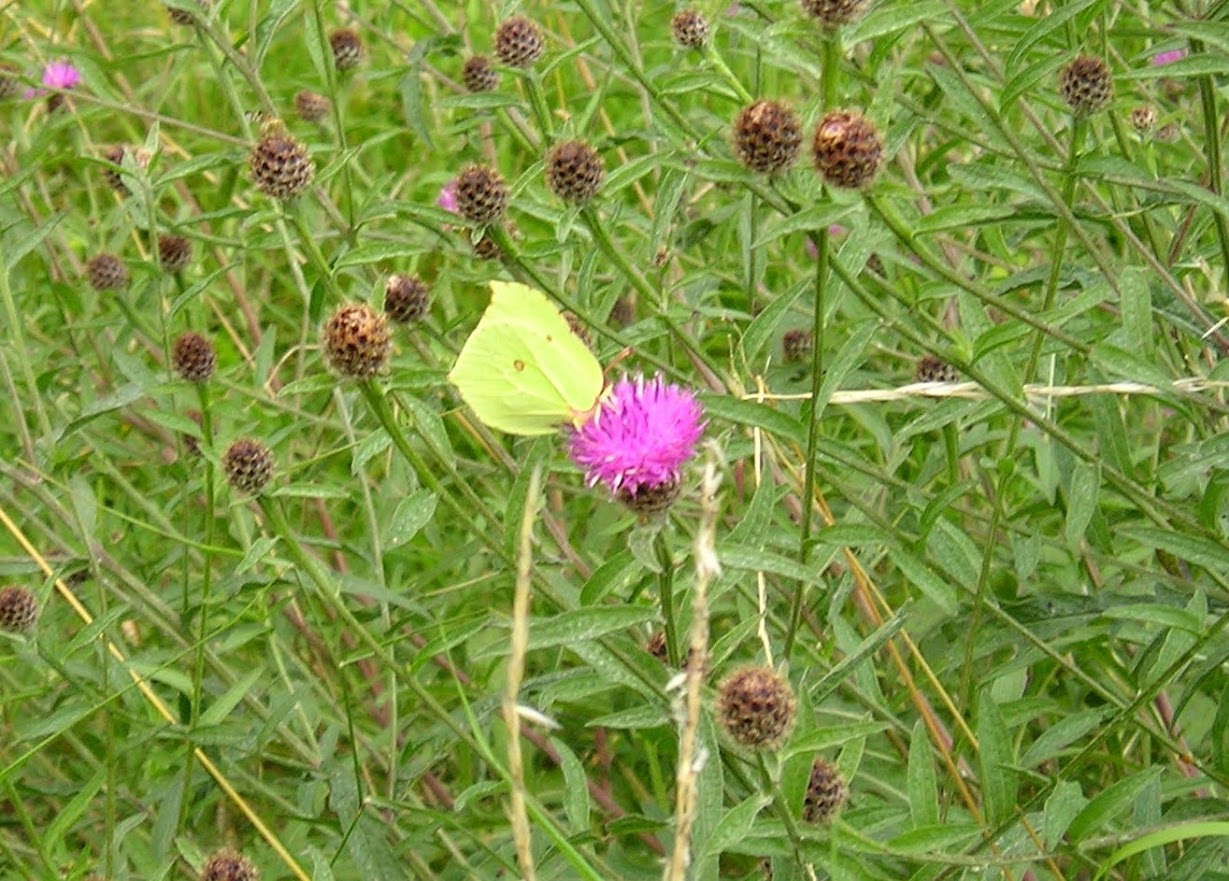
        Brimstone butterfly
        Brimstone butterfly

        Later on, for several years Manchester University brought first year students to the Butterfly Park to see nature conservation in action. The local branch of the Chartered Institute of Ecology and Environmental Management visited twice to see and discuss habitat creation and management for invertebrates. 

        Bumblebee

        Damselfly

        Bird's foot trefoil

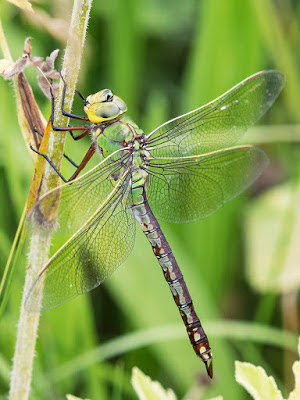
        Dragonfly


        We did not envisage, in the 1990s, that by 2020 insect conservation would have become a major topic, as the extent of insect decline nationally and internationally has become apparent.

        Sunday, 3 May 2020

        Hedgehog Awareness Week


        Thank you to Steph for sharing this video of a hedgehog in her garden in Irby.

        Steph has a wildlife blog on Instagram: www.instagram.com/nessiesnaturenotebook/

        She will be giving a talk about hedgehogs on Instagram Live at 4.30pm on Tuesday 5th May for Hedgehog Awareness Week.

        Steph has also created a video to show how to find out if there are hedgehogs in your garden.


        Wednesday, 22 April 2020

        Spring 2020 at Cleaver Heath


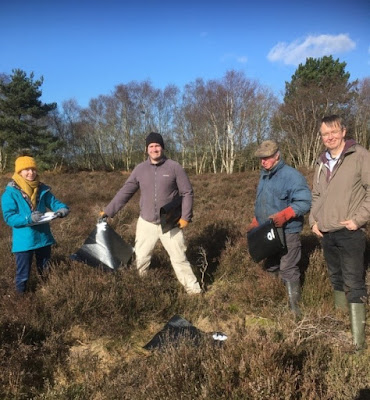
        Installing reptile refugia at Cleaver Heath

        On the last Sunday workday of the season on Cleaver, one of the tasks was to deploy 32 reptile refugia or ACO (Artificial Cover Objects) in preparation for a Common Lizard survey. This was on 1st March before things went crazy. Local reptile expert Tom Doherty-Bone showed us how to set out the refugia in suitable locations. Most of them were within the heather panels in the upper and lower part of the reserve. The others were placed in the relatively bare areas earmarked for our heathland restoration project. We deployed them in a sequence allowing reasonably convenient checking in a subsequent transect. They were all numbered and the GPS coordinates recorded (4 digit OS grid).  Cheshire Wildlife Trust has provided guidance from ARG UK on the best way to carry out surveys including weather conditions and timing. I have been keeping an eye on the ACO as I pass round the reserve and did dedicate one of my day-release ‘exercise’ walks in April, to a proper survey. Although, I have seen nothing, Tom tells me of third party reports of sightings, including the photo of a dead lizard he thinks might have been regurgitated. Ugh. I found lots of ants however. It is a shame that Green Woodpeckers (unlike dogs) are not able to lift the ACOs (squares of roofing felt) as they would have an endless supply of tasty food, without having to queue for it or have it delivered. In fact, there has been constant Green Woodpecker activity within the reserve and in the nearby gardens over the last month.


        Green Woodpecker

        Local resident Frank Burns has kindly supplied me with this excellent photo of a male which he and my wife watched climbing the large Scots Pine one afternoon. I am pretty sure there is at least a pair present as, during one of my early morning Common Bird Census ‘exercise walks’, I watched a female posing on a tree while another called from some distance away.  I am also pleased to report that we have at least one singing linnet present again. This means that all the usual birds that we think breed here are back in town. The first dates when I heard the visitors singing in the reserve this year were:
        Chiffchaff, March 20th
        Blackcap, April 1st
        Willow Warbler, April 15th


        Linnet singing at Cleaver Heath

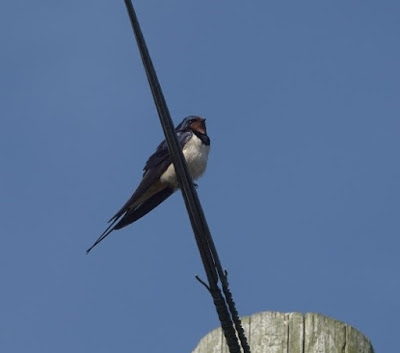
        Whitethroats have been a bit scarce on the reserve in recent years. I have watched one singing on Heswall shore this week but have so far seen none up here. The Oldfield Farm Swallows’ arrival pattern has been slightly different this year. The first arrived on April 6th (a few days early) followed by sporadic sightings since. It might be that some of these are just passing through.  Normally, by mid-April the numbers have grown to around a dozen making use of the farm stables. I haven’t seen any House Martins in Oldfield yet, although I have seen them feasting on insects above Heswall sewage works – always a good place to look for birds.


        Swallow


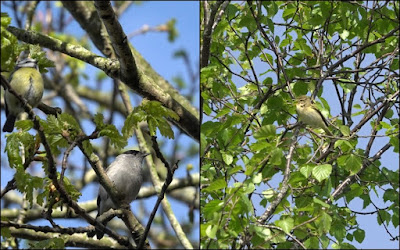
        Sadly, the annual Dawn Chorus Walk through Cleaver and Heswall Dales has had to be cancelled this year, so here are a couple of photos of this year’s singing warblers instead: Blackcap and Willow Warbler. We were shocked one morning to find a deceased Blackcap below our dining room window. It had presumably flown into the glass. I am happy to report that there are still at least two males singing on the reserve following this.


        Blue Tit and Blackcap (left) and Willow Warbler (right)

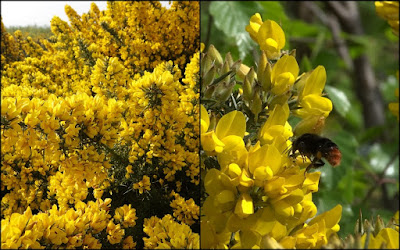
        The European Gorse has been looking stunning this spring. As you can see, there are plenty of insects, including this Red-Tailed Bumble Bee, taking advantage of the blossom. 


        European Gorse with Red-Tailed Bumble Bee

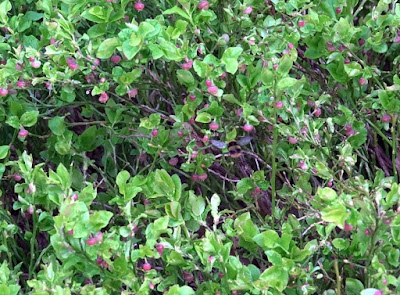
        Another plant doing really well is Bilberry. As previously noted, this plant grows widely in the main Heswall Dales but is restricted to a small, but expanding, panel within our managed scrub area. It is currently developing flowers and is also being heavily used by insects.


        Bilberry

        On the subject of insects, while conducting one of our 3-yearly heathland condition surveys last September, we came across this lovely green and yellow caterpillar. I sent the photo to our county moth recorder, Steve Holmes, who confirmed that it was the larva of a Beautiful Yellow Underwing moth and, as a relatively rare sighting, has been included, with photo, in his annual report.


        Beautiful Yellow Underwing moth caterpillar

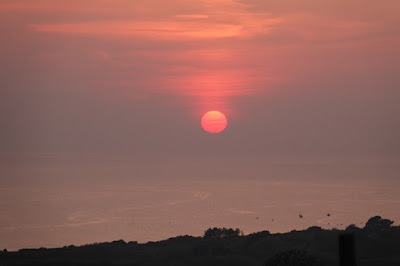
        As a parting shot, I leave you with a recent sunset photo - now well over Liverpool Bay. Compare this with the Clwyd Hills photo of the Winter Newsletter.


        Sunset over Liverpool Bay

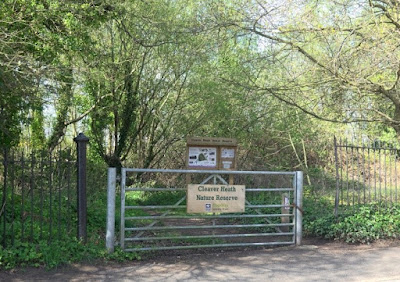
        You may also notice that the traditional reserve entrance photo has been seasonally adjusted.


        Cleaver Heath entrance


        Alan Irving
        Volunteer Reserve Warden for CWT
        Cleaver Heath
        April 2020

        Wednesday, 8 April 2020

        Garden Mammals on My Patch


        RECORD's theme for this weeks My Patch campaign is garden mammals.


        Hedgehog


        MY PATCH Week 3 - Mammal Theme
        These are often the most elusive garden visitors and we usually only know they're around because we notice signs, like poo or footprints. There are 108 UK species of mammal, from field voles (most numerous with ~60 million) to the Greater Mouse Eared Bat (only 1 individual!).
        1 in 5 mammal species face a high risk of extinction in the UK and some have declined by up to 66% in the last 20 years! Recording garden mammals can help scientists understand what's happening to their populations which informs decisions on how to protect them.
        Owl Pellets: has anyone ever tried dissecting owl pellets? You can find the answers to some of the most frequently asked questions about owl pellets here.
        Mammal poo - not everyone's favourite topic, but its often the main evidence that mammals have been visiting a garden. If you know any young mammal detectives with a particular interest, we have a downloadable activity here perfect for them. They might also enjoy learning the basics of mammal detecting here.

        QUIZ of the WEEK: Mammals
        Sadly no prizes but email info@record-lrc.co.uk with your answers!
        1) How many mammal species do we hold Cheshire records for from the last 10 years?
        2) What is our most commonly recorded mammal in the last 10 years?
        3) What was our most commonly recorded bat species in the last 10 years?
        4) Can you name these mammal footprints?

        Mammal footprints

        5) Can you name these mammal faeces?
        Mammal faeces


        A reminder of how to join in My Patch

        Upload your garden wildlife sightings here OR email info@record-lrc.co.uk if you'd prefer

        You can find resources and useful links on this page of our website.
        Where you can, we'd love you to share our posts, news etc. about the campaign with your contacts and encourage as many people as possible to get involved. You can also post your own sightings with the hashtag #MyPatch to help spread the word and share with others what you've been up to.

        Wednesday, 1 April 2020

        Birds on My Patch


        For just over a week RECORD have been encouraging people to connect with nature at home, through recording garden wildlife as part of the My Patch campaign. The theme for last week was 'Becoming a Wildlife Recorder' and this week's theme is.....BIRDS!


        Female House Sparrow
        Female House Sparrow, Passer domesticus.
        Did you know... a group of sparrows is called a 'Quarrel'.
        We think it's the perfect name for these noisy garden visitors!

        Observations

        So far, we have over 100 Garden Wildlife observations on our iNaturalist page, which is brilliant! Thank you to everyone who's joined in and please keep your records coming in.

        Add your Garden Wildlife Sightings here:
        https://www.inaturalist.org/projects/my-patch-from-record-lrc


        Online Resources

        We're trying to make it easier for those people who might not regularly record wildlife to get involved (as well, of course, as those of you who are already pros!). This includes young wildlife enthusiasts and their families. Take a look at our online resources page for some helpful guides, tips and activities and feel free to share these with anyone you think might be interested. Perhaps you know someone who is looking for homeschooling ideas or similar?

        INCLUDING:

        Garden Explorers Collection - activities for young wildlife recorders great for ages 5+

        What makes up a Wildlife Record? - learn about what information is needed to make your records as useful as possible

        Out and about recording sheet - useful to note down what you've seen whilst out in the garden, all ages

        AND MORE...


        This week is BIRDS. We'll be adding more bird-related resources and links and would love you all to get involved by telling us about the birds you see in your garden.


        QUIZ of the week... Bird Records!

        Sadly there are no prizes, but we thought this might be a fun addition to our weekly email, reply to info@record-lrc.co.uk with your answers.

        1) How many Cheshire bird records in total do we hold from the last 10 years?

        2) Which bird species do we hold the most records for in Cheshire (in the last 10 years)?

        3) How many different species of bird do we hold Cheshire records of (within the last 10 years, including sub-species)?


        A reminder of how to join in My Patch

        Upload your garden wildlife sightings here: https://www.inaturalist.org/projects/my-patch-from-record-lrc

        You can find resources and useful links on this page of our website.

        Follow us on facebook or twitter for the latest updates.


        Where you can, we'd love you to share our posts, news etc. about the campaign with your contacts and encourage as many people as possible to get involved. You can also post your own sightings with the hashtag #MyPatch to help spread the word and share with others what you've been up to.

        Monday, 30 March 2020

        RECORD My Patch


        Last week RECORD launched a new campaign called ‘My Patch’ and would love you to join in…


        We’re challenging you to keep enjoying nature, whilst staying at home. Explore your garden and appreciate the amazing diversity of wildlife found there. We’re aiming to gain an insight into the species found across Cheshire’s garden habitats and would love you to join us through recording the wildlife you see in your patch.


        Throughout the next few weeks we’ll show you how easy it is for ANYONE to contribute to conservation through biological recording at home. Gardens provide crucial habitat for many of our, often threatened, UK species. Yet these mini-ecosystems right on our doorstep are often ignored when it comes to wildlife recording. The more we understand about what lives there, the better we can help and protect it.

        Each week, we’ll share tips, guides, resources and activities for all ages to get involved with. This is all about working together (whilst keeping apart) to get as many good quality biological records as we can whilst having fun and enjoying the outdoors.

        Please remember to follow government advice at all times whilst recording wildlife.

        Follow us on social media keep an eye on your emails to stay up to date.


        How Do We Join In?

        Upload your garden wildlife records to our new iNaturalist Page

        We'll be uploading resources and useful links to this page on our website.

        Where you can, we'd love you to share our posts, news etc. about the campaign with your contacts and encourage as many people as possible to get involved. You can also post your own sightings with the hashtag #MyPatch to help spread the word and share with others what you've been up to.

        Wednesday, 19 February 2020

        Winter 2019-20 at Cleaver Heath


        Flooded paths at Cleaver Heath


        So far, at mid-February, there has been no ‘Beast-from-the-East’. The frosts have been few, no snow but plenty of wind and rain, as the pictures above demonstrate.

        We have now used up the remaining pile of approved stone to reinforce some more of the main paths. The weather on the monthly work party days has been kind, allowing us to complete our planned birch and gorse control. The birch and selected European gorse within the main heath panels was cut and treated. Our volunteers helped us coppice the taller birch within the manged scrub area and we made a start on further coppicing of European gorse in the lower part of the reserve. The gorse strategy is to prevent further incursion, improve the age structure and hence provide more valuable wildlife cover. 


        Birds at Cleaver Heath

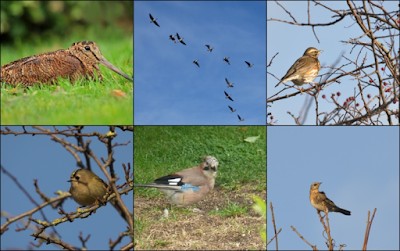
        Winter is generally thought of as a quiet time on a nature reserve like Cleaver Heath but here is a list of 20 bird species seen at Cleaver in the last few weeks: Pink-footed Goose, Woodcock, Herring Gull, Woodpigeon, Great Spotted Woodpecker, Jay, Magpie, Carrion Crow, Raven, Coal Tit, Blue Tit, Great Tit, Wren, Blackbird, Fieldfare, Redwing, Robin, Dunnock, Chaffinch, Goldcrest. 


        Some, like the Woodcock (top left in the above photo) which is normally hiding in the heather and the Pink-footed Geese flying overhead, are obviously winter visitors. So too are Redwing (top right) and Fieldfare (lower right). Birds such as the Jay (centre lower) and the tiny Goldcrest are here all year round. However the numbers of some resident species including Blackbird and Robin are greatly swollen by visitors from continental Europe. I am told this will still happen after January 2021.

        I have again started to record bird sightings more regularly outside of formal surveying activities. The BTO (British Trust for Ornithology) has been promoting the value of ‘complete lists’. In many ways, the information from these is just as, if not more, useful than random casual records of ‘interesting’ sightings. The online resource BirdTrack (www.bto.org/birdtrack) is very simple to use. When you are out for a walk, perhaps along a favourite route, you keep track of how many goldfinches, blackbirds, curlew etc. you have seen or heard. You can enter them on a smartphone app as you go or, as I do, keep them in a handy notebook and enter them back at home. It can be strangely satisfying if you are of that sort of mind and, possibly, a source of intense irritation for your walking companion. I don’t remember hearing as many birds singing in January and February as I have in walks this year. They are as confused as us about the weather patterns.

        Cramp-Ball Fungus Weevil

        Talking of surveys, Tony Parker of the Liverpool World Museum and rECOrd (http://www.record-lrc.co.uk/) has kindly helped me assemble a list of all the sightings which he and his fellow naturalists accumulated during four field visits to Cleaver this last summer. These are all now publically available as part of the huge wildlife and plant rECOrd database covering Cheshire and its surroundings. The groups made 474 confirmed sightings including over a hundred invertebrate species, 31 birds, 64 plants, 3 mammals as well a frog and 4 sightings of Common Lizard. I had no idea just how many species of hoverfly, wasps and bees there were! The star was probably the ‘first for Cheshire’ finding of this Cramp-Ball Fungus Weevil (Platyrhinus resinosus © Leanna Dixon).


        Most of the sightings were well beyond my abilities to identify. However, there were two common species reported which do not appear in my own Cleaver records: a Skylark and a Rabbit!

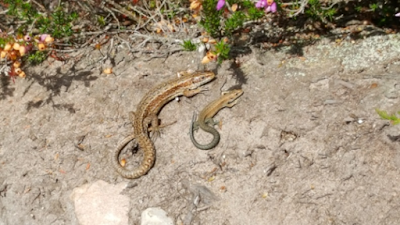
        Common lizard

        I am looking forward to re-starting the annual butterfly transect surveys at the end of March/beginning of April. Another survey which we hope to start in the spring is for Common Lizard. We have taken advice on how best to do this and, on our March work day, we will be deploying a new set of ‘refugia’ in an orderly manner within the reserve. You may have previously seen small sheets of corrugated iron lying about in Cleaver. These provide cover and indeed basking areas on sunny days.  The lizards shown here were actually photographed in the Dales where the sandstone outcrops provide many basking opportunities. In the planned heathland restoration area in the SW corner of the reserve, we hope to provide bare ground patches on the south facing slope and ‘hibernacula’ for winter refuge.


        FAQs - Let me try to answer a couple of questions I often get asked:

        Q1: Why is heathland management done only in the autumn and winter months?

        A1: Cleaver is of course a SSSI and so its management is regulated by Natural England (NE). NE specifies when we can work in habitats like heathland and woodland. The timing is based on the notional bird-nesting season.  But surely birds nest in trees so you should be able to carry on working in heather and gorse? No, a lot of the birds using Cleaver nest very close to the ground in the cover provided by the heathland. Warblers, for example, are most obvious while singing in the trees but are actually nesting in the gorse and bramble cover. 

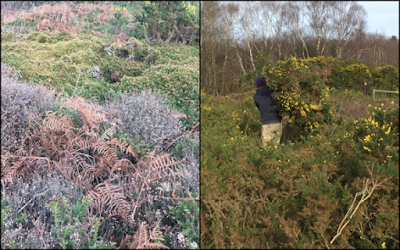
        Western and European Gorse at Cleaver Heath

        Q2: How can you tell the difference between Western and European Gorse?

        A2: The most obvious difference is that the Western Gorse is very compact and rarely grows tall enough to shade the heather. The left photo above shows a carpet of Western with a stand of (flowering) European in its top right. The willing volunteer on the right photo is carrying off some cut European Gorse giving the shaded heather a better chance. On closer inspection, the stalk of the Western is quite densely covered with prickles whereas the barer European stalks can been seen quite clearly.  Most of the Western gorse flowers at the end of summer rather than the beginning. 


        Heathland Management


        We are working with the Friends of Heswall Dales to run a Wirral Workshop on Lowland Heath Management on February 29. With the cooperation of delegates from Wirral Borough Council, Cheshire Wildlife Trust, the National Trust and Natural England, we are exploring opportunities for greater cooperation in the management of Wirral heathland.  On April 21 there will be a Cheshire Lowland Heath Forum hosted by Heswall Dales. These Forums are an excellent opportunity for conservation people to see each other’s reserves and share good ideas as well have a joint hand-wringing session about how hard it all is. When cattle used Wirral heathland for grazing, the conservation of this resource was ensured. Now, if we wish to keep this habitat, we have to intervene directly. We need volunteers to do the work of the cattle. 


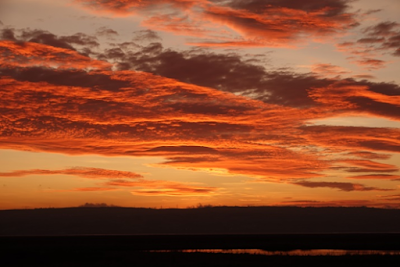
        Sunset at Cleaver Heath


        Colleagues at CWT are in the process of updating our reserve websites, including that for Cleaver. Among the attractions listed, is that Cleaver is a ‘perfect reserve for an evening stroll at sunset’.  Indeed, this winter has seen a regular sequence of spectacular sunsets as this recent photo demonstrates.


        Cleaver Heath entrance


        Alan Irving
        Volunteer Reserve Warden for CWT
        Cleaver Heath

        February 2020