Showing posts with label trees. Show all posts

Sunday, 26 November 2023

Tree Pruning Workshop at Dibbinsdale


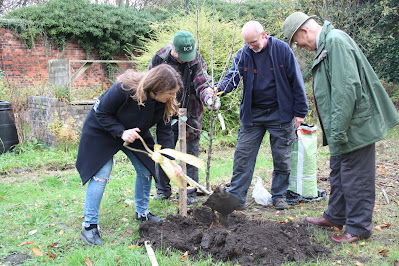
Looking carefully before pruning the Bramley tree planted by Alison McGovern MP and Stephen Ross in 2021.
Looking carefully before pruning the Bramley tree
planted by Alison McGovern MP and Stephen Ross in 2021.

We had an excellent training day on pruning fruit trees on 25th November, led by Katie Tonge of Heathfield Orchards. Katie talked us through the things to think about, then we went out for practical demonstrations and to try our own hand, in the walled garden at Dibbinsdale.


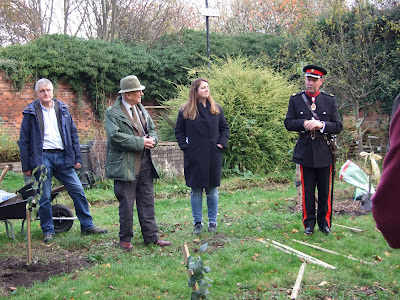
The tree before pruning (Katie Tonge in the baseball cap).

The tree before pruning (Katie Tonge in the baseball cap).


In the process the six apple trees we planted for Wirral Wildlife's 50th birthday in 2021 were given expert pruning to train their shape as they mature. Several members of the Friends of Dibbinsdale were left with guidance on what to do with the plum trees, come spring, and how to set about some of the older trees that have been neglected for the last few years through the pandemic.

"Yes, I really do mean take that much off"

If you have or are thinking about starting a community orchard, we can recommend booking a workshop with Katie to learn how to prune them to get a crop and to benefit wildlife. Thank you to Wirral Borough Council for use of the walled garden, Ste Smith, the Ranger, and the Friends of Dibbinsdale for hosting us.


Pete does the next cut.

Hilary Ash

Tuesday, 21 February 2023

Spring/Summer 2023 Quiz


See if you can crack the cryptic clues in our tree and shrub themed quiz


The Spring/ Summer 2023 Prize Quiz consists of 50 cryptic clues to the names of trees and shrubs. All the plants may be found in the UK, although not all are native.

Price per entry: £1
All money raised by selling quiz sheets will go to Wirral Wildlife.

A £10 gift voucher will be awarded to the person with the best overall score.

The closing date is 31st July 2023.

Download the quiz and instructions here

Saturday, 3 December 2022

A Tree-mendous Celebration of Cheshire Wildlife Trust's 60th Birthday


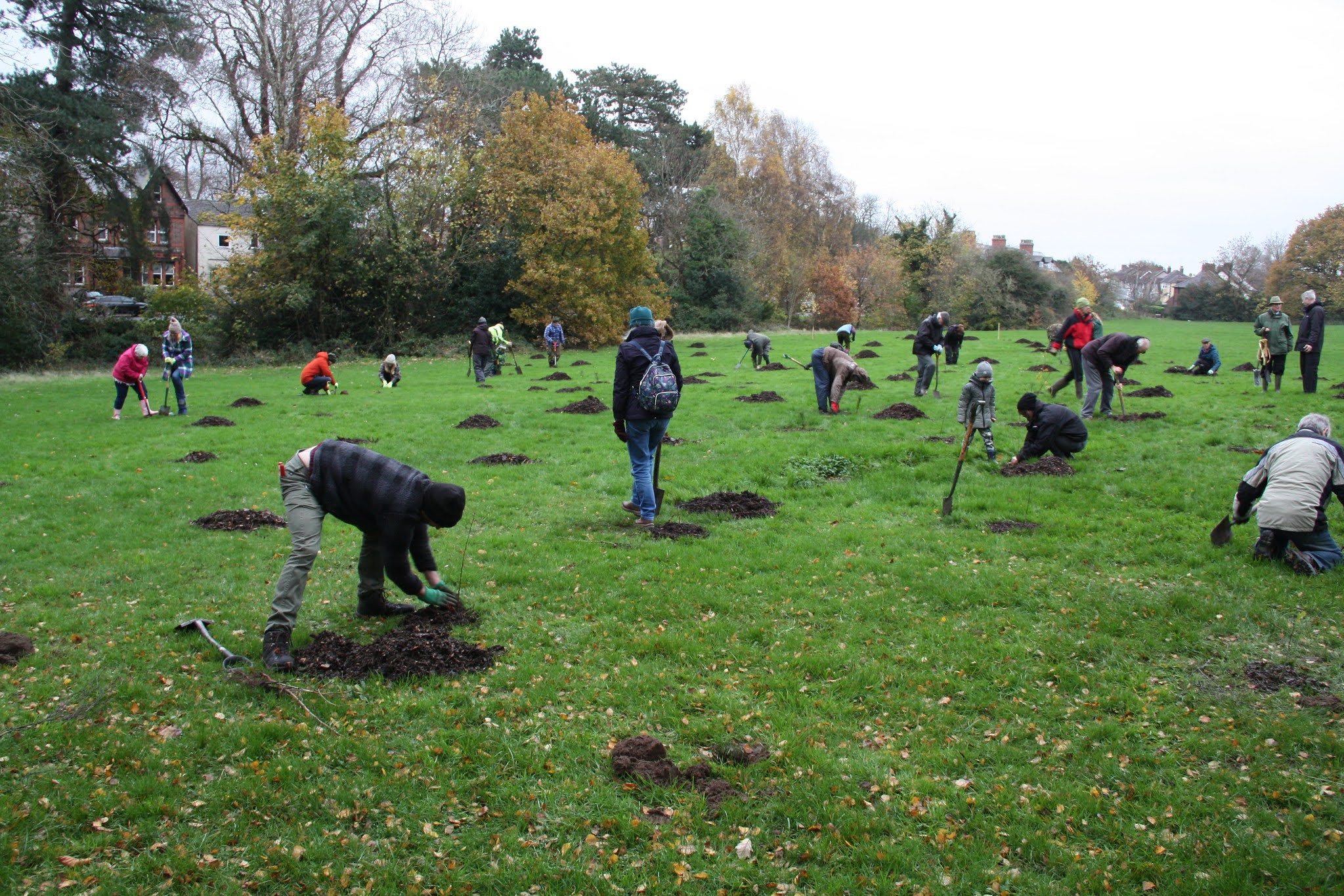
Tree planting at Brotherton Park, Dibbinsdale, to celebrate Cheshire Wildlife Trust's 60th birthday


One hundred and eighty tree whips planted in 22 minutes! Not sure if we would make the Guinness Book of Records but it is impressive.

On Saturday 26th November Wirral Wildlife celebrated the 60th birthday of Cheshire Wildlife Trust by organising a tree planting at Brotherton Park, Dibbinsdale. These trees will buffer Brotherton Park against pollution and noise from the busy Spital Road. They are native species and when grown will absorb carbon dioxide and pollutants and support wildlife.

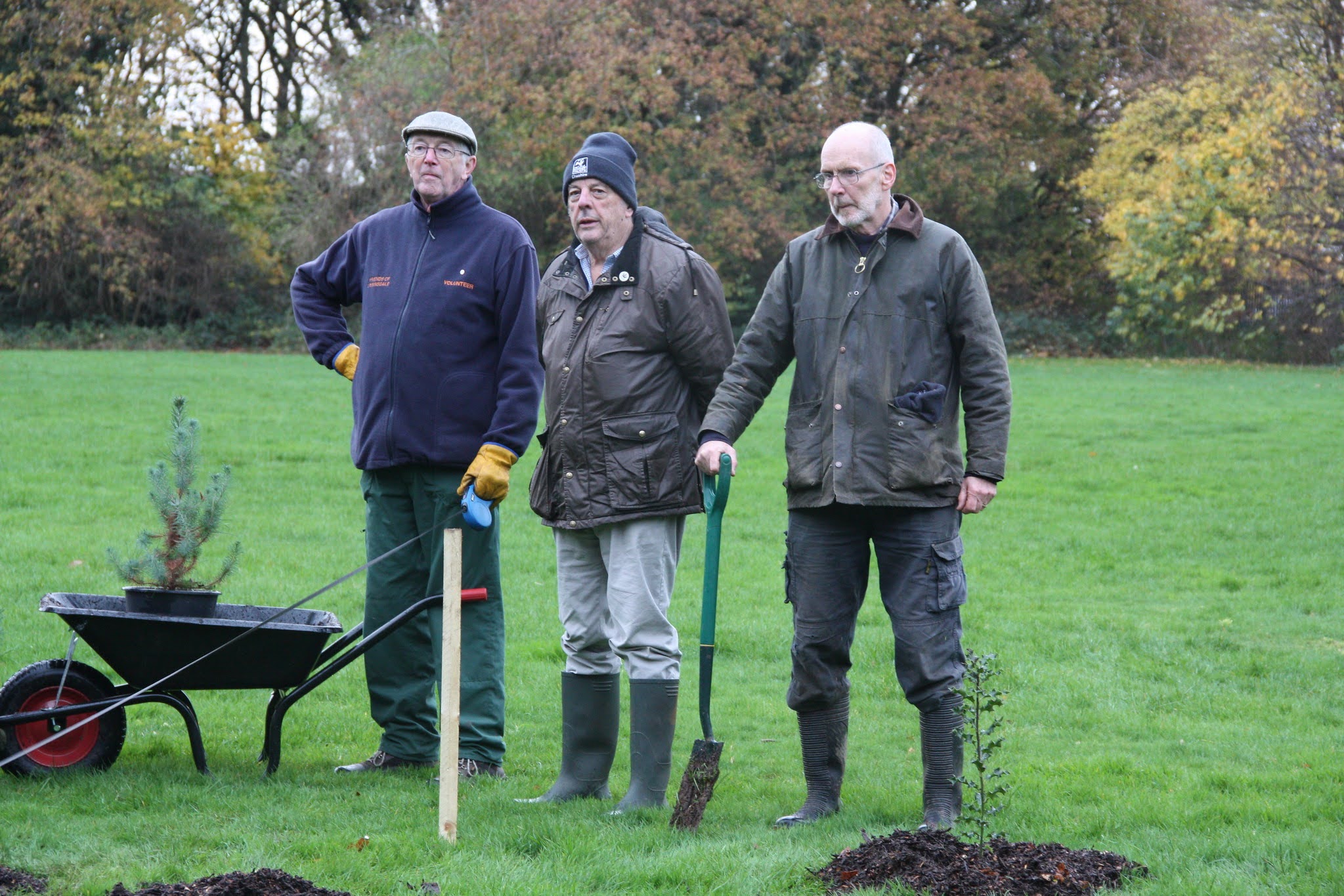
Ron Warne (left), Howard Gibson (centre) and Tim Gannicliffe (right)


Around 40 people turned up to help on the day but much meticulous planning had gone on beforehand, by Hilary Ash and Paul Loughnane, who liaised with Dr Nicola Wallbank, Tree Strategy Landscape Manager for Wirral Council. Thanks also to Ron Warne and the Friends of Dibbinsdale, and the Wirral Countryside Volunteers.


Cheshire Wildlife Trust Vice-Chair Charles Neame about to cut the cake
Cheshire Wildlife Trust Vice-Chair, Charles Neame, about to cut the cake


Afterwards hot drinks and cake were enjoyed and Charles Neame, Vice-Chair of Cheshire Wildlife Trust, cut a celebration cake with a specially polished billhook. Thanks are due to the helpers baking cakes, boiling the kettles and washing up afterwards!


A close up of the birthday cake and the ceremonial billhook

Of course that is not the end of it. The trees will need weeding and mulching for the next two summers. We will be asking for volunteer help to do so. Ron and the Friends of Dibbinsdale will keep an eye on them and let us know when care is needed. If we get another drought, then Nicola will organise watering.


Stephen Ross, Chairman of Wirral Wildlife (left), and Charles Neame, vice-Chair of Cheshire Wildlife Trust (right)
Stephen Ross, Chairman of Wirral Wildlife (left),
and Charles Neame, Vice-Chair of Cheshire Wildlife Trust (right)
 

Finally a message from our Chairman:


I cannot thank you all enough for making the 60th Anniversary of Cheshire Wildlife Trust such a success.

Never have I seen so many trees planted so rapidly by so many keen enthusiastic volunteers. It was pleasurable to converse with so many of you thereafter while the excellent cakes and tea were consumed with such vigour.

It could not have happened without so much planning and care, supported by our cake makers and caterers. To Ron and Friend's of Dibbinsdale, together with Wirral Countryside Volunteers who make such a profound contribution to wildlife conservation across Wirral, particular appreciation.

Once again, many thanks,

Stephen Ross


All photos by Richard Ash.


Monday, 29 August 2022

Wirral's Wild 50: September Worksheets


Here are the Wirral's Wild 50 activity sheets for September. Take a look at the autumn leaves, cones, berries, nuts and fruits.


September activities and resources

Things to do in September

● Learn to identify trees from their leaves

● Find out why trees have cones, berries, nuts and fruits like apples

● Find a spider’s web and learn about spider silk

● Discover how bats catch their prey

● Find an acorn and plant it in a pot of soil outdoors


Look for seeds on an autumn walk and made a bat bookmark


Resources

1. nuts & berries

2. berry spotter

3. pine cone creatures

4. video - primary school level - spiders

5. craft: nature mandala

6. make a spinning dial to identify leaves


Friday, 27 May 2022

Wirral's Wild 50: June Worksheets


Here are June's Wirral's Wild 50 activity sheets. This month, become a minibeast detective and take a really good look at a tree.


June activities and resources


Things to do in June

Look for dragonflies, ducklings and lizards
Learn about reptiles and how they are different to amphibians
Visit a meadow and look for invertebrates (minibeasts)
Learn how to identify trees by their leaves
Investigate a tree in or near your school


My street tree and a leaf ladder puzzle

Thursday, 2 December 2021

Wirral's Wild 50: December Worksheets


Here are this month's Wirral's Wild 50 activity sheets. In December, make your own bird feeder and learn how to identify trees in winter by looking at their twigs.


Download full size instructions and watch a video to help you make the bird feeder:


Things to do in December

Think about how plants and animals survive the winter

Learn how to identify trees when they have no leaves

Make a bird feeder

Look for mistletoe and find out how it survives without roots

Work out how old a tree is


Saturday, 27 November 2021

The High Sheriff, The MP and The Trees


Alison McGovern MP planting a tree


Tree Planting to celebrate Wirral Wildlife’s 50th Birthday


Wirral Wildlife were delighted to celebrate their 50th Anniversary on a fine autumnal day on 20th November at Brotherton Park, part of Dibbinsdale Local Nature Reserve. The High Sheriff of Merseyside, Nigel Lanceley, and Alison McGovern MP kindly attended our celebration.


The High Sheriff of Merseyside, Nigel Lanceley, gives a speech.


We were heartened by the presence of the Chairman and Vice Chairman of Cheshire Wildlife Trust, so many friends from related organisations and long serving volunteers spanning all the activities in which we engage. The chairman outlined the history of the group and gave thanks for the efforts made by the founders and all current supporters. The High Sheriff stressed how prestigious is the award of the QAVS. The key issue being the way we engage with disadvantaged groups in an inclusive way and seek to assist the cause of wildlife generally.


A female black poplar was planted by the High Sheriff in Brotherton Park. It was he who had processed our nomination for the QAVS, so it was a particular pleasure that he was able to attend. Thereafter we planted six varieties of Cheshire apple trees in the Walled Garden (see details below).


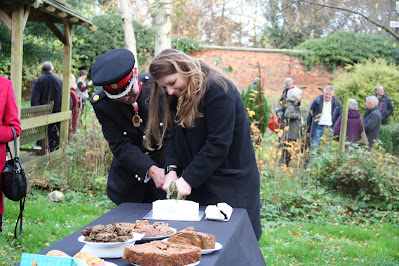
Cutting the cake with a billhook!

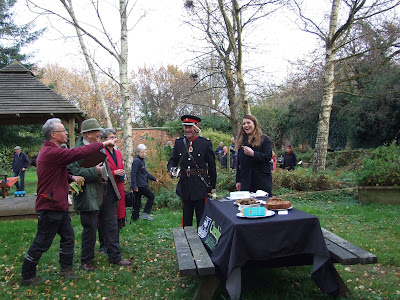
Then the High Sheriff and Alison McGovern MP cut the anniversary cake with a polished bill hook, before distributing slices on the end of his sword. Tea and cake were enjoyed by all our guests.


Handing out slices of cake on the end of the High Sheriff's sword.

Thank you to everyone who attended to make the occasion such a special celebration. 


This is a list of the trees we planted and who helped:


  • Black Poplar: (female tree, clone 32, raised by Chester Zoo) planted next to the two male trees planted in Brotherton Park for our 40th birthday). Planted by High Sheriff, Nigel Lanceley.

Bella Smallthwaite planting a traditional apple tree variety

  • Six Apple trees were planted in the Walled Garden.

1. Bramley. Cooker. (Donated by Friends of Dibbinsdale to mark Wirral Wildlife’s 50th birthday). Supplied by Morrey’s Nursery, Kelsall.

The Friends told us “Happy Birthday to Wirral Wildlife. We look forward to continue working cooperatively with you in future years”. 

Planted by Alison McGovern MP, Stephen Ross (Chair of Wirral Wildlife), with help from Steve Yandell (chair, Wirral Countryside Volunteers) and Tim Gannicliffe (WW recorder).


2. Millicent Barnes. Dessert.

Planted by Bella Smallthwaite helped by Ron Warne (Friends of Dibbinsdale and recorder) and Paul Loughnane (reserves manager, NFBP and Thornton Wood).


3. Eccleston Pippin. Dual purpose.

Planted by representatives of the Wirral Wildlife recording team: Mike Inger, Sheila Ross, Elina Doss (who also works for Record local records centre).


4. Rival. Dessert.

Planted by David Parker (DECG), Tom McCullough (warden Foxes Wood and Tom’s Paddock) and Steve Lyus (chair, New Ferry Butterfly Park).


5. Bee Bench. Dual purpose.

Planted by young volunteers Mairead Corr and Maddy Green, helped by Pete Miller (chair, Friends of Dibbinsdale).


6. Ashmead’s Kernel. Dessert.

Planted by Elaine Mills in memory of Frank Cottrell (former chairman), helped by Lesley Brockbank (Wirral & Cheshire Badger Group) and Eric Greenwood (retired from Liverpool World Museum and botanical expert).


Trees 2-6 were raised and supplied by Katie Tonge (Heathfield Orchard, Chester). All are varieties traditionally grown in Cheshire.


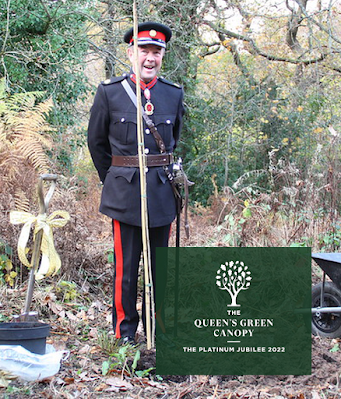
The High Sheriff of Merseyside with the planted black poplar, a contribution to the Queen's Green Canopy project.
The High Sheriff of Merseyside with the planted black poplar,
a contribution to the Queen's Green Canopy project.

Dr Hilary Ash registered our black poplar and apples as a contribution to the Queen’s Green Canopy project (QGC). This is a tree planting initiative created to mark Her Majesty’s Platinum Jubilee in 2022 which invites people from across the United Kingdom to “Plant a Tree for the Jubilee”.


We received this acknowledgement.

 “We are delighted to confirm your Jubilee tree planting has been uploaded to The Queen’s Green Canopy (QGC) map. Thank you for your contribution to this special initiative, which we hope will inspire countless others. With your support we are creating a greener UK and a legacy in honour of The Queen’s leadership of the nation, which will benefit future generations.

Yours sincerely, The Queen’s Green Canopy”


The High Sheriff also wrote to us.

‘’ I would like to thank you all for the warm welcome and hospitality on Saturday. I was honoured to plant the tree and contribute to the ceremony. I would like to congratulate you again for all the great work that you carry out in Wirral. As residents we all benefit from your commitment. Please pass on my regards and best wishes to the team and if I can help again please do not hesitate to contact me. I think it is a great compliment to the group that you have reached the ripe old age of fifty. This means that you are still very important in our communities and as I said you are vital for the next 50 years.

Thank you again and best wishes,

Nigel’’


There is an album of photographs of the event taken by Richard Ash: 

https://www.flickr.com/photos/30661871@N03/albums/72157720161168189


Tuesday, 23 June 2020

Ash Dieback


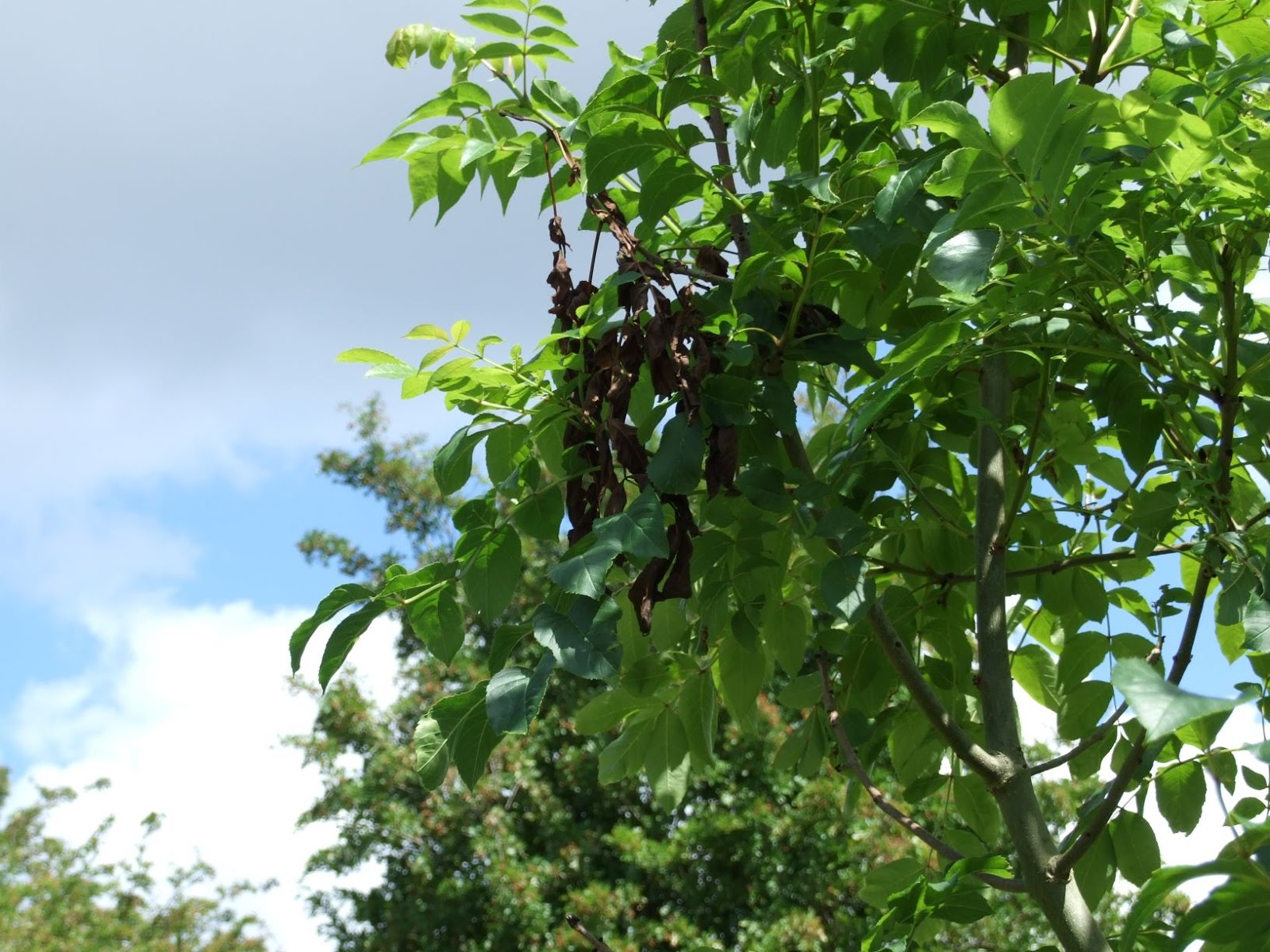
Ash tree showing signs of ash dieback in the blackened leaves

Last July we alerted you to the presence of Ash Dieback. It is still with us this year and you can recognise it by the wilting and blackened leaves on ash trees.

Ash tree with dead shoots

The photographs above were taken at New Ferry Butterfly Park on 20th June.

Please look out for it.

Here is a poster reminding you what to look out for and how to report it.


Homeowners can get guidance at

Saturday, 22 February 2020

Nature's Solutions To The Climate Emergency


Cheshire Wildlife Trust's February newsletter is about the need to protect nature and wild ecosystems in order to tackle the climate crisis.

Golden plover


The climate crisis regularly makes the headlines, and rightly so. But there’s another crisis - the massive ongoing loss of nature.

In the UK, 41% of our species have declined since 1970 and one in seven species are now threatened with extinction. The climate emergency has terrible ramifications for wildlife, but the loss of wildlife and wild places also makes the climate crisis worse.

Healthy wild places can store huge amounts of carbon, taking it out of the atmosphere and locking it away in soils and plant matter, sometimes for thousands of years. But many of these wild places are damaged, fragmented and threatened with further destruction. As these habitats are lost, carbon is released.

To tackle the climate emergency, we need to protect and restore our wild places.

A recent estimate suggests that around one third of the greenhouse gas reduction required between now and 2030 can be provided by carbon drawdown through Natural Climate Solutions. Natural Climate Solutions, roughly speaking, mean ecological restoration. Let’s take a look as some of them:

Green carbon
  • Tree planting
When you think about natural solutions to climate change, tree planting is probably the first thing that springs to mind. Trees absorb carbon as they grow, storing it in their trunks, boughs, roots and in the soil, so allowing woodlands to grow naturally will lock up carbon and help counter our manmade carbon emissions. But trees can only be part of the solution; alone they are not enough. Nature has an arsenal of other, powerful natural climate solutions that currently receive much less attention.
  • Peatlands
Peatland is a type of wetland, made up of soil formed from slowly decomposing plants. Peatlands cover just 3% of the earth’s surface but store more carbon than any other habitat on land, with the UK’s peatlands alone containing 3.2 billion tonnes of carbon. Healthy peatlands also play a role in reducing flooding and improving water quality, as well as providing a home for some wonderful wildlife, like the dazzlingly plumaged golden plover.

But damaged peatlands are a major source of greenhouse gas emissions. Peatland has to be wet to be healthy, and much of our peatland has been drained. At least 80% of the UK’s peatlands are damaged and may be releasing up to 23 million tonnes of carbon dioxide a year – that’s more than is absorbed by all our woodlands. Fixing them must be a first step.
  • Grasslands
The same is true for many other habitats: when healthy, they’re excellent carbon stores, but when damaged they release carbon. Grasslands soak up and store carbon in their roots and the soil but, between 1990 and 2006, an estimated 14 million tonnes of carbon dioxide were released by grasslands being put to the plough.


Blue carbon

Seahorse in seagrass meadow

Blue carbon is carbon that’s stored in our seas.

  • Oceans
Our oceans lock up even more carbon than the habitats on land, absorbing an estimated 20-35% of manmade carbon dioxide every year. We call this blue carbon, and it can be stored in plants, sediments and even the bodies of animals.
  • Saltmarshes
Saltmarshes are superstars of the carbon storage world, absorbing carbon at a faster rate than either peatlands or woodlands. These coastal habitats also act as a buffer against erosion and as important breeding and feeding grounds for a host of birds and other animals.
  • Seagrass meadows
Seagrass meadows are almost as impressive, responsible for 10% of the ocean’s total burial of carbon, despite covering less than 0.2% of the ocean floor.
  • Marine life
Carbon is also stored through the actions of marine life, from tiny phytoplankton that absorb carbon as they grow, to huge whales that carry carbon down to the seafloor when they die.

But our blue carbon solutions are threatened. In the UK, we’ve lost nearly 50% of our seagrass beds in the past 35 years, and we’re losing around 100 hectares of saltmarsh each year to development and rising sea levels. As these habitats are damaged, carbon is released, making the problem worse. Our seas are not as healthy as they should be, but even in their current state they take up huge amounts of carbon dioxide. Imagine how much more they could hold if we restored them, bringing back more seagrass meadows, coastal marshes and the wildlife they support.


Restoring the natural solutions

Peatland is a carbon store

Clearly natural solutions have a big part to play in tackling the climate crisis, so restoring these damaged habitats and ecosystems must be a priority. The Wildlife Trusts are playing a leading role in making this happen, with projects around the UK improving, expanding and protecting the wild places that are key for capturing carbon.

Through our work for wildlife, Cheshire Wildlife Trust is restoring and protecting places that store carbon on land and sea. We’re planting thousands of trees and hedgerows, rewetting peatlands and sowing acres of wildflowers meadows each year and every year.

Did you know that our Holcroft Moss Nature Reserve is the only peatland site in Cheshire never to have been cut for peat?

As well as managing our own sites, we also respond to consultations and planning applications that would threaten these important carbon stores on land and at sea.


Working together

As one of 46 Wildlife Trusts across the UK, Cheshire Wildlife Trust are championing a Nature Recovery Network nationally – a coordinated, effective plan to restore and connect habitats across the whole of the country. Essentially, we need to work together for more wild places that are healthier and better connected. This broad, connected approach is vital to reversing the loss of our nature. With 66% of carbon in nature-rich areas lying outside of our protected sites, we need to look at the bigger picture to help combat the climate crisis.

Nature has solutions – and we’re in desperate need of them all. By working together, we can buid and speed up nature’s natural solutions. It is essential we restore these damaged systems. Thank you for helping us to create a wilder future.

Friday, 29 November 2019

Wirral Tree Strategy


Wirral Tree Strategy

The value of trees is being recognised. Please read and comment on the draft Wirral Tree Strategy.

Comments need to be in by 20 December. Everyone can read it and give their feedback to the Council.

Friday, 19 July 2019

Ash Dieback Signs and Advice


Ash dieback has now been confirmed on the Wirral. It causes leaf wilting and blackening. Diseased trees often have dead tops and side shoots and lesions around the side shoots.

If you spot signs of the disease please report it to info@record-lrc.co.uk

The disease will kill many trees but some will recover. Do not fell trees without expert advice as it is vital that we retain trees with resistance to the disease.

For more information visit the Forestry Commission website:

Thursday, 25 October 2018

Saving Cheshire’s Trees


Saving trees

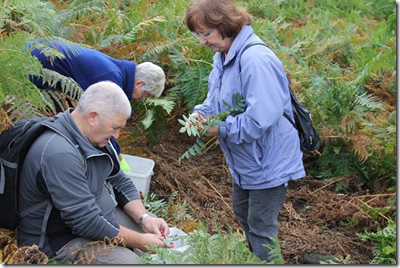
This autumn Cheshire Wildlife Trust volunteers have been busy collecting seed from alder buckthorn trees at Hatchmere Nature Reserve.

Alder buckthorn is a little known tree in the area, but it grows well on the acidic peat soil and heathland found on our reserve. The day involved the volunteers first learning to identify the tree, then identifying ripe fruit followed my many hours of seed collection. The target was 10,000 of the alder buckthorn seeds!

Collecting seeds

So why are we collecting seed?

The seeds are now safely banked in the underground vaults of Kew’s Millennium Seed Bank – as part of the UK’s first national collection of tree seeds. Stored in a temperature and humidity controlled environment before being processed and transferred to deep-freeze conditions, the seeds should remain viable for many decades.

These collections of seeds will play a vital role in on-the-ground conservation work to protect UK trees and woodlands from threats such as pests and diseases like ash dieback. The collections, and associated data, are also available to researchers working on solutions to tackle the many threats facing our woodlands.

As a partner of the project, so far this year Cheshire Wildlife Trust has collected seeds from five species of tree including wild cherry, guelder rose, wild service and hawthorn, with many more collections planned.

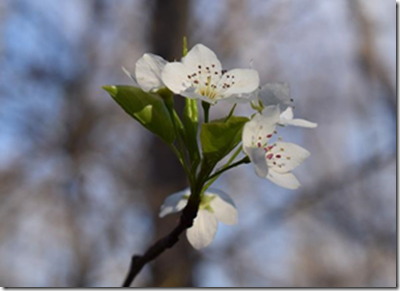
Cherry blossom

The work is part of the UK National Tree Seed Project, which was launched in May 2013. Set up by the Kew’s Millennium Seed Bank at Kew Royal Botanic Gardens, the project's aim is to protect the UK’s trees by securing genetically diverse collections of our native trees and shrubs.Taking into account factors such as conservation status, prevalence in the landscape and vulnerability to pests and diseases, the target species include many which underpin the UK’s wider plant and animal diversity. This also includes species that support the woodland industry, tourism and recreation, such as ash, juniper, Scots pine, alder, beech, hazel, silver birch and yew.

To date, the project has collected more than 12.5 million seeds sampling from over 8,000 individual trees across the UK.

The UK National Tree Seed Project is funded by players of People’s Postcode Lottery.

Wednesday, 2 May 2018

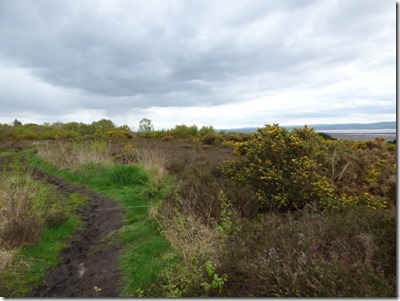
Spring 2018 at Cleaver Heath


Cleaver Heath 1

Spring seems to have arrived several times this year – the temperatures rose, then dropped, rose, then dropped and so on, with bouts of hail, rain and snow and just a bit of sunshine. This has had obvious implications for our visitors both human and wildlife.

Cleaver Heath 2


Avian migrants

I have been keeping tabs on the arrival dates of our spring visitors from the south - these notes are being written at the end of April.

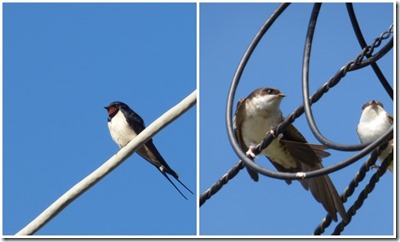
Swallow and House Martins

In order of arrival, I have observed singing Chiffchaff from March 25, Willow Warblers from April 8, pairs of Swallows at Oldfield Farm also from April 8 and singing Blackcaps from April 15. House Martins appeared locally on April 26. I have not seen or heard Whitethroats yet at Cleaver although they are already around elsewhere on Wirral. These photos are of ‘Oldfield’ Swallows and House Martins. The poor weather is presumably responsible for the roughly 10-14 days delay of most warbler arrivals compared with 2017. However, the Swallows bucked the trend by arriving a week early this year! I began this year’s Common Bird Census at Cleaver on April 5. I described the technique in last year’s Early Summer Newsletter. Basically I make 10 visits (roughly every week) noting on a large scale map where I see or hear the birds. The idea is to get a picture, for each species, of where the territories are. I reported the outcome from last year in the Late Summer Newsletter.
Collared Dove and Wood Pigeon

This year, the numbers so far seem to be quite a bit down. One new feature this year has been the observation of a few Collared Doves. These are quite common on Wirral but are a first for Cleaver Heath. Note how dainty they are compared with a Woodpigeon. There is no white on them, just a half collar of black. They have a wheezy flight sound rather than the clumsy clapping of the Woodpigeon. Their song is Coo-Coo-Coo rather than Coo- Coooo- Coo- CooCoo.

We will be holding our annual Dawn Chorus Walk on Cleaver Heath and Heswall Dales on Sunday May 6. This is an opportunity for us all to brush up our bird song and call ID skills and also marvel at one of nature’s spectacular sound spectacles.


Butterflies

If the crazy spring weather confused the birds, it was even more confusing for the butterflies. Nectar- bearing plans have been well behind schedule while the low temperatures and high rainfall have had also inhibited flight for the early butterflies including those over-wintering as butterflies (e.g. Peacock) or as pupae (e.g. Green-veined White and Orange Tip). We started our Butterfly transect survey on April 5 and the total sightings in the first 3 weeks were 0, 1 and 2 respectively! The three species seen were the three mentioned above. Last year, the corresponding 3 weeks resulted in sightings of 2, 9 and 6 respectively. We are currently struggling to find days in each week when the weather is butterfly-friendly. Today, the last day of April, it is 6 degrees and wind force 4. I don’t feel I should have to wear a woolly hat and gloves while I do a butterfly survey.

Plants

This month we completed the botanical survey of the reserve started in 2016. This meant gaining access to the NW corner of the reserve before the bracken started to grow tall again. There was little new there to add to our existing tally of around 140 species of plants, shrubs, trees and mosses. We keep records of species in each habitat area of the reserve as a way on monitoring its health and suitability for supporting wildlife.

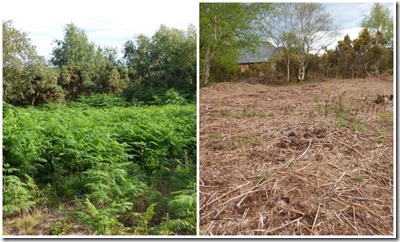
The first bracken shoots are now pushing through. It does look like the annual Asulox spraying is having an effect.

Bracken

These photos show the same area in July last year before spraying (left) and as it looks now at the end of April (right). If there are new shoots there, I have not yet found any. The green and red shoots you can see are rosebay willowherb and bramble.

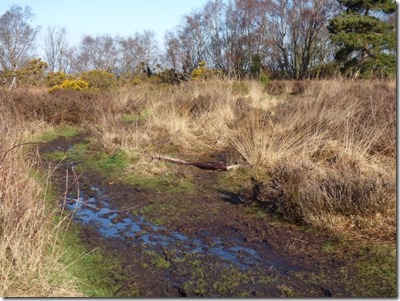
As far as the heathland birch control is concerned, it is also a bit early to assess properly the effectiveness of our stump treatment over the autumn/winter. However, I can just about convince myself that there is a difference in the extent of regrowth in those areas where we treated and in those where we didn’t get it done.

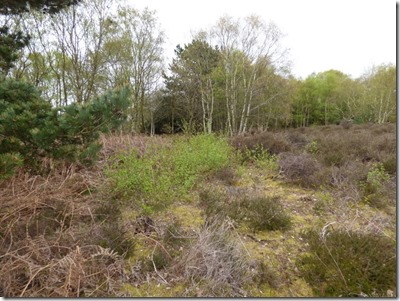
Birch Regrowth

This photo shows quite vigorous birch regrowth at the edge of the upper heathland where the stumps were deemed too small to cut and treat as compared with the surrounding area where we did treat. There are a few multi-stem stumps in the foreground which seem to have succumbed. The real test will be in the autumn when our work groups go over each heathland panel systematically. Will we have less work to do this year? I hope so.

Gorse

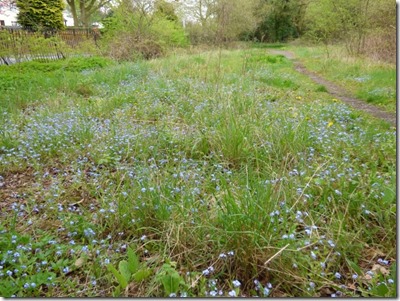
The dominant colour (and smell) on the reserve is currently provided by the European Gorse which is also providing nesting cover for the birds. The various shrubs and tree species add their own shades of green as they come into leaf. The ex-car park area is starting to look really colourful with whites, yellows and blues all around. The forget-me-nots are quite spectacular. What we really want now is some more warmth to bring out all the butterflies and other insects to take advantage of them.

Forget-Me-Nots

Alan Irving
Volunteer Reserve Warden for CWT
Cleaver Heath
April 2018