Showing posts with label Cheshire Wildlife Trust. Show all posts

Wednesday, 19 November 2025

Felicity Goodey's Speech at the Cheshire Wildlife Trust AGM

Cheshire Wildlife Trust's President, Felicity Goodey,
with Volunteer of the Year, Stephen Ross, Chair of Wirral Wildlife


For those who were unable to attend the Cheshire Wildlife Trust AGM at Ness Gardens on 8th November, here is a transcript of the speech given by President Felicity Goodey.

If you would like to pass on this powerful message to your councillors or MP, please copy the text or share the link to this blog post.


There is one thing on which all political parties are agreed: we need more economic growth; we need more houses; we need better infrastructure; we need cheaper and cleaner energy. The problem according to too many politicians is people like us. We are Nimbys, armed with legions of great crested newts and bats and we want to turn the whole of the UK into a wildlife reserve.

Yes, it’s nonsense and the truth is very different.

Newts and bats featured in just 3.3% of all planning appeal decisions last year; England is already the 7th most nature depleted country in the world, and in Cheshire less than 10% of our region is protected. Are we really ‘nimbys’ for wanting to stop further destruction?

Earlier this week, I asked the boss of one the UK’s biggest construction and civil engineering companies why was it that Britain could successfully design and build a state-of the art fighter plane but couldn’t bring a major infrastructure project in on time or anywhere near budget. Good question, he said, and without hesitation replied, ‘too much pressure to deliver short term savings’. His colleagues agreed and began to swap stories of how pressure to deliver short-term targets resulted again and again in long term cost and major over runs.

Earlier this year I had the great pleasure of receiving on behalf of the Trust a plaque to celebrate the establishment of a new National Nature Reserve at Risley, Holcroft and Chat Moss. It was ordinary people, supported and informed by experts like Cheshire Wildlife Trust, who had persuaded politicians not to allow the further destruction of peatlands for short term gains, because those peatlands store billions of tonnes of carbon and provide a vital natural resource for millions of people in Cheshire and Greater Manchester.

And it was thousands of signatures from members of Cheshire Wildlife Trust which helped persuade the councillors of Cheshire East not to allow developers to concrete over major parts of Danes Moss which they too now recognise as a vital resource for the future. That’s a major victory for good sense, although as we will hear later, there is no room for complacency.

‘Nature is vital for our health, wealth and security,’ said the Chair of Natural England, ‘Spending time outdoors in natural settings is great for mental and physical wellbeing and the services provided by nature help prevent flooding, catch carbon and benefit the local economy.’ He’s quite right. He was speaking as the Government’s national representative – what a pity then, that as national Government struggles to deliver the promises which secured them votes, they too often begin to overturn what local people want and know to be in the long-term interests of the community.

We at Cheshire Wildlife Trust believe it is not in the interests of a healthy population and cleaner, cheaper energy to destroy an internationally recognised and protected major wetland habitat like the Mersey Estuary, or to concrete over the whole of the Adlington greenbelt. The Mersey Tidal Barrage and the New Town of Adlington are just two of the current planning proposals being opposed by Cheshire Wildlife Trust.

It is down to people like us to force governments to listen, not to the lobbyists chasing short term profit or political advisers chasing next year’s votes, but to the facts and to work with a broad range of community interests to come up with proposals which are genuine, long-term solutions to benefit future generations, not short-term commercially driven expediencies.

Devolution gives more decision-making power and funding to regions like Cheshire and Warrington. By 2027, we may have a new regional mayor with significant power over planning and economic development. Wildlife Trusts already have more members than the three established political parties put together; Cheshire alone has more than 17,600 members. We have a voice, a strong one. Please use it to support campaigns being run in your name. We can provide all the ammunition you need to pressure your local councillor, MP or regional mayor into voting for nature recovery not destruction, for the long-term benefit of the community, not short-term commercially driven gain.

This is not ‘Nimbyism’!

And the more of us the better. So, this Christmas why don’t we all try to recruit another 17,600 members through gifts of membership or simple persuasion. Give them the facts! As Charlotte will report later, Cheshire Wildlife Trust continues to make huge gains for wildlife recovery and habitat restoration. It’s all thanks to you and the more of you there are, the more nature will benefit.

Saturday, 15 November 2025

Cheshire Wildlife Trust Volunteer of the Year Award for Stephen Ross, Chairman of Wirral Wildlife

Stephen (centre) being presented with the Cheshire Wildlife Trust Volunteer of the Year award by Charlotte Harris (CEO of CWT) and Bill Stothart (outgoing chair of the Trustees of CWT)


Cheshire Wildlife Trust has grown over 60 years from a small, volunteer-driven interest group into a professional, ambitious regional organisation. They are the region’s largest conservation charity, supporting and conserving wildlife and the natural environment throughout Cheshire and Wirral. They rely on a large group of dedicated volunteers to help bring wildlife back and build deeper connections between people and nature

The Volunteer of the Year Award is the highest accolade for volunteering given by Cheshire Wildlife Trust. The award is given in memory of, and inspired by, the contribution of Eric Thurston, a long-standing volunteer for the mid-Cheshire group, who provided inspiration to many others over the years.

Winners are awarded a limited edition of a Roger Stephens print of peregrines circling above Beeston Castle.

This was presented to Stephen at the Cheshire Wildlife Trust AGM held at Ness Gardens on 8th November.

The award was given at the AGM of Cheshire Wildlife Trust held at Ness Gardens

Stephen, a life-long supporter of wildlife (with an especial interest in birds) and life member of Cheshire Wildlife Trust (CWT), has been Chair of Wirral Wildlife (the Wirral Group of the CWT) since 2004. During that time, he has guided the committee with a gentle but firm hand and been a brilliant facilitator for our activities. He is a great support to our outreach activities, always introducing the talks and other events which form our winter programme, and leading the discussions with which these close. He is also a willing volunteer at the various stalls and displays we put on at various events through the year. His interesting Annual Report always brings a global perspective to what we do.


Stephen with the apple press at an Apple Day event

He represents Wirral Wildlife on many occasions. For example, in July 2025 he chaired a one-day event organised by Jane Turner to ‘Celebrate Biodiversity and Sustainability in Hoylake and Meols’. He keeps us in informal contact with many other organisations in Wirral including The Heswall Society, Rotary, Heswall Hall Community Trust (we held our winter programme of talks and events at Heswall Hall for many years) and the Dee Estuary Conservation Group (where he was our representative for some time, becoming vice-chair and then chair for a while).

Stephen (left) at a tree planting in Brotherton Park for Cheshire Wildlife Trust's 60th anniversary

Stephen has also been very active within CWT. Soon after becoming Chair of Wirral Wildlife, he became a member of Council and a Trustee, bringing his expertise from his professional life to the Personnel Subcommittee of CWT and to the preparation of several reports relating to CWT activities.

For over two decades, Stephen has applied his enormous networking and facilitating skills to further the activities of Wirral Wildlife and its environment-related activities in Wirral. He is the best of chairs, never dominating but always giving Committee members the freedom to develop their roles in their own way and supporting their activities, often participating in them.

He is a worthy winner of this award.

Saturday, 3 December 2022

A Tree-mendous Celebration of Cheshire Wildlife Trust's 60th Birthday


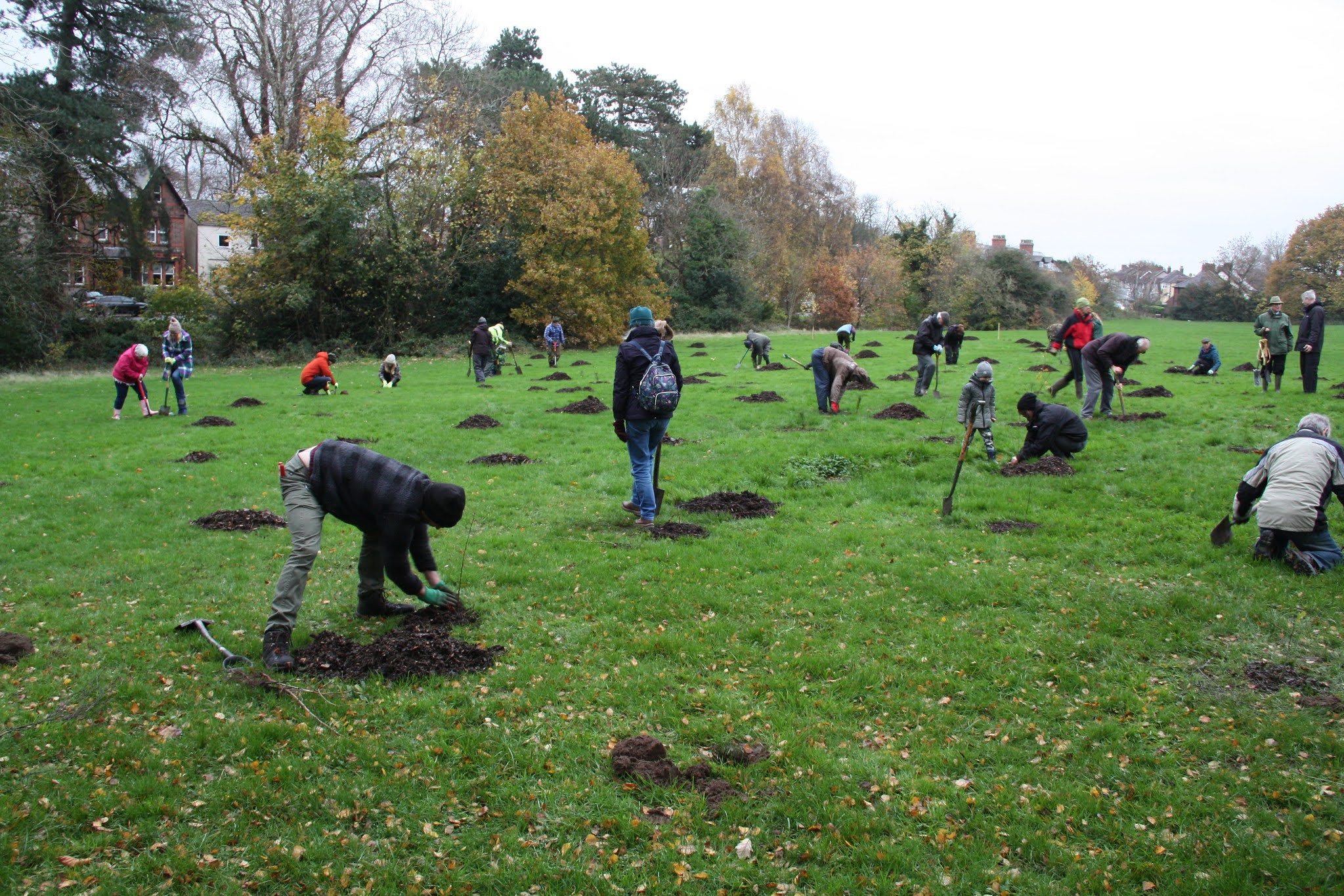
Tree planting at Brotherton Park, Dibbinsdale, to celebrate Cheshire Wildlife Trust's 60th birthday


One hundred and eighty tree whips planted in 22 minutes! Not sure if we would make the Guinness Book of Records but it is impressive.

On Saturday 26th November Wirral Wildlife celebrated the 60th birthday of Cheshire Wildlife Trust by organising a tree planting at Brotherton Park, Dibbinsdale. These trees will buffer Brotherton Park against pollution and noise from the busy Spital Road. They are native species and when grown will absorb carbon dioxide and pollutants and support wildlife.

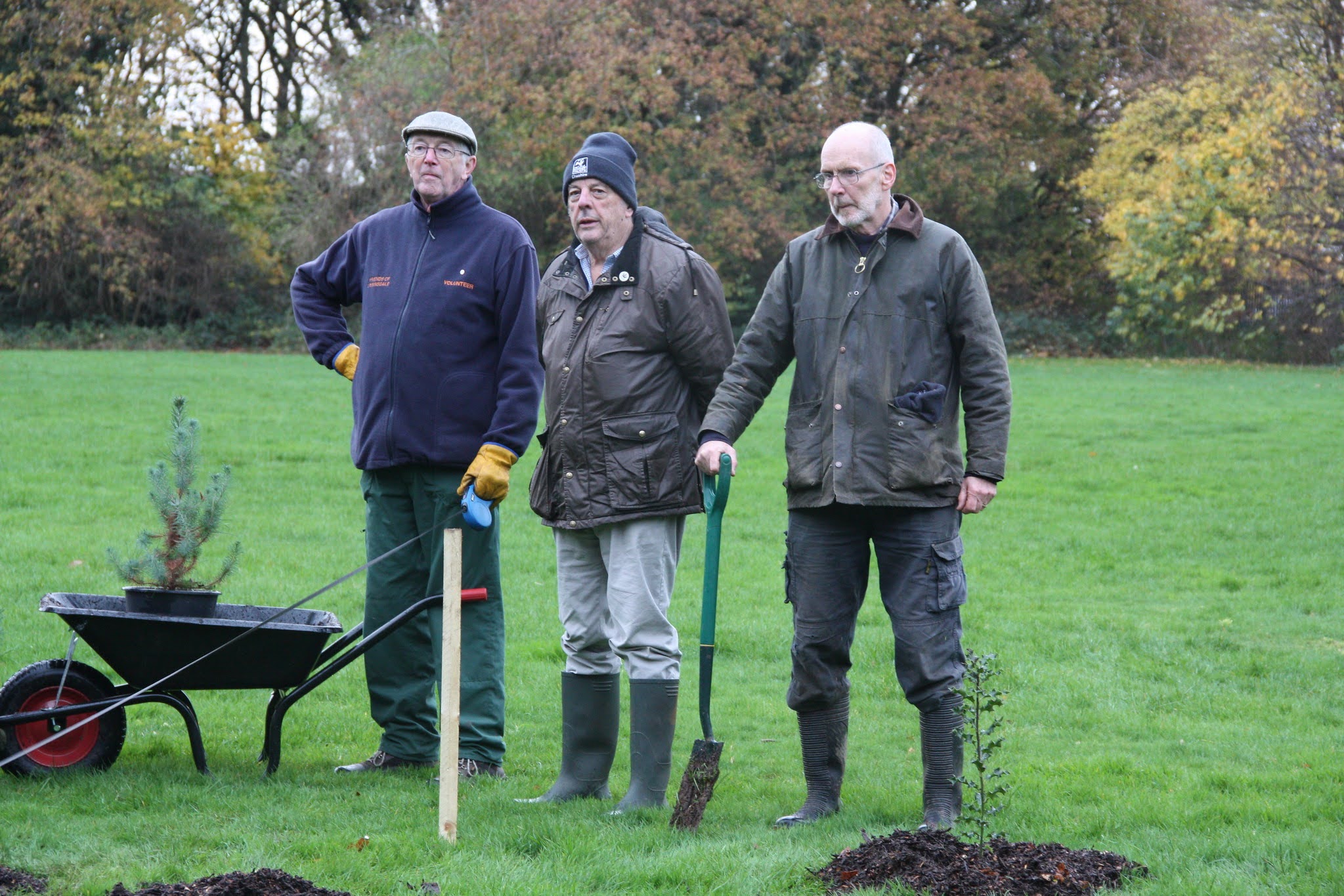
Ron Warne (left), Howard Gibson (centre) and Tim Gannicliffe (right)


Around 40 people turned up to help on the day but much meticulous planning had gone on beforehand, by Hilary Ash and Paul Loughnane, who liaised with Dr Nicola Wallbank, Tree Strategy Landscape Manager for Wirral Council. Thanks also to Ron Warne and the Friends of Dibbinsdale, and the Wirral Countryside Volunteers.


Cheshire Wildlife Trust Vice-Chair Charles Neame about to cut the cake
Cheshire Wildlife Trust Vice-Chair, Charles Neame, about to cut the cake


Afterwards hot drinks and cake were enjoyed and Charles Neame, Vice-Chair of Cheshire Wildlife Trust, cut a celebration cake with a specially polished billhook. Thanks are due to the helpers baking cakes, boiling the kettles and washing up afterwards!


A close up of the birthday cake and the ceremonial billhook

Of course that is not the end of it. The trees will need weeding and mulching for the next two summers. We will be asking for volunteer help to do so. Ron and the Friends of Dibbinsdale will keep an eye on them and let us know when care is needed. If we get another drought, then Nicola will organise watering.


Stephen Ross, Chairman of Wirral Wildlife (left), and Charles Neame, vice-Chair of Cheshire Wildlife Trust (right)
Stephen Ross, Chairman of Wirral Wildlife (left),
and Charles Neame, Vice-Chair of Cheshire Wildlife Trust (right)
 

Finally a message from our Chairman:


I cannot thank you all enough for making the 60th Anniversary of Cheshire Wildlife Trust such a success.

Never have I seen so many trees planted so rapidly by so many keen enthusiastic volunteers. It was pleasurable to converse with so many of you thereafter while the excellent cakes and tea were consumed with such vigour.

It could not have happened without so much planning and care, supported by our cake makers and caterers. To Ron and Friend's of Dibbinsdale, together with Wirral Countryside Volunteers who make such a profound contribution to wildlife conservation across Wirral, particular appreciation.

Once again, many thanks,

Stephen Ross


All photos by Richard Ash.


Monday, 28 November 2022

June Receives Volunteer Award from Cheshire Wildlife Trust


June Mortazavi (centre) with Felicity Goodey, President of Cheshire Wildlife Trust (left)
and Charlotte Harris CEO of 
Cheshire Wildlife Trust (right)

At the Cheshire Wildlife Trust AGM on November 26th Wirral Wildlife volunteer June Mortazavi was presented with the Eric Thurston Award. This is the highest accolade for volunteering given by Cheshire Wildlife Trust. It is given to acknowledge the Trust’s most inspirational and outstanding volunteers. Winners are awarded a limited edition of a Roger Stephens print of peregrines circling above Beeston Castle.

Here is a taste of why June was nominated.

June arrived with a burst of enthusiasm on the Wildlife Trust scene in 2017 and has made an impact across several Cheshire Wildlife Trust areas. At New Ferry Butterfly Park, she rapidly got involved in practical habitat management and also as a warden, an active committee member and helping host courses and open days. Her impact is Wirral-wide, being an active and encouraging part of the Wirral Wildlife biological recording team. June started with little plant knowledge but has developed her confidence in carrying out botanical surveys and this year is in charge of her own survey. June is a real support to some over stretched volunteers e.g. helping Dr Hilary Ash by writing up flora records. June has become very adept at deciphering Hilary’s annotations of plant names in Latin!

She was trusted to help the Wirral Wildlife recording team process data and publish a peer reviewed paper on quadrat survey carry out at Thurstaston common for 39 years. That is a lot of data!

June gets out and fights for nature, for example liaising with neighbours over injured hedgehogs found at the New Ferry Butterfly Park. June is also a stalwart of the Friends of Lowfields Wood, Eastham, which was set up by Cheshire Wildlife Trust's Natural Futures programme in January 2019 and continues to flourish. June works beyond Wirral with CWT staff in the Delamere area.

All this tremendous activity and sustained and growing enthusiasm is on top of a part time job.  June has not retired yet and achieves so much for the Trust locally on the Wirral and further afield. June is prepared to both do the spade work in the field and in the digital world with alacrity.

She is a deserving recipient of this Award and we are grateful for her commitment and drive.


Thursday, 4 August 2022

Wirral Wildlife Committee Visit the Hatchmere Beavers


Visit to Hatchmere, hoping for a beaver sighting

The Wirral Wildlife committee, and some of their family members, recently paid a visit to the beavers at Hatchmere Nature Reserve (near Delamere Forest), led by Martin Varley, Director of Nature's Recovery at Cheshire Wildlife Trust.


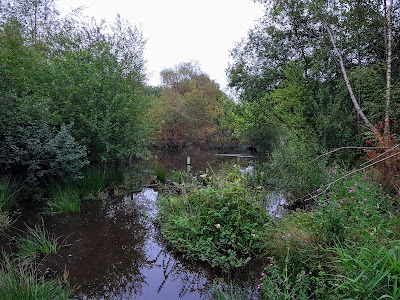
The beaver habitat at Hatchmere

Martin's determination and successful fundraising have been vital to bringing the beaver back to Cheshire. 

The party were rewarded with several sighting of an adult, along with plentiful signs of their activities, including the dam they have built, which is about a metre high.


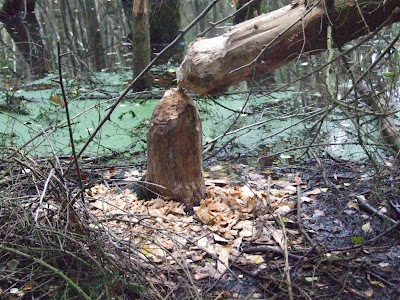
A gnawed and felled tree, an obvious sign of beavers at work


Stephen Ross, Wirral Wildlife Chairman, reported “We spent over two hours walking in the 10 acre beaver enclosure. It was remarkable. They swam around in sight and we looked at their dam which has transformed a small pond and stream into a substantial lake. Fascinating to see their choice of site and line of construction which seemed to suggest that they were aware of how to get the depth they required across the site. Difficult to assess the length but at least 20 metres. Incredible how much stuff including branches that two animals can move in such a short time. Wildfowl were present on the lake and because of the fencing are probably safe from foxes. Martin Varley was most informative and generous with his time. We are all most grateful to him”.


Richard Ash recorded a short video of a swimming beaver. You can view it below or on YouTube:

https://www.youtube.com/watch?v=qYvFMjaecMI

Wednesday, 7 April 2021

50 Years of Wirral Wildlife


In the early days of the Cheshire Conservation Trust (how Cheshire Wildlife Trust was originally known), Wirral group was part of the West group based in Chester. Sixty members living in Wirral were needed before the Group could become autonomous. That happened at a meeting at Bebington Oval on 7th April 1971. We now have over 2250 members.

The original committee consisted of Chairman Major Frank White, Margaret Gilmour, Henry Larsen, Nora MacMillan (Mrs Mac), David Mills, Jane Ratcliffe, Richard Smith and Graham Taylor.

The group manned two caravans each summer weekend, one at Thurstaston Visitor Centre and one at Eastham Country Park and meetings were held at a variety of venues. Jim Gilmour, a previous Secretary to the committee, remembered passing a queue waiting for our jumble sale in Liscard and hearing a woman wondering what a ‘Conversation Trust’ actually did. After Wirral became part of Merseyside in 1974 we changed our name to Wirral Wildlife.

We had little base data on species distribution in 1971 – an essential pre-requisite of conservation action. Recording of species in Sites of Special Scientific Interest (SSSIs) and Local Wildlife Sites has been carried out regularly since then. The information accumulated by our recorders has been of value to the Planning Department and Ranger Service. Our records and plans have been incorporated into management plans and used to obtain grants. They have enabled us to contribute knowledgeably to Council initiatives like the Local Plan and make recommendations when we scrutinise planning applications for their impact on wildlife.

We are now involved with six Wirral nature reserves and practical work is led by honorary wardens and teams of volunteers. Our urban reserve, New Ferry Butterfly Park, celebrated being open to the public for 25 years in 2020.


A busy day at New Ferry Butterfly Park


We have also created a programme of talks and guided walks open to the public. Monthly talks from September to April are held in Heswall Hall and feature a wide range of speakers.  In the summer guided walks include a (very early) Dawn Chorus and a bluebell walk.  Each autumn we hold an Apple Day at Eastham Country Park where visitors can taste locally grown varieties of apples and help to make juice using our traditional wooden apple press. Our group also attends events like Science Day at Ness Gardens, Ness Children’s Day and Science under the Stars.


Our display at Ness Science Day


None of these things would be possible without a dedicated team who form the Wirral Wildlife committee and the host of volunteers who help out in so many different ways. We value their support and we are all committed to a Wirral richer in wildlife.


Science Under The Stars


We are currently considering what we can do to celebrate this 50 year milestone. For our 40th anniversary we met in November at Brotherton Park, Dibbinsdale and planted two native black poplars.

Tree planting at Dibbinsdale to mark our 40th Anniversary


When the newly formed committee left the Oval in April 1971 they could have had no idea of how the world would change. In 2017 we were awarded the Queens Award for Voluntary Service in recognition of the impact the group has had in protecting nature in Wirral. Our aim is to inspire, inform, educate and encourage people to protect nature in Wirral – values that were as true in 1971 as they are today.


Acknowledgment: most of the early information was taken from an article written by Jim Gilmour for our 40th anniversary.


Saturday, 13 March 2021

Natterjack Toads at Red Rocks


Natterjack toad
Natterjack toad

Red Rocks Marsh is a Cheshire Wildlife Trust coastal reserve covering 4 hectares of sand dunes, reedbeds and marsh. The reserve lies within the Red Rocks SSSI (Site of Special Scientific Interest). Open pools support the rare natterjack toad and this is the only breeding colony of natterjack toads in Wirral. This species is extremely limited in Britain and is protected by the 1975 Wild Creatures and Wild Plants Act.


Red Rocks Nature Reserve Red Rocks Nature Reserve information board
Red Rocks Nature Reserve information board


Active management occurs to maintain the breeding pools and monitor both the adult numbers and the toad spawn. This winter the Royal Liverpool Golf Club have cut the natterjack pools and they are looking a nice depth going into spring. A small interpretation panel has been installed next to the natterjack pools. It was paid for through the Tesco funding and the Royal Liverpool Golf Club kindly put it in for us. There will be three panels, changed throughout the year, each explaining what’s happening at that time of the year with the natterjacks. The panel has already attracted the attention of walkers which is good to know.

Aerial view of Red Rocks Nature Reserve


RECORD recently published an interesting article about the genetics of this natterjack population and a population at Talacre. We have reproduced this below.


Microsatellite Markers Reveal Inbreeding In Reintroduced Natterjack Toad Populations

By Susie Phillips


Natterjack toad
Natterjack toad


Our latest article is by Susie Phillips, RECORD volunteer and Democracy & Insight Coordinator at the University of Chester. She tells us about her Masters research into Natterjack toads, which included studying a re-introduced population of this charismatic species on the Wirral.

The Natterjack toad (Epidelea calamita) (below left) is distinctive not only in its prominent dorsal stripe and loud nocturnal mating call, but also in its rarity, being found at only a handful of isolated sites in South East England, North West England, East Anglia, North Wales and parts of Scotland.

Following several local extinction events in the 1900s, the Natterjack and its breeding sites were legally protected and a series of reintroduction programmes, using individuals from extant populations alongside various habitat management techniques, took place across the UK in the 1990s. In the north west, spawn strings were taken from Ainsdale, Merseyside (a recognised stronghold for the species) to repopulate both Red Rocks Nature Reserve on the Wirral and Gronant Dunes/Talacre Warren in North Wales, both Sites of Special Scientific Interest within the Dee catchment area.

Following the reintroduction, breeding success was recorded annually by site managers via spawn string counts during the breeding season (April – July). Over the last 20 years, these counts showed interesting fluctuations in population size at both Red Rocks and Talacre but identifying population trends from demographic data alone can be misleading. Therefore, our study aimed to conduct the first genetic analysis of these populations in order to shed light on the genetic diversity of the two reintroduced populations, and to identify any potential conservation actions required to ensure the genetic longevity of the species at these sites.


Collecting natterjack toads for swabbing

Adults were sampled using a non-invasive swabbing technique and nine microsatellite markers (short segments of DNA where the nucleotide sequence repeats) were amplified across the samples to assess genetic variation within each site and for comparison with the Ainsdale source population. We observed a high inbreeding coefficient at both sites, which indicates that individuals within the two populations were more related than would be expected where random mating occurs.

When paired with the observed level of genetic variability (heterozygosity), which is currently lower in the reintroduction sites than it was in the source population at the time of the reintroductions, this indicates that genetic diversity is low in both populations. Indeed, such low genetic diversity has not previously been recorded in any Natterjack population.

Without intervention the two populations are at higher risk of reduced fitness, increased vulnerability to disease and, ultimately, a second extinction event. However, genetic rescue via introducing new breeding individuals to the population and increasing the available breeding habitat via pool creation has been shown to effectively increase genetic diversity within this species. Therefore, with this knowledge, site managers have the opportunity to mitigate for these risks sooner rather than later and safeguard the species at these sites into the future.

You can read the full scientific paper here (open access).


Wednesday, 4 November 2020

Autumn 2020 at Cleaver Heath


Autumn at Cleaver Heath


It’s been a strange autumn here. The leaves are being prematurely ripped from the branches by a series of gales and a sequence of showery periods has contributed to some flooded paths.

Of course, the weather has not been the only complication in getting conservation work started this year - COVID has played its part. We need guaranteed dry spells for carrying out stump treatment within the heather panels but we also need a number of willing volunteers to help with that and other routine task such as birch and gorse coppicing. We have nevertheless been able to carry out some COVID-safe jobs working independently in the fresh air. Even if the socialising aspect is a bit restricted, I found many volunteers grateful for the excuse to get out, spend time in a nice place and help the environment.

Common lizards found during the survey at Cleaver Heath

So, what else has been happening at Cleaver since the summer newsletter? The Common Lizard survey has drawn to a close. There were a total of 16 sightings between July and September. The good news was that most of the sightings were juveniles including some quite tiny ones. So we have breeding lizards at Cleaver. Less good news was that the sightings were confined to one particular panel east of the main path. Strangely, there were no sightings in the many refugia deployed in the less frequented areas of the reserve. We will be pondering this when planning future surveys.

Butterflies and spider web at Cleaver Heath

As summer moved into autumn there were still quite few second brood butterflies on the wing. As well as large numbers of whites we had regular sightings of Holly Blues (top right), plenty of Red Admirals feeding on holly flowers (bottom left) and a nice Small Copper seen right at the end of September (top left). On the colder bright mornings, much of heather was adorned with ‘hammock’ spider webs (bottom right) as well as the more conventional concentric circle webs.

Fungi in the woodland at Cleaver Heath


Lots of fungi are to be seen in any walk round the reserve these days. The path through the south woodland area had lot of Earthballs (genus Scleroderma) like the ones shown on the top left here. The others are all from the Amanita genus: continuing clockwise Tawny Grisette (A fulva), Blusher (A rubescens), Fly Agaric (A muscaria)…. I think!


Long-tailed tits
Long-tailed tits


On the bird front, there was a spell in September when the now less frequent Easyjet and Ryanair flights tracking over our house and the reserve were replaced by skeins of Pink Feet all heading for the Dee. Their musical calls as they agree final landing arrangements are always a welcome sign of autumn. The tits are starting to go around in flocks, especially the Long-tailed Tits whose gang sizes are growing. Redwing and Fieldfares have been appearing around Wirral but I have not yet spotted any in the reserve or in my garden. We had a very good, early crop of Rowan berries which the Mistle Thrushes and Blackbirds finished off in short order, leaving nothing much for the other winter thrushes. On a couple of mornings we observed 8 Mistle Thrushes at a time on the garden Rowan.

Mistle thrush
Mistle thrush


Following the increased footfall through Cleaver, particularly on sunny Sundays, a member recruitment officer from the Trust visited recently and had some success showing that the face-to-socially-distanced-face recruitment still works. This is Will Robinson pictured in a brief spell between his sign-up activities and bird spotting. As a keen birder he particularly enjoyed his day out even with his mask on.

Will Robinson, Cheshire Wildlife Trust Member Recruitment Officer
Will Robinson, Cheshire Wildlife Trust Member Recruitment Officer 


Here is my usual seasonally-updated photo of the reserve entrance. Do you notice that the gate has finally been painted to match the railings?


Cleaver Heath entrance


Alan Irving
Volunteer Reserve Warden for CWT

Cleaver Heath
November 2020

Friday, 21 August 2020

Bringing Beavers Back To Cheshire

Cheshire Wildlife Trust made an exciting announcement this week...


Beaver


It’s with great pleasure and excitement that we can share the news - Cheshire Wildlife Trust are planning to release a pair of beavers at Hatchmere Brook this autumn. After 400 years of local extinction, beavers will be returning to Cheshire!

If Hatchmere Nature Reserve can be made ready to receive the beavers by October, there’s every chance it could be home to the first beaver kits (baby beavers) next year!


Beavers in Britain

The Eurasian beaver (Castor fiber) is a large herbivore, a mammal that was formerly native to these shores and once played an important part in our landscape from prehistoric times until it was hunted to extinction in the 16th century for its fur, meat and scent glands. The loss of this charismatic species also led to loss of the mosaic of lakes, meres, mires, tarns and boggy places that it so brilliantly built.

Wildlife Trusts across the country are working hard to bring these fantastic mammals back to Britain.


Why do we need beavers?


Beaver building a dam


This isn't just about the reintroduction of a species - it's about the reintroduction of an entire ecosystem that's been lost.

Beavers are often referred to as 'ecosystem engineers'. They make changes to their habitats, such as digging canal systems, damming water courses and coppicing tree and shrub species, which create diverse wetlands. In turn these wetlands can bring enormous benefits to other species, such as otters, water shrews, water voles, birds, invertebrates (especially dragonflies) and breeding fish.


Dragonfly

Beavers and the landscapes they generate benefit both people and wildlife because:

• They help to reduce downstream flooding - the channels, dams and wetland habitats that beavers create hold back water and release it more slowly after heavy rain.

• They increase water retention.

• They clean water.

• They reduce siltation, which pollutes water.


Why Hatchmere?


Hatchmere

• Man-made problems are destroying rare habitats at Hatchmere Nature Reserve, and killing aquatic life in the wetlands and in Hatch Mere lake.

• Peat bogs are delicate habitats which need nutrient-poor water. But the brook flowing into the site has become far too rich and nutrient-packed, so the peat bog plants and animals are losing their fight for survival.

• Invasive species like nettles and bramble are thriving on the rich water supply – reducing sunlight and accelerating the loss of peat bog life.

By beavers doing what they do naturally along Hatchmere brook, they will create new habitats and remove nutrient flow into the mere and mosslands. They will also help to remove the invasive species along the brook.


We're not out of the woods yet

Map of beaver release area

Before we can bring beavers back, we must first secure a 10-acre area next to Hatchmere Nature Reserve with 870 metres of beaver-proof fencing.

To do this, we need to raise £30,000 - that’s £34 a metre.


Help bring beavers back to Cheshire and make a donation here:

www.cheshirewildlifetrust.org.uk/beaver-appeal


£30,000 needed before 18th September 2020

Work must begin before the ground becomes too wet, otherwise it’ll be next year before we can bring beavers back. We have until 18th September 2020 to raise £30,000 – that’s less than five weeks.

Members of Cheshire Wildlife Trust will shortly receive a pack in the post with more information about the project and how you can help to bring beavers back. As this is such an exciting moment, we’re offering all members that donate an opportunity to watch the beaver release live online.

Since launching the appeal on Monday evening, we’ve already raised £4,445. Thank you so much to all those that have already kindly given.

Together we can bring wildlife back to Cheshire.


Wednesday, 5 August 2020

MPs visit Butterfly Park


Charlotte Harris, Hilary Ash, Alison McGovern MP, Angela Eagle MP, Paul Loughnane


On Wednesday July 29th Angela Eagle MP and Alison McGovern MP plus Seacombe Councillor Paul Stuart visited New Ferry Butterfly Park.

Alison McGovern MP arriving at the Butterfly Park

Charlotte Harris CEO of Cheshire Wildlife Trust was also there to welcome them along with members of New Ferry Butterfly Park committee.

Charlotte Harris, Alison McGovern MP, Angela Eagle MP, Paul Loughnane


It was a sunny day and lots of bees and some butterflies were around. Very appropriate as there was discussion about the Wildlife Trusts’ Take Action for Insects Campaign and the Big Butterfly Count.

Angela Eagle MP being shown woodlice by Paul Loughnane