Showing posts with label Dibbinsdale. Show all posts

Sunday, 26 November 2023

Tree Pruning Workshop at Dibbinsdale


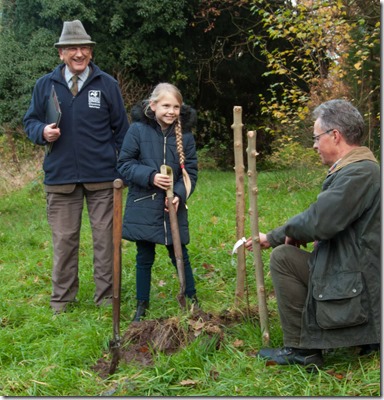
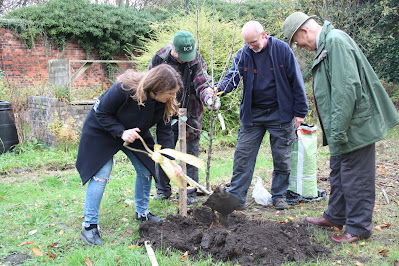
Looking carefully before pruning the Bramley tree planted by Alison McGovern MP and Stephen Ross in 2021.
Looking carefully before pruning the Bramley tree
planted by Alison McGovern MP and Stephen Ross in 2021.

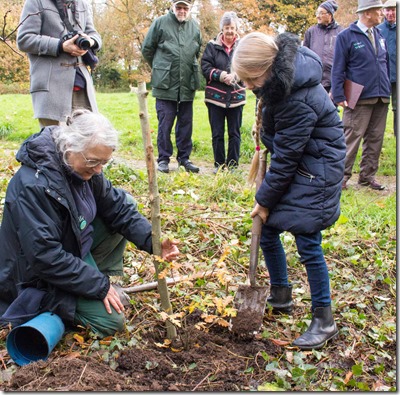
We had an excellent training day on pruning fruit trees on 25th November, led by Katie Tonge of Heathfield Orchards. Katie talked us through the things to think about, then we went out for practical demonstrations and to try our own hand, in the walled garden at Dibbinsdale.


The tree before pruning (Katie Tonge in the baseball cap).

The tree before pruning (Katie Tonge in the baseball cap).


In the process the six apple trees we planted for Wirral Wildlife's 50th birthday in 2021 were given expert pruning to train their shape as they mature. Several members of the Friends of Dibbinsdale were left with guidance on what to do with the plum trees, come spring, and how to set about some of the older trees that have been neglected for the last few years through the pandemic.

"Yes, I really do mean take that much off"

If you have or are thinking about starting a community orchard, we can recommend booking a workshop with Katie to learn how to prune them to get a crop and to benefit wildlife. Thank you to Wirral Borough Council for use of the walled garden, Ste Smith, the Ranger, and the Friends of Dibbinsdale for hosting us.


Pete does the next cut.

Hilary Ash

Friday, 27 October 2023

Fungal Foray at Dibbinsdale


Fungal Briefing by John Ratcliffe

A third fungal foray was held by Wirral Wildlife at Dibbinsdale Local Nature Reserve. Prior to the foray a recognisance survey was undertaken by John Ratcliffe of North-West Fungal Group, and it was found to be a fungal desert as a result of the dry weather. John added “Our only hope is rain.” The Eventbrite attendees were emailed to warn them the host of fungi may not be as impressive or abundant as other years. Luckily for these fungal detectives it did rain, it rained so much that the path by Otter’s Tunnel under the railway was flooded and the planned route was altered. The autumn flowers of the fungi came out, though not very as abundant in numbers a respectable diversity of 52 species were recorded with 30 species not having been recorded on the previous fungal foray here.

Amethyst Deceiver
Amethyst Deceiver

The gills/pores of a mushroom head give 20 times the area of the mushroom for spores' dispersal. It can be quite daunting with all those new names in English and Latin, but as the attendees went along, they started recognising the fungi that were seen early in the foray. Crib sheets of the previous year’s fungal records were provided to help recall the names.

One fungus found was the Beef Steak mushroom which when you pressed it oozed out red dye as you see in a steak. Also found was the attractive Amethyst Deceiver and a Blushing Bracket. Clive, another fungal expert, was full of anecdotes about each fungus. Cramp balls, so called as you put them down your breeches when on a long horse ride to prevent cramp. Birch Polypore can be dried and used as a razor strop, or the fresh elastic skin peeled into a strip could be used like a sticking plaster, with the inside being clean. John was pleased to see attendees were all interested. One of the attendees, Ben Hart, typed up a list of the species seen on the day in the evening, including the common and Latin names. John, our fungal leader, searched for the Horn of Plenty on the damp rock cutting on the banks of the river Dibbin but unfortunately, we did not find that this time. We will look for it during next autumn’s Fungal Foray.

Horn of Plenty
Horn of Plenty


Saturday, 3 December 2022

A Tree-mendous Celebration of Cheshire Wildlife Trust's 60th Birthday


Tree planting at Brotherton Park, Dibbinsdale, to celebrate Cheshire Wildlife Trust's 60th birthday


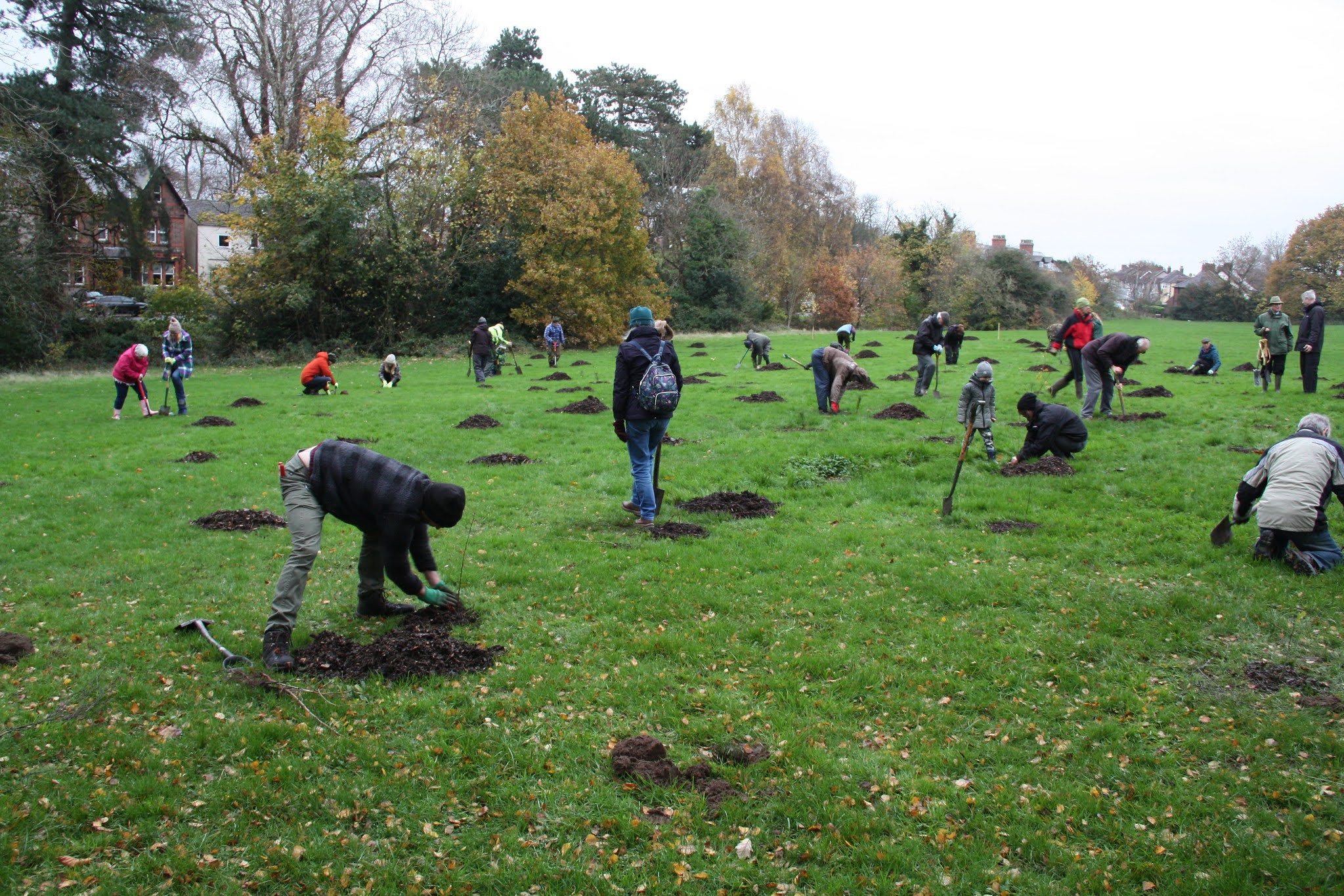
One hundred and eighty tree whips planted in 22 minutes! Not sure if we would make the Guinness Book of Records but it is impressive.

On Saturday 26th November Wirral Wildlife celebrated the 60th birthday of Cheshire Wildlife Trust by organising a tree planting at Brotherton Park, Dibbinsdale. These trees will buffer Brotherton Park against pollution and noise from the busy Spital Road. They are native species and when grown will absorb carbon dioxide and pollutants and support wildlife.

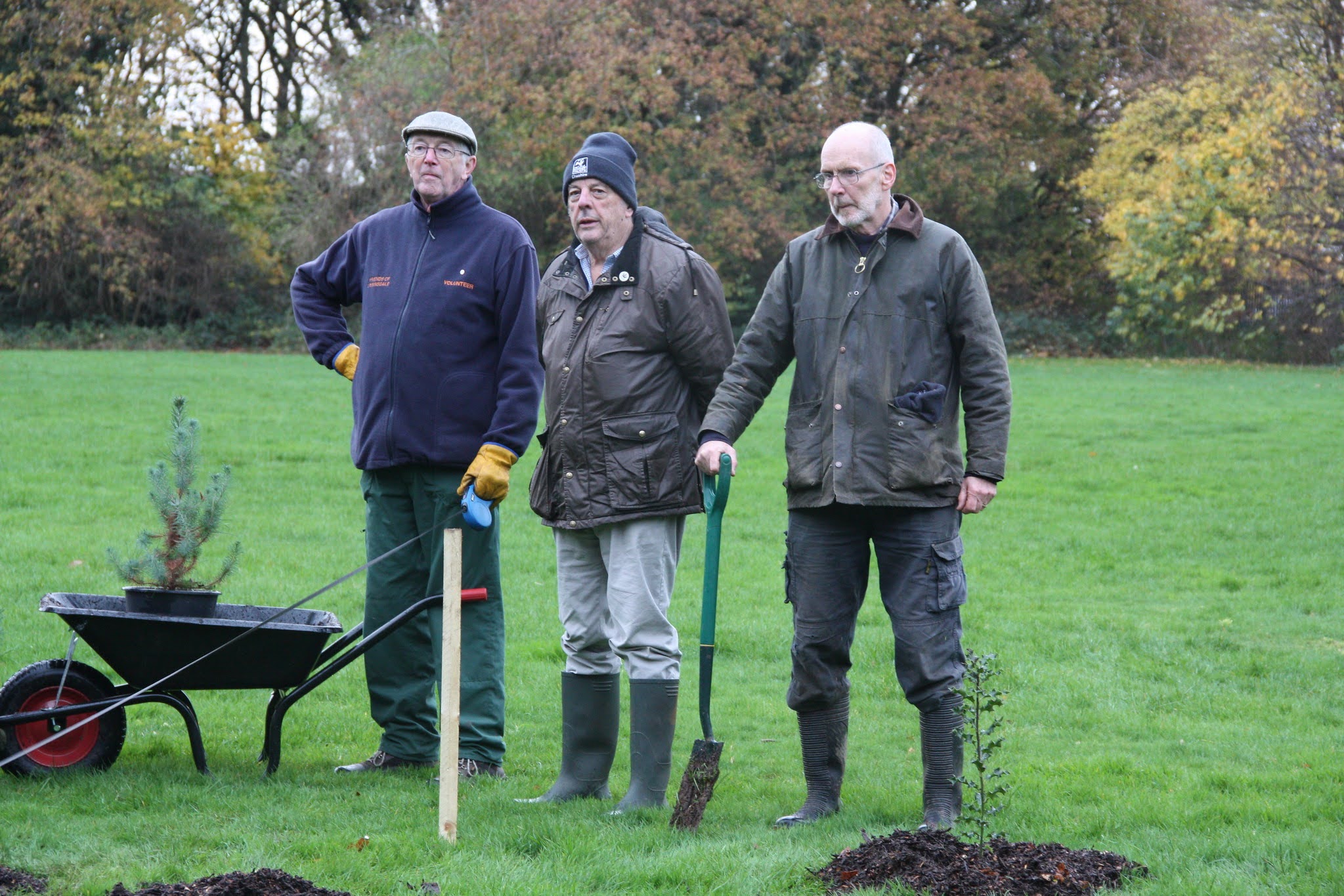
Ron Warne (left), Howard Gibson (centre) and Tim Gannicliffe (right)


Around 40 people turned up to help on the day but much meticulous planning had gone on beforehand, by Hilary Ash and Paul Loughnane, who liaised with Dr Nicola Wallbank, Tree Strategy Landscape Manager for Wirral Council. Thanks also to Ron Warne and the Friends of Dibbinsdale, and the Wirral Countryside Volunteers.


Cheshire Wildlife Trust Vice-Chair Charles Neame about to cut the cake
Cheshire Wildlife Trust Vice-Chair, Charles Neame, about to cut the cake


Afterwards hot drinks and cake were enjoyed and Charles Neame, Vice-Chair of Cheshire Wildlife Trust, cut a celebration cake with a specially polished billhook. Thanks are due to the helpers baking cakes, boiling the kettles and washing up afterwards!


A close up of the birthday cake and the ceremonial billhook

Of course that is not the end of it. The trees will need weeding and mulching for the next two summers. We will be asking for volunteer help to do so. Ron and the Friends of Dibbinsdale will keep an eye on them and let us know when care is needed. If we get another drought, then Nicola will organise watering.


Stephen Ross, Chairman of Wirral Wildlife (left), and Charles Neame, vice-Chair of Cheshire Wildlife Trust (right)
Stephen Ross, Chairman of Wirral Wildlife (left),
and Charles Neame, Vice-Chair of Cheshire Wildlife Trust (right)
 

Finally a message from our Chairman:


I cannot thank you all enough for making the 60th Anniversary of Cheshire Wildlife Trust such a success.

Never have I seen so many trees planted so rapidly by so many keen enthusiastic volunteers. It was pleasurable to converse with so many of you thereafter while the excellent cakes and tea were consumed with such vigour.

It could not have happened without so much planning and care, supported by our cake makers and caterers. To Ron and Friend's of Dibbinsdale, together with Wirral Countryside Volunteers who make such a profound contribution to wildlife conservation across Wirral, particular appreciation.

Once again, many thanks,

Stephen Ross


All photos by Richard Ash.


Saturday, 27 November 2021

The High Sheriff, The MP and The Trees


Alison McGovern MP planting a tree


Tree Planting to celebrate Wirral Wildlife’s 50th Birthday


Wirral Wildlife were delighted to celebrate their 50th Anniversary on a fine autumnal day on 20th November at Brotherton Park, part of Dibbinsdale Local Nature Reserve. The High Sheriff of Merseyside, Nigel Lanceley, and Alison McGovern MP kindly attended our celebration.
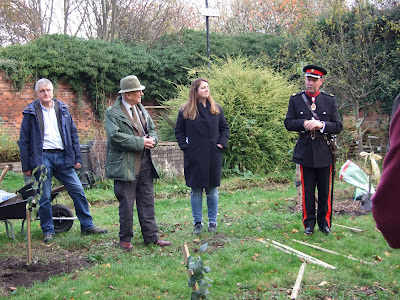

The High Sheriff of Merseyside, Nigel Lanceley, gives a speech.


We were heartened by the presence of the Chairman and Vice Chairman of Cheshire Wildlife Trust, so many friends from related organisations and long serving volunteers spanning all the activities in which we engage. The chairman outlined the history of the group and gave thanks for the efforts made by the founders and all current supporters. The High Sheriff stressed how prestigious is the award of the QAVS. The key issue being the way we engage with disadvantaged groups in an inclusive way and seek to assist the cause of wildlife generally.


A female black poplar was planted by the High Sheriff in Brotherton Park. It was he who had processed our nomination for the QAVS, so it was a particular pleasure that he was able to attend. Thereafter we planted six varieties of Cheshire apple trees in the Walled Garden (see details below).
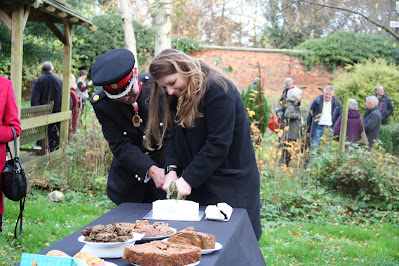

Cutting the cake with a billhook!

Then the High Sheriff and Alison McGovern MP cut the anniversary cake with a polished bill hook, before distributing slices on the end of his sword. Tea and cake were enjoyed by all our guests.
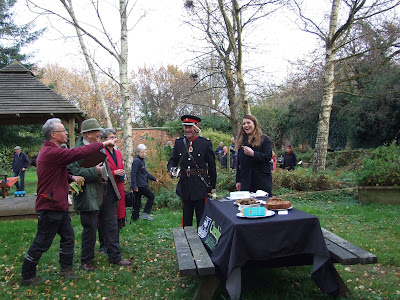

Handing out slices of cake on the end of the High Sheriff's sword.

Thank you to everyone who attended to make the occasion such a special celebration. 


This is a list of the trees we planted and who helped:


  • Black Poplar: (female tree, clone 32, raised by Chester Zoo) planted next to the two male trees planted in Brotherton Park for our 40th birthday). Planted by High Sheriff, Nigel Lanceley.

Bella Smallthwaite planting a traditional apple tree variety

  • Six Apple trees were planted in the Walled Garden.

1. Bramley. Cooker. (Donated by Friends of Dibbinsdale to mark Wirral Wildlife’s 50th birthday). Supplied by Morrey’s Nursery, Kelsall.

The Friends told us “Happy Birthday to Wirral Wildlife. We look forward to continue working cooperatively with you in future years”. 

Planted by Alison McGovern MP, Stephen Ross (Chair of Wirral Wildlife), with help from Steve Yandell (chair, Wirral Countryside Volunteers) and Tim Gannicliffe (WW recorder).


2. Millicent Barnes. Dessert.

Planted by Bella Smallthwaite helped by Ron Warne (Friends of Dibbinsdale and recorder) and Paul Loughnane (reserves manager, NFBP and Thornton Wood).


3. Eccleston Pippin. Dual purpose.

Planted by representatives of the Wirral Wildlife recording team: Mike Inger, Sheila Ross, Elina Doss (who also works for Record local records centre).


4. Rival. Dessert.

Planted by David Parker (DECG), Tom McCullough (warden Foxes Wood and Tom’s Paddock) and Steve Lyus (chair, New Ferry Butterfly Park).


5. Bee Bench. Dual purpose.

Planted by young volunteers Mairead Corr and Maddy Green, helped by Pete Miller (chair, Friends of Dibbinsdale).


6. Ashmead’s Kernel. Dessert.

Planted by Elaine Mills in memory of Frank Cottrell (former chairman), helped by Lesley Brockbank (Wirral & Cheshire Badger Group) and Eric Greenwood (retired from Liverpool World Museum and botanical expert).


Trees 2-6 were raised and supplied by Katie Tonge (Heathfield Orchard, Chester). All are varieties traditionally grown in Cheshire.
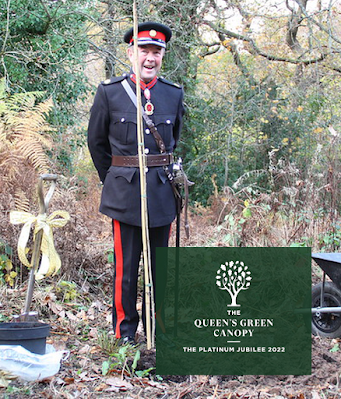

The High Sheriff of Merseyside with the planted black poplar, a contribution to the Queen's Green Canopy project.
The High Sheriff of Merseyside with the planted black poplar,
a contribution to the Queen's Green Canopy project.

Dr Hilary Ash registered our black poplar and apples as a contribution to the Queen’s Green Canopy project (QGC). This is a tree planting initiative created to mark Her Majesty’s Platinum Jubilee in 2022 which invites people from across the United Kingdom to “Plant a Tree for the Jubilee”.


We received this acknowledgement.

 “We are delighted to confirm your Jubilee tree planting has been uploaded to The Queen’s Green Canopy (QGC) map. Thank you for your contribution to this special initiative, which we hope will inspire countless others. With your support we are creating a greener UK and a legacy in honour of The Queen’s leadership of the nation, which will benefit future generations.

Yours sincerely, The Queen’s Green Canopy”


The High Sheriff also wrote to us.

‘’ I would like to thank you all for the warm welcome and hospitality on Saturday. I was honoured to plant the tree and contribute to the ceremony. I would like to congratulate you again for all the great work that you carry out in Wirral. As residents we all benefit from your commitment. Please pass on my regards and best wishes to the team and if I can help again please do not hesitate to contact me. I think it is a great compliment to the group that you have reached the ripe old age of fifty. This means that you are still very important in our communities and as I said you are vital for the next 50 years.

Thank you again and best wishes,

Nigel’’


There is an album of photographs of the event taken by Richard Ash: 

https://www.flickr.com/photos/30661871@N03/albums/72157720161168189


Saturday, 19 June 2021

Poulton Hall Garden Opening - 3rd July


Fruit trees in the Walled Garden at Poulton Hall

On Saturday 3rd July, from 2pm, we have kindly been offered the use of Poulton Hall Walled Gardens to raise awareness and funds for Wirral Wildlife and New Ferry Butterfly Park. Poulton Hall is situated just north of where the valley of the Clatter Brook joins the River Dibbin.

Caroline and Scirard Lancelyn Green, our hosts, are fervent wildlife supporters. Cheshire Wildlife Trust manage three of the Poulton Estate’s woodlands, namely Foxes Wood, Thornton Wood and Intake wood, which are all part of Dibbindale SSSI and are being the finest examples of ancient woodland in Merseyside. Cheshire Wildlife Trust also manages a small wildflower area for the Estate known as Tom’s Paddock which acts as woodland glade for Foxes Wood.


Hedgerows and trees in the Poulton Hall gardens


Wirral Countryside Volunteers have used the hall grounds to host four very enjoyable and successful hedge laying training days when a mixed hedge of nine shrub species was laid and an example of each species left as a standard tree. Although some of the species do not normally form standard trees, this has been achieved. Why nine species of shrub? One species of shrub for every century the family have resided here. This 400metre hedge is hand trimmed with secateurs by staff at the hall. This dedication to detail and aftercare much impressed the Wirral Countryside Volunteers, no split ends here.


Wildflower meadow at Poulton Hall gardens


Adjacent to this species rich hedge bedecked with a diverse species of standard trees lies a colourful wildflower meadow with some notable species such as early purple orchids. Guided tours of this area will be given as well as a self-guided trail being available. Have a go hedge-laying mock ups will be available as well as have a go with a scythe. You can make a newspaper pot and sow a seed to take home to nurture. All this wildlife to enjoy even before you have crossed the ha-ha and walked into the more formal gardens.


Classical Garden at Poulton Hall


The series of gardens are an eclectic mixture of themes with literary connotations from Greek mythology, Beowulf, Arthurian legends, Shakespeare, Alice in Wonderland to a Dalek. There are over 40 interesting artistic features to view in the garden with four new features to spot this year.


Spot the Viking head


There's a witch in the garden

The shrub and flower collections are colourful, impressive and inspirational. There will be various activities such as pond dipping and a costume jewellery sale. There will be story telling every half an hour following the chimes from the set of the 32 bells at the hall.


Fountain and willows


To walk around the garden and meadow taking in all these fascinating features is about one mile and will take about two hours, but you may like to take the opportunity to sit down and enjoy a cream tea and soak up the atmosphere before heading round to view more of the gardens. There is a children’s themed garden inspired by nursery rhymes.


Narnia themed garden at Poulton Hall


For entrance to the gardens and to make sure there is a cream tea waiting for you and your friends book online. Admission £6 for entrance, £9.50 for entrance and cream tea, under 16s free.  

http://www.poultonhall.co.uk/GardenOpenings.html


Pergolas in the garden at Poulton Hall

We look forward to welcoming you to these wonderful gardens.


Monday, 2 March 2020

Nature's Wild Drummers


We are sharing Cheshire Wildlife Trust’s newsletter about woodpeckers.

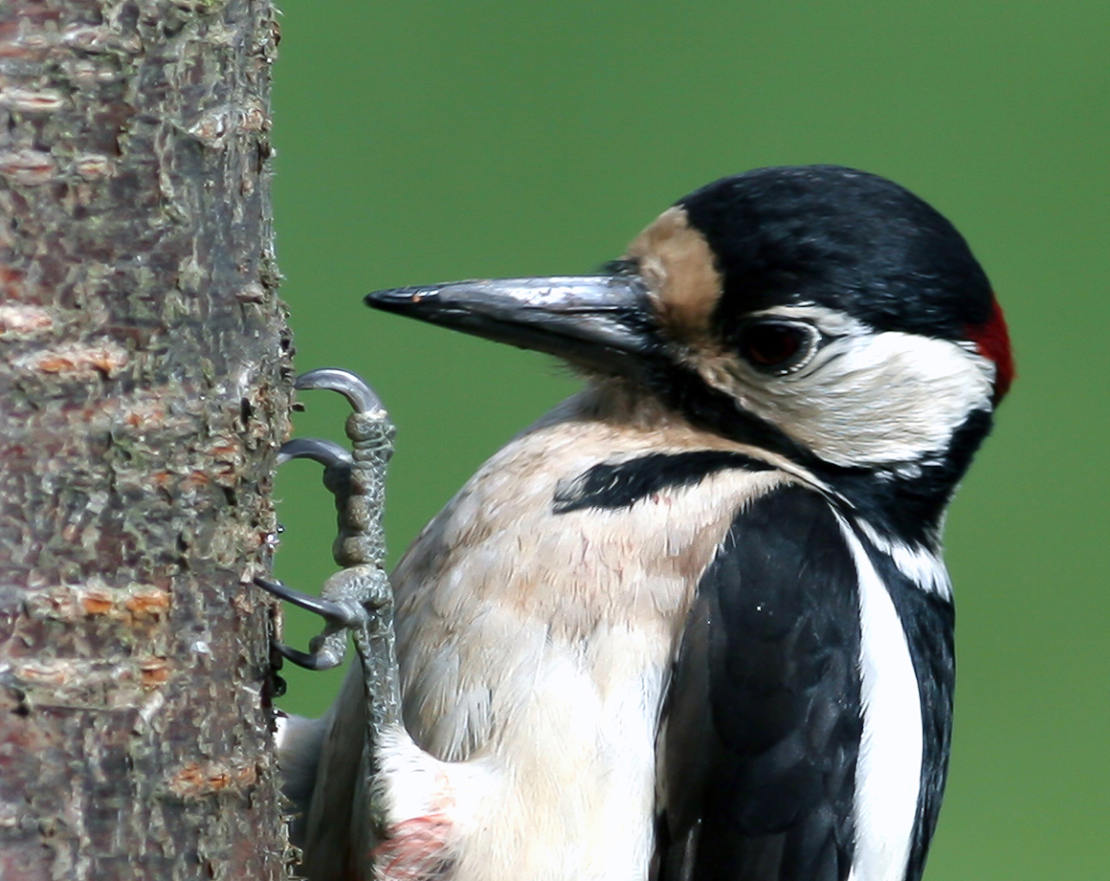
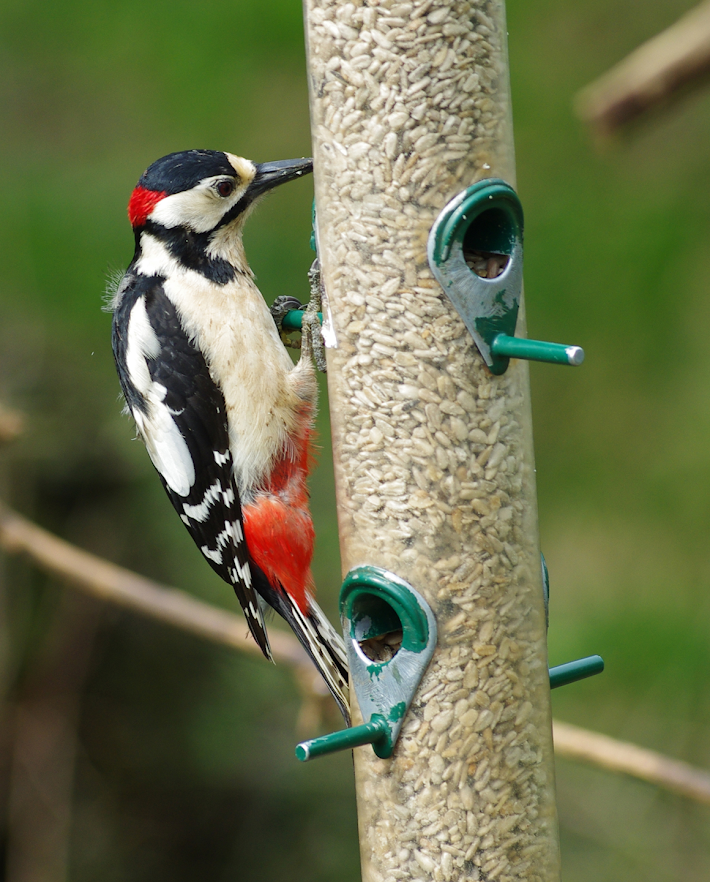
Great Spotted Woodpecker

Did you know while our resident songbirds like the robin, great tit, chaffinch, wren and blackbird sing the melody, it's our woodpeckers that bring the rhythm. And it's this time of year when the great spotted woodpecker and their smaller, rarer cousin, the lesser spotted woodpecker can be heard drumming their beaks against trees or other hard surfaces; excavating holes for nests and food.

We have three species in the UK: the great spotted woodpecker, the green woodpecker and the lesser spotted woodpecker.


Built-in shock absorbers

So how can woodpeckers drum their beaks against a tree over and over again without hurting themselves? The answer lies inside its head. The bones of the woodpecker’s skull are a durable combination of spongy ‘shock absorbers’ and a specially-adapted tongue bone that acts as a ‘seat belt’. This holds the brain tightly in place while they drum with impressive force in bursts of up to 20 times per second!

Both males and females ‘drum’ for food, but the male also uses it a way of proclaiming his territory and to advertise for a mate.


Super feet

Great Spotted Woodpecker

Most birds have four 'toes' with three that face forwards and one that faces backwards to help them cling to branches. Woodpeckers like to do things a little differently. Instead of the usual toe arrangement, woodpeckers have 'zygodactyl' feet. This means they have two toes that face forwards and two that face backwards.

This arrangement of toes, along with a short strong tail which they use as a prop, enables woodpeckers to climb up and hang onto vertical tree trunks with ease.


Tongue twister

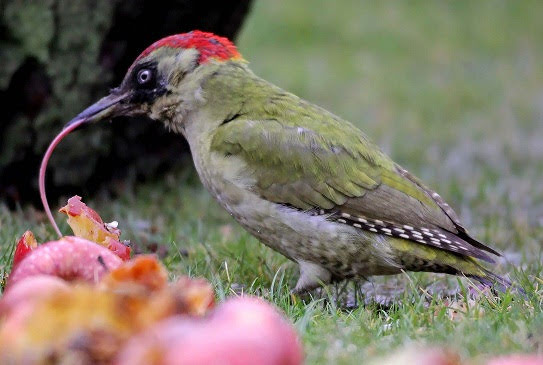
Green Woodpecker

Woodpeckers have super long sticky tongues which they use to slurp up insects and grubs that they find in tree trunks. The green woodpecker's tongue is an amazing 10cm long! It's so long that it curls around the back of its skull to fit inside its head.


Where to see or hear woodpeckers

Woodpeckers usually live in woodland, but even with their brightly coloured feathers they can be hard to spot. Instead listen for their drumming to try to work out where they are.

So wrap up warm and go out into the woodlands near you on a still, clear day. Ancient, broadleaved woodlands are the best, with enough big old trees to give places for woodpeckers to nest. Great spotted woodpeckers drum in short bursts that fade out at the end. The drumming of the lesser spotted woodpecker is higher pitched, in a longer burst that stops abruptly. It's sometimes possible to entice a woodpecker closer or to encourage him to reply by hitting a dead branch with a stone.

Here are just some of the places we know are great for hearing woodpeckers:

- Bickley Hall Farm, Malpas
- Cleaver Heath, Heswall
- Compstall Nature Reserve within Etherow Country Park
- Dibbinsdale Local Nature Reserve, Bromborough
- Gowy Meadows, Thornton-le-Moors
- Hatchmere, near Delamere Forest
- Hockenhull Platts, Waverton
- Owley Wood, Weaverham
- Swettenham Valley Nature Reserve and across the Dane Valley
- Warburton's Wood and Hunter's Wood in Frodsham

Great Spotted Woodpecker

Great spotted woodpeckers are also frequent visitors to bird feeders, so put some seeds and peanuts out and you might be lucky enough to spot one in your garden.

Wednesday, 4 September 2019

‘Trees In A Changing Climate’ conference


‘Trees In A Changing Climate’

Saturday 19th October
from 10 a.m.

Birkenhead Town Hall

£15

A conference for Tree Wardens, Friends of Parks Groups, Tree Officers, Councillors, Council officers and staff, volunteers and workers in Wildlife, Biodiversity and environmental groups.

An opportunity to network and provide commentary on issues relevant to realistic long-term and strategic planning for trees in the North of England. The new Wirral Borough Council collaborative Tree Strategy will be unveiled as an example of work-in hand, linked to Climate Change Strategies.

Book your ticket here:

As the Tree Council are hosting the meeting, there will be a cadre of Tree Wardens, but we are keen to say that the meeting is for everyone who wants a tree strategy for Wirral and is keen to get involved with the Wirral Tree Strategy, and management of trees in your local areas.  So if you can help get the word out as widely as possible, that would be great.

Wirral Council has also made a climate change statement and are looking across the Council to explore how this statement will affect and influence the working of the Council. The Tree Strategy is a Council wide strategy, cutting across all departments and teams.

If anyone who will be attending the event can help out on the day, please contact Helen Ellis (helen.ellis@mac.com) as she is one of the key organisers of the day at Birkenhead Town Hall.

Friday, 25 January 2019

Volunteer Bird Surveyors Wanted


Natural England, Wirral Council and Cheshire Wildlife Trust would like to hear from anyone who is interested in becoming a volunteer bird surveyor at Dibbinsdale SSSI.

The team briefing takes place on Thursday 7th March, from 12 – 2 p.m. at Brotherton Park and Dibbinsdale LNR Visitor Centre.

For more information please email

Saturday, 25 August 2018

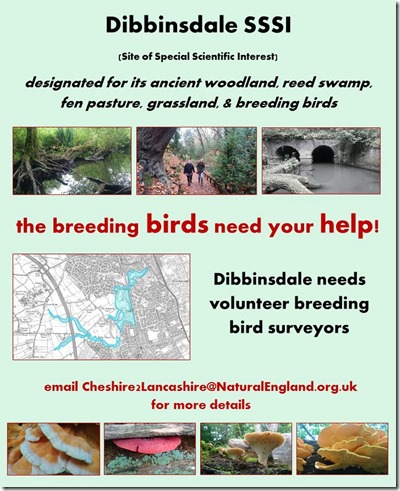
Dibbinsdale’s Birds Need Your Help!


Dibbinsdale breeding birds

Natural England are looking for volunteer surveyors to carry out breeding bird surveys at Dibbinsdale SSSI.


Thursday, 29 March 2018

Small Mammal Survey Training


Wood mouse. Photo: Hans Hillewaert

Alan Smail, the Ranger at Brotherton Park and Dibbinsdale Local Nature Reserve, is sponsoring a short training course on Small Mammal Surveying.

Ron Warne will be running the course which will be held in the reserve's Visitor Centre on the morning of 12th May 2018.

Ron will set up the traps on 10th and 11th with a view to having some real animals to experience.  He expects to have completed the session by lunchtime.

The number of places will be limited to give everybody some 'hands-on' experience with the equipment and animals.

If you would like to attend, please contact Ron directly via email to book a place.  If this session is over subscribed there will be a further one in conjunction with the Wirral Tree Wardens a little later in the Spring/Summer.

Monday, 20 November 2017

Tree Planting at Dibbinsdale


Planting the lime
Planting the small leaved lime. Photo: John Gill

On Saturday 18th November the group planted three trees at Dibbinsdale Local Nature Reserve to celebrate winning The Queen’s Award for Voluntary Service. A small leaved lime, a wild pear (grown from a seed from a tree at Willaston) and an oak were planted with the help of Bella Smallthwaite the daughter of committee member Caroline Smallthwaite. We are grateful for the assistance of Ranger Alan Smail and the Friends of Dibbinsdale and the use of a room to celebrate with tea and cake afterwards.

Planting the oak
Planting the oak. Photo: John Gill

Planting the pear
Planting the pear. Photo: John Gill

Wednesday, 10 May 2017

Bluebell walk at Dibbinsdale


Photograph taken before the start of the
‘Bluebell Walk’ at Dibbinsdale last Saturday.
Photograph Hilary Ash


36 people turned up for the Bluebell walk at Dibbinsdale, which made two nice-sized groups led by Pete Miller and Hilary Ash. The bluebells presented a lovely display and they also saw a few celandines and wood anemones, as well as wood sorrel, wood speedwell, sanicle and other flowers.

Saturday, 11 February 2017

Calling All Photographers!


Peter Miller, Chairman of the Friends of Dibbinsdale, has a challenge for local photographers...

Do you visit Brotherton Park or Dibbinsdale with your camera?

The Friends of Dibbinsdale are going to produce a calendar for 2018 and invite everyone to submit their photos of the reserve. The best will be selected for the calendar.

Get snapping! We look forward to seeing what you come up with. The details are below.

As part of our continual aim to promote the enjoyment of visiting Brotherton Park and Dibbinsdale Local Nature Reserve, we wish to produce a calendar for 2018, which will highlight the beauty and diversity of the landscape, wildlife and flora through the seasons.

WE THEREFORE INVITE ALL YOU BUDDING PHOTOGRAPHERS, WHATEVER SKILL LEVEL, to visit the reserve and submit digital pictures which best capture the Reserve’s diversity. All we ask is for you to submit your digital picture(s) by email as a jpeg, no more than 4MB per photo, and preferably in landscape. Please add any notation you consider appropriate. 

When submitting your image could you please reference your file and the email subject heading with your telephone number. This is necessary for us to ensure the image and the submitter are cross referenced when we start the selection process.

During October/November we will, together with Wirral 20 Photography club, decide on 12 photos which will be submitted for printing.

If you have any queries regarding the above then please email the Friends of Dibbinsdale

Saturday, 30 July 2016

Balsam Bashing


Himalayan Balsam. Photo: ceridwen


Many of you will know, over the past years there has been a concerted effort to control the Himalayan balsam in Thornton Woods nature reserve, through which Clatter Brook runs before joining the River Dibbin. This year a wider area has been tackled.

Over the past 3 years there has been a decrease in its density, and we have been able to clear the whole of the wood and the top wood west of the M53. Alas one cannot find every single plant and so they will grow and seed. This work has been carried out by day and evening tasks by Wirral Conservation Volunteers and work parties organised by the Wildlife Trust. Thornton Brook which runs through Foxes Wood is looked after by Tom. Further down the Dibbin is Dibbinsdale nature reserve where the Friends of Dibbinsdale volunteers and Alan the ranger have been doing their bit there. However, for successful control you need to go upstream as far as possible to get to, or close to the source, as the seeds are mainly carried by water.

This year we have forged upsteam of Thornton Woods for the first time for a few years. We gained permission from Wirral Hospitals Trust to go into the Clatterbridge Hospital grounds and clear the brook before it is culverted under the buildings. We did find some isolated plants there. We then tried to identify from maps and a site visit where the brook emerges from the Northern boundary of the hospital grounds to go across the fields in a small valley/ ditch towards Brimstage. This was complicated by the fact there are two brooks marked on the map, but we could only find one at the hospital. Anyway then we asked for and got permission from Leverhulme Estates to walk this stretch of the brook. We expected to be able to to walk and deal with any balsam between Brimstage and the hospital in a morning. Unfortunately heavy balsam growth and chocking vegetation in the deep ditch here impeded progress somewhat. It took over an hour and we were not even halfway to the hospital. We did not realise the course of the brook at this point narrows to a deep ditch in places. We need to go back in the winter to do a further survey of the brook, and find other access points. The main point is we are now pushing up upstream on the Clatter, which should in the future make things easier for control in the reserves downstream. We are getting to the end of the balsam pulling season as lot of it is flowering now.

Tim Gannicliffe