Showing posts with label dragonflies. Show all posts

Sunday, 28 June 2026

June at New Ferry Butterfly Park


Almost every day, on the New Ferry Butterfly Park Facebook page, we feature amazing photographs taken by Roy Lowry on his regular visits.

We know that not everyone uses Facebook so we have selected some of the images he has taken and shared with us in June.

Here are two busy bumblebees photographed at the beginning of the month.

Red tailed bumblebee (Bombus lapidarius)


Common carder bee (Bombus pascorum)

However life will be less easy if they are spotted by a ferruginous bee-grabber. This fly lives up to its name by grabbing hold of bumble and honey bees to lay an egg from which a larva emerges and proceeds to eat the host alive.

Ferruginous bee-grabber on a bramble flower

Close up of Sicus ferrugineus - the ferruginous bee-grabber
Close up of Sicus ferrugineus - the ferruginous bee-grabber


On most sunny day visits to the Butterfly Park Roy will photograph butterflies.

Common blue butterfly (Polyommatus icarus)

Green veined white (Pieris napi)

Both photographs show how the underside of the wings differs from the upper surface.

Recent star of the butterflies for Roy Lowry was a dingy skipper that posed on the lime waste. This was the first he had managed to photograph since 2023.

Say hello to the dingy skipper!


Dingy skipper (Erynnis tages)


Also present at the Butterfly Park this month - small coppers, speckled woods and brimstone caterpillars.

Small copper (Lycaena phlaeas)

Speckled wood (Pararge aegeria)

Caterpillar of the brimstone butterfly (Gonepteryx rhamni)


Day flying moths are good to build a story around. Roy reported “The narrow-bordered five-spot burnet moths were in a frisky mood in Saturday’s warm weather”.

Two's company for the narrow-bordered five-spot burnet moths
Two's company for the narrow-bordered five-spot burnet moths

Three’s a crowd
Three’s a crowd...

But four?????
But four?????

The pond is a good place to find dragonflies and damselflies. 
Here are paired azure damselflies expertly photographed egg-laying in the pond.

Male and female azure damselflies (Coenagrion puella)

The male azure damselfly is blue and the female is green
The male azure damselfly is blue and the female is green


Roy also photographed two male broad bodied chaser dragonflies on the pond.

They had distinctively different markings - one had much more brown colouration on the thorax and base of the abdomen, but this might change as it ages.

Broad bodied chaser dragonfly (Libellula depressa)

A Broad bodied chaser dragonfly with more brown colouration
Broad bodied chaser dragonfly with more brown colouration


Here’s a hairy shieldbug.

Dolycoris baccarum - or the hairy shieldbug


As the name suggests, they're covered in tiny hairs - though you may have to look closely to spot them! They are also known as sloe shieldbugs, because they're often found around blackthorns, where they use their piercing mouthparts to feed on the fruits - called sloes. They also feed on the leaves, seeds and fruits of a wide range of other plants.

Hairy shieldbugs spend the winter as an adult, emerging in spring to mate. Females lay clumps of brownish, barrel-shaped eggs that stick firmly to the chosen plant. The young, known as nymphs, are smaller and rounder than the adults, but still covered in pale hairs. They go through several stages of growth, before maturing into their adult form in late summer or early autumn.

Dock bugs - a northerly migrating species - are now very well established.

Dock bug (Coreus marginatus)

The trivial plant bug is a Mediterranean species that was introduced into the London area on imported plants and has now got this far north. Roy first saw them last year.

Trivial plant bug (Closterotomus trivialis)

This year they are joined by the cabbage bug which Roy had not seen on the Wirral before.

Cabbage bug (Eurydema oleracea)

Roy’s favourite subjects are hoverflies, especially Chrysotoxum festivum (hook-barred spearhorn).

These are specialists with larvae feeding on ant-attended root aphids. He noticed a couple of males - one had territory on the path to the lime waste and the other on the path about halfway along the lime waste, and both territories were being defended.

The territory along the lime waste was also defended last year.

Hook-barred spearhorn (Chrysotoxum festivum)


Here’s Melangyna sexguttata sensu lato which he doesn't see very often.

This name is much longer than the actual hoverfly!

Melangyna sexguttata sensu lato

These mating craneflies make an interesting image.

Cranefly courtship
Cranefly courtship

Not everyone likes spiders but here’s a zebra jumping spider with its prey. 

Zebra jumping spider (Salticus scenicus)

Visitors to New Ferry Butterfly Park can also look out for beetles.

Roy photographed thick-legged flower beetles plus several spotted longhorn beetles. These were flying around the bramble flowers looking a bit like self-propelled aliens.

Thick-legged flower beetle (Oedemera nobilis)
 Thick-legged flower beetle (Oedemera nobilis)

Spotted longhorn beetle (Rupeta maculata)

June is a good time to admire flowers at the Butterfly Park, with the red poppies and marsh orchids being particularly eye-catching.

Poppies in the wild flower strip

A marsh orchid in the limewaste

New Ferry Butterfly Park is extremely lucky to have someone of Roy’s photographic and identification skills creating a monthly visual record of its wildlife.


Wednesday, 20 March 2024

An Assembly of Tiles: Part 2 - the Broad-bodied Chaser Dragonfly


Caroline Lancelyn-Green at Poulton Hall with the Broad-Bodied Chaser tile

The broad-bodied chaser tile is the most detailed of all the tiles that Freya Levy has painted. Freya has patiently captured the wing vein pattern of this dragonfly in excellent detail. The tile is dedicated to Caroline Lancelyn Green of Poulton Hall, Bebington.

Caroline has been a long-term supporter of the park and was the guest of honour at the 2023 Opening Day wearing a theatrical butterfly themed scarf. Pictured below is Caroline being presented with a wild pear tree from Willaston stock, as a thank you for being the guest of honour to unveil a new noticeboard. Caroline hosts fund-raising open garden events for a range of charities, including one for Wirral Wildlife and New Ferry Butterfly Park. Do visit the garden open days at Poulton Hall. They are well worth several visits throughout the season as there is a succession of flowering plants. Come especially on the Wirral Wildlife and New Ferry Butterfly Park fundraiser event on Saturday 29th June at 2pm.

See the Poulton Hall web page www.poultonhall.co.uk closer to the day for details and to book tickets.

Presentation of a wild pear tree to Caroline at the 2023 Butterfly Park Open Day
 
Caroline does much for nature conservation at Poulton Hall including the wildflower meadow beyond the ha-ha. It is a haven for the meadow brown butterflies which are on the wing even in light rain. Cheshire Wildlife Trust lease Tom’s Paddock, Foxes Wood, Thornton Wood, and Intake Wood from the Poulton Hall Estates and manage these sites for nature conservation.

Male Broad-Bodied Chaser dragonfly

The Broad-Bodied Chaser is an easily recognised dragonfly with is distinctive, broad, flattened body, which has yellow patches on the side of its abdomen. Painted on the tile is the male which has a blue abdomen. It is on the wing in June and July. Egg laying occurs by the female dipping her abdomen over shallow water at the muddy edge of the pond. The chaser has a marked preference for new ponds, so hopefully will continue to make use of the newly restored pond at the park. They patrol ponds regularly, returning to the same low perch after swift flights along the pond margins, so they can easily be observed.


Paul Loughnane
New Ferry Butterfly Park Reserve Manager

Monday, 21 September 2020

Kathryn's Garden Makeover For Wildlife

Kathryn J Fegan contacted us with news of her garden transformation. Kathryn's achievements are really impressive and provide habitat for a wide range of wildlife. The results are a pleasure to see...


Bee and butterfly service station flower bed
Bee and butterfly service station flower bed in full bloom


I was both inspired and challenged by your articles over the summer to help wildlife in our gardens, and I just wanted to share the changes I’ve made in my back garden and how I’m enjoying the garden coming to life with bees, other insects, butterflies and a hedgehog.


The beginnings of the new flower bed


Filling the bed with topsoil and compost

My garden used to be a big square lawn with green shrubs around the sides. Very little changed through the seasons. Hardly any living things visited despite me putting out bird feeders and we had an ignored blue tit box.


Starting the new bed in the middle of May’s drought

The finished flower bed

Since March I have created a bee and butterfly service station flower bed to one side of the lawn by placing a layer of cardboard over the grass when it was brown in the hot weather, and covering this with a deep layer of topsoil and mushroom compost which I had delivered. The result has been spectacular and I have had fun identifying honey bees, carder bees, red tailed and buff tailed bumble bees and a cuckoo bumble bee.

I followed Charles Dowding’s no dig method from YouTube which preserves the soil structure and fungal connections beneath, is very much less hard work and in 2 months the cardboard is rotting and feeding the soil, and the plants are rooting into the rich soil below.


Perfect foraging for bees


Then opposite to this I have dug a small shallow pond and already have 4 black diving beetles in it, and today a visit from a mating pair of common darter dragonflies.


Kathryn's small pond
Kathryn's small pond providing a home for aquatic insects


Common darter dragonflies


I have scarified the back half-moon of lawn and sown wildflower seed; it was a little late in the season so I expect to see better results next year but field grasshoppers now visit.


Grasshopper
Grasshopper


An area of lawn with longer grass and wildflowers

I have dug up the back border and planted a mixed native hedge with hawthorn, hazel, blackthorn, field maple and dog rose. I planted whips so they’re about 3 feet tall now. I made 2 hedgehog holes in a fence and a gate, and now have hedgehog poo on the lawn. Gradually I am replacing green shrubs with native and bee-friendly plants.

I’ve been fascinated by the arriving insects and have been uploading them to iNaturalist for identification and recording. I’ve identified Green, Hawthorn and Sloe shield bugs in the garden - that started when one literally fell onto my knee as I sat in the garden with a coffee!


Red admiral on ivy flowers


Sloe shield bug
Sloe shield bug


Green shield bug nymph


All this change has been just one person in 7 months! I would like to encourage others to make the change for wildlife. I’ve found it fascinating to see how nature responds to just a little invitation from us, and my garden is now alive with insects and birds.


Wednesday, 27 June 2018

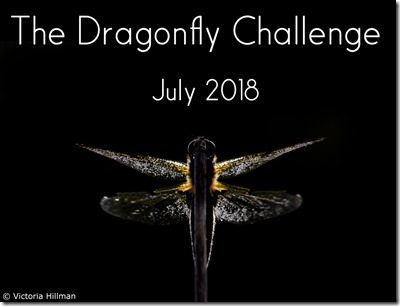
Dragon Hunters


dragon hunters

Could you be a dragon hunter in July?

The British Dragonfly Society is in the process of launching a new citizen science project called the Dragonfly Challenge. This is a fun, educational activity to encourage people to spend more time outdoors over the summer.

Participants, known as ‘Dragon Hunters’, will have to try and find as many of the Challenge's six special species as possible within July. To do this they will have to learn about the species and their habitats, then explore different types of wetlands to find them all.

The species are: Large Red Damselfly, Blue-tailed Damselfly, Common Darter, Southern Hawker, Four-spotted Chaser, and Golden-ringed Dragonfly.

To access and download all the Dragonfly Challenge resources, and for more information, please visit the project page:


Wednesday, 14 June 2017

Great News from Delamere


Delamere’s first ‘dragon’ of the year has been spotted in the forest… well the white-faced darter 
dragonfly.
White-faced darter. Photo: Kevin Reynolds


As one of the UK’s rarest dragonflies, this beautiful species has been extinct in our county for over a decade. However, an ambitious project over the last several years has meant that the adult dragonfly has been spotted again this year. The work has involved countless Cheshire Wildlife Trust volunteer and reserve staff hours, reinstating and improving habitat in Delamere Forest, in partnership with the Forestry Commission, as well as a series of white-faced darter translocations.
Doolittle Pool, Delamere. Photo: Richard Gabb


Chris Meredith, Delamere Conservation Officer at Cheshire Wildlife Trust explained the importance of this. “Sightings this month are really significant as it is the first year where we have not introduced new larvae to the pool. This means the adults you can see flying around the pools, are either from larvae that were at an earlier stage and have therefore survived for a longer period, or are in fact the result of adults breeding successfully at our site. A huge thank you to all of our supporters, volunteers and funders who have contributed to the success of the project.”
Dragonflies have been on the earth for over 300 million years and during that time have remained largely unchanged. Although the dragonflies you see are usually flying through the air, they will have all started life in the water. After an egg has been laid, the larva hatches and spends between 3 months and 5 years feeding and growing underwater. Once the larva has reached its full size, it will climb out of the water where it breaks out of its outer skin, revealing its adult body with wings. The adult dragonfly is several times bigger than the larva and has to spend a few hours letting its body and wings stretch out after developing in such a small space. Once dry the dragonfly can take its first flight.
Adult emerging. Photo: Chris Meredithsmall


The white-faced darter reintroduction project is a partnership between Cheshire Wildlife Trust, the Forestry Commission, Natural England, the British Dragonfly Society and Cheshire West and Chester Council, with funding support from the Heritage Lottery Fund and the Linley Shaw Foundation.