Showing posts with label wildflower planting. Show all posts

Friday, 13 March 2026

New Ferry Butterfly Park - March Update


The area where seeds have been sown

On the Butterfly Park workday on 8th March, we sowed more seeds on the ground opposite Mel’s Garden (pictured above). In total, more than 20 species of grass and wildflower seeds are in the soil so far.

On the following day we put some degradable plastic ribbons and flower/ yoghurt pots to deter the birds from eating the seeds (photo below). We hope it works, but apologies to the birds for this temporary deprivation. They can resume their pecking after a month or so. Some of those seeds are bought, but most are donated by friends and partner conservation organisations. Although some are a bit old, we shall wait and see!

Trying to deter birds from eating the freshly sown seeds

Some of the plugs planted by university students and refugees last year are doing well, in particular Black Knapweed, Hawkbit, Great Birds-foot Trefoil, Red Campion and Selfheal (all pictured below).

Black Knapweed
Black Knapweed

Hawkbit
Hawkbit

Great Birds-foot Trefoil

Red Campion
Red Campion

Selfheal
Selfheal

If you have some native grass and wildflower seeds to spare, why not give them to us and we will make good use of them.


Yan and Charles, New Ferry Butterfly Park volunteers

Monday, 21 September 2020

Kathryn's Garden Makeover For Wildlife

Kathryn J Fegan contacted us with news of her garden transformation. Kathryn's achievements are really impressive and provide habitat for a wide range of wildlife. The results are a pleasure to see...
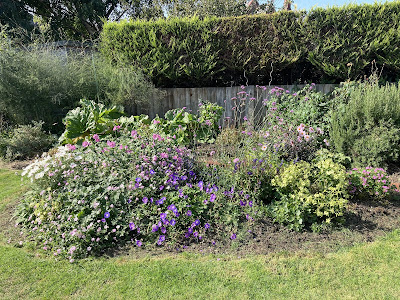

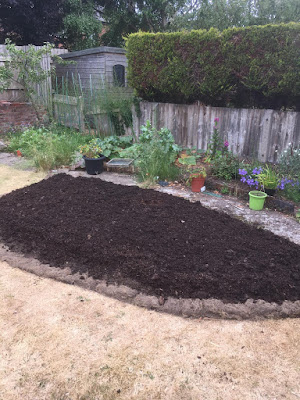
Bee and butterfly service station flower bed
Bee and butterfly service station flower bed in full bloom


I was both inspired and challenged by your articles over the summer to help wildlife in our gardens, and I just wanted to share the changes I’ve made in my back garden and how I’m enjoying the garden coming to life with bees, other insects, butterflies and a hedgehog.
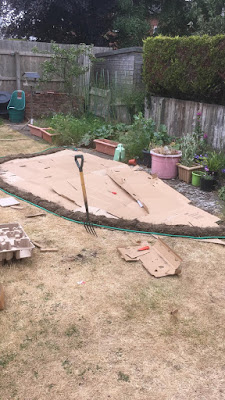

The beginnings of the new flower bed


Filling the bed with topsoil and compost

My garden used to be a big square lawn with green shrubs around the sides. Very little changed through the seasons. Hardly any living things visited despite me putting out bird feeders and we had an ignored blue tit box.
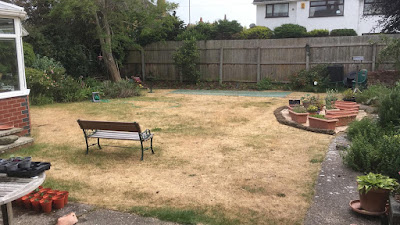

Starting the new bed in the middle of May’s drought

The finished flower bed

Since March I have created a bee and butterfly service station flower bed to one side of the lawn by placing a layer of cardboard over the grass when it was brown in the hot weather, and covering this with a deep layer of topsoil and mushroom compost which I had delivered. The result has been spectacular and I have had fun identifying honey bees, carder bees, red tailed and buff tailed bumble bees and a cuckoo bumble bee.

I followed Charles Dowding’s no dig method from YouTube which preserves the soil structure and fungal connections beneath, is very much less hard work and in 2 months the cardboard is rotting and feeding the soil, and the plants are rooting into the rich soil below.
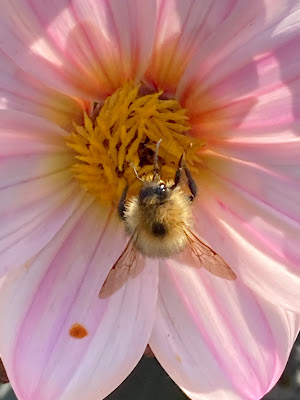

Perfect foraging for bees


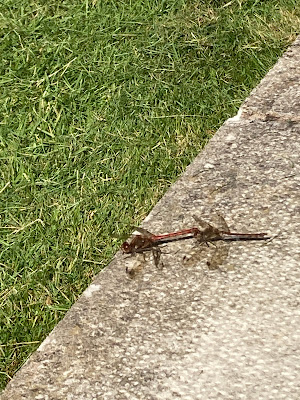
Then opposite to this I have dug a small shallow pond and already have 4 black diving beetles in it, and today a visit from a mating pair of common darter dragonflies.


Kathryn's small pond
Kathryn's small pond providing a home for aquatic insects


Common darter dragonflies


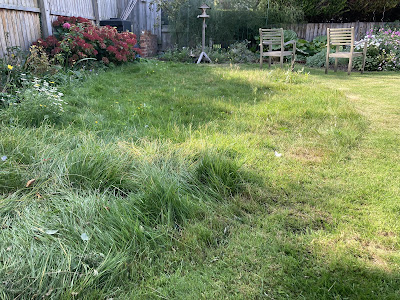
I have scarified the back half-moon of lawn and sown wildflower seed; it was a little late in the season so I expect to see better results next year but field grasshoppers now visit.


Grasshopper
Grasshopper


An area of lawn with longer grass and wildflowers

I have dug up the back border and planted a mixed native hedge with hawthorn, hazel, blackthorn, field maple and dog rose. I planted whips so they’re about 3 feet tall now. I made 2 hedgehog holes in a fence and a gate, and now have hedgehog poo on the lawn. Gradually I am replacing green shrubs with native and bee-friendly plants.

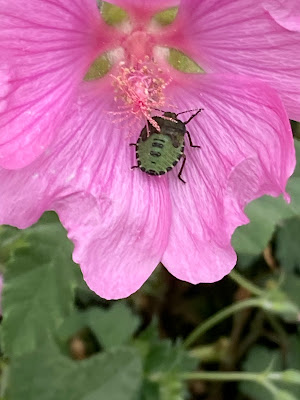
I’ve been fascinated by the arriving insects and have been uploading them to iNaturalist for identification and recording. I’ve identified Green, Hawthorn and Sloe shield bugs in the garden - that started when one literally fell onto my knee as I sat in the garden with a coffee!


Red admiral on ivy flowers


Sloe shield bug
Sloe shield bug


Green shield bug nymph


All this change has been just one person in 7 months! I would like to encourage others to make the change for wildlife. I’ve found it fascinating to see how nature responds to just a little invitation from us, and my garden is now alive with insects and birds.


Monday, 3 June 2019

Woad You Believe It!


Woad in the Eastham Rake station car park. Photo: Hilary Ash

Have you heard of woad, the blue dye with which the Romans said the Picts painted themselves?

Since the invention of chemical dyes it has ceased to be a crop plant and become a rarity in Britain. To our surprise it turned up in Eastham Rake railway station car park a few weeks ago, and has now formed its distinctive seeds, like little paddles. It is growing round the bases of two lamp-posts. The ground round the lamp-posts and some of the car park edges have been sown with a wild flower mix (well done Merseyrail). Ox-eye daisy, bacon-and-eggs and red clover are flowering and being much enjoyed by the local bumble bees.

Woad in the Eastham Rake station car park. Photo: Hilary Ash

Hilary Ash

Monday, 17 April 2017

A Natural Future for Bees and Butterflies


Planting below the laid hedge. Photograph Richard Ash


A £280 grant from Cheshire Wildlife Trust’s  Project “Natural Futures” has enabled New Ferry Butterfly Park volunteers to plant 400 wildflower plugs to enhance the park’s hedge banks, pond verges and grasslands. The event attracted 25 volunteers in all, including our regular volunteers, Students from Liverpool John Moores University Conservation Society and 10 members of the public. 


A boundary hedge at the park was laid in the winter to renew the hedge growth from the base of the hedge. The hedge laying exposed the partially shaded hedge bank and revealed a rather boring ground flora. This has been remedied by the planting of 150 woodland wildflower plugs into the bank. The mix consisted of betony, common dog violet, primrose, greater stitchwort and wild strawberry. This will make the hedge bank more attractive and supply further nectar and pollen sources for bees and butterflies at the park. In a few years it will show-case what an attractive hedge bank can look like.


Planting around the pond. Photograph Richard Ash


Fifty ragged robin and fifty purple loosestrife plug plants were planted around the pond dipping pond which was restored last summer.


Also 150 common sorrel were planted into Charlie’s Field, at the south end of the park. Charlie’s Field has recently been be reclaimed from invasive suckering plum and a mowing regime started. Last year a pleasant surprise was that over 40 Cowslips have naturally colonised the area following the start of the mowing regime. Common sorrel is the larval food plant of the small copper butterfly. The small copper butterfly although a widely distributed butterfly, is declining in abundance; nationally a staggering 37% between 1976 -2014*. Here at the park we are doing our part to reverse that trend.


Planting in Charlie's Field. Photograph: Richard Ash
Ella Woodcock, Volunteer Coordinator from Liverpool John Moores University Conservation Society said “We were delighted to help at this community project and learn a little about butterfly ecology.  We were well looked after, we had homemade butterfly themed cakes, and thoroughly enjoyed ourselves.  We will be coming back.” She added enthusiastically “Whilst we were weeding some purging buckthorn shrubs for the brimstone butterfly, a brimstone butterfly flew around these shrubs. It was great to see conservation in action.”

Beth Alvey, Natural Futures Volunteering and Training Manager, Cheshire Wildlife Trust said” It was great to see the connections between the volunteers, students and local residents.  If any other wildlife volunteering groups would like some assistance in building volunteering capacity, grants and training please contact Beth Alvey at Cheshire Wildlife Trust”.

Paul Loughnane, Honorary Reserve Manager, New Ferry Butterfly Park added “These projects are all in preparation for the Park’s open season which begins on Sunday 30th April with a big open day event with environmental themed stalls. It starts at 11 a.m. with Alison McGovern MP being the guest of honour and unveiling a new piece of artwork inspired by a poem ‘Life is like a butterfly’ by Joseph T. Renaldi 

* Small copper data from Butterfly Conservation