Wednesday, 7 November 2018

Helping Wildlife This Autumn


Helping wildlife

Some good advice from Cheshire Wildlife Trust this autumn…

You could be mistaken for feeling that there’s not much to do for wildlife in the autumn. However there are small things that you can do to even make the smallest of gardens, balconies or outside spaces better for wildlife.

Hedgehog

1. Compost, don't burn

Please check for hedgehogs, toads and frogs before lighting a bonfire at this time of year. What we think is a pile of garden waste looks like a warm winter retreat to these creatures. Or even better – why not compost instead? It’s better for hedgehogs and worms will love it too.

Blue tit on feeder

2. Feed the birds

Put out bird food – a fat ball at this time of year can make a huge difference during the lean winter months. Put them in wire cage dispensers and not the plastic nets as birds like woodpeckers can get their tongues caught. Why not make your own using coconut shells, holes drilled in wood or even shells?

Cotoneaster

3. Get planting

Plant berrying and fruiting trees and shrubs such as apple trees, Cotoneaster (right) and Pyracantha. These plants fruit at a time when other food sources are scarce, filling the ‘hungry gap’ for birds in your neighbourhood. They also add a splendid colour to any outdoor area.

Ask at your local garden centre or plant nursery for help in chosing the right plants.

Wildlife Friendly Garden Award

Small actions make a huge difference!

Small things we do can make a huge difference to wildlife on our doorsteps! Look online for advice of how you can make your outside areas better for wildlife.

Do you have a wildlife friendly garden already? Well why not apply for My Wildlife Friendly Garden award and let your neighbourhood know that you’re taking action for wildlife? Simply look online, make a donation and apply today to get your plaque sent in the post.

Tuesday, 6 November 2018

Unilever Consumer Team Visit to New Ferry Butterfly Park


Unilever 1

On Tuesday 16th October a team from Unilever spent the morning volunteering their time and energy at the New Ferry Butterfly Park. The visit was organised as part of their Vitality initiative for 2018. The objective was to make a difference to the local community, to build the team and to have fun outdoors.

On our arrival, we were welcomed by Paul and his team of regular volunteers. After a quick introduction to the park and the regulatory Health and Safety briefing, we spilt into teams to tackle a variety of activities.

One group took on the challenge of the invasive honeysuckle – a worthy opponent but it was defeated by the efforts of the Team. This group also rebuilt the layers of the insect house by stuffing it with dried fern leaves and pine cones.

Unilever 3

Another group took on the composting challenge. This involved moving compost at various stages of decomposition from one bin to another. They also bagged up compost ready for sale to raise valuable funds for the park.

Unilever 2

To allow the growth of spring flowers to attract the butterflies, another group scythed. This was hard work which was made to look easy by the regular volunteers, but a determined team completed the task and had the blisters and aching muscles to prove it!

The final group spent the morning coppicing, cutting down trees to encourage regrowth and to provide stakes for hedging work. This particular activity really built teamworking and co-operation skills.

Unilever 4

The time flew by, it was coffee time before we knew it! After a short break which involved networking and some team members becoming acquainted with the compostable toilet facilities, we carried on until it was time for lunch. The volunteers from the park laid on a lovely barbecue for us which was enjoyed by all.

Unilever 5

During our visit, the volunteers also took the time to show us around the park and explained to us how it runs. They also told us about the various activities they run throughout the year.
The Unilever Team returned to work feeling a sense of achievement and wellbeing (even with the blisters!).

We would like to thank Paul and all the volunteers for giving up their time and letting us join them in maintaining a beautiful local attraction. We hope to be back soon!

Philippa Toleman CTI Specialist, CTI Laundry, Unilever.

Thursday, 25 October 2018

Saving Cheshire’s Trees


Saving trees

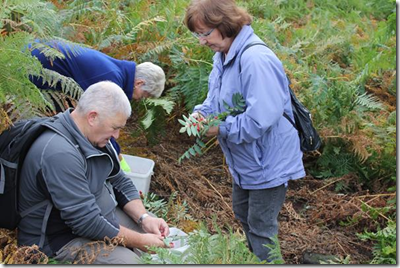
This autumn Cheshire Wildlife Trust volunteers have been busy collecting seed from alder buckthorn trees at Hatchmere Nature Reserve.

Alder buckthorn is a little known tree in the area, but it grows well on the acidic peat soil and heathland found on our reserve. The day involved the volunteers first learning to identify the tree, then identifying ripe fruit followed my many hours of seed collection. The target was 10,000 of the alder buckthorn seeds!

Collecting seeds

So why are we collecting seed?

The seeds are now safely banked in the underground vaults of Kew’s Millennium Seed Bank – as part of the UK’s first national collection of tree seeds. Stored in a temperature and humidity controlled environment before being processed and transferred to deep-freeze conditions, the seeds should remain viable for many decades.

These collections of seeds will play a vital role in on-the-ground conservation work to protect UK trees and woodlands from threats such as pests and diseases like ash dieback. The collections, and associated data, are also available to researchers working on solutions to tackle the many threats facing our woodlands.

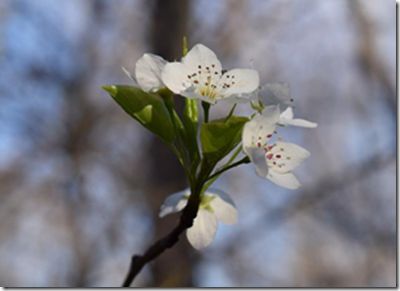
As a partner of the project, so far this year Cheshire Wildlife Trust has collected seeds from five species of tree including wild cherry, guelder rose, wild service and hawthorn, with many more collections planned.

Cherry blossom

The work is part of the UK National Tree Seed Project, which was launched in May 2013. Set up by the Kew’s Millennium Seed Bank at Kew Royal Botanic Gardens, the project's aim is to protect the UK’s trees by securing genetically diverse collections of our native trees and shrubs.Taking into account factors such as conservation status, prevalence in the landscape and vulnerability to pests and diseases, the target species include many which underpin the UK’s wider plant and animal diversity. This also includes species that support the woodland industry, tourism and recreation, such as ash, juniper, Scots pine, alder, beech, hazel, silver birch and yew.

To date, the project has collected more than 12.5 million seeds sampling from over 8,000 individual trees across the UK.

The UK National Tree Seed Project is funded by players of People’s Postcode Lottery.

Tuesday, 23 October 2018

Volunteer Press Gangs at Butterfly Park


Liverpool John Moores Conservation Society. Photo: Paul Loughnane

I was once asked by an officer the Cheshire Wildlife Trust did I allow volunteers to take rest breaks, as if I was running press gangs! Well one recent weekend we had two press gangs. Firstly on Saturday Dave Elwand and the Wirral Tree Wardens and then on Sunday a press gang imported from Liverpool John Moores University Conservation Society.

Wirral Tree Wardens. Photo: Paul Loughnane

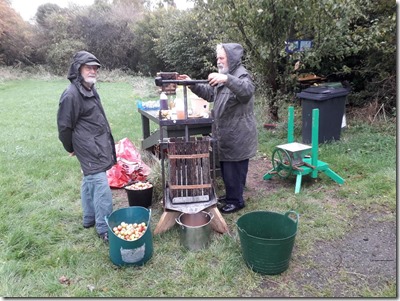
We were making use of the fallen apples from New Ferry Butterfly Park as well as apple donations from Burton Walled Garden, Upton Hall School Orchard, Brimstage Orchard and private gardens. Approximately 3.5 gallons of apple juice was produced with a mix of dessert and cooking apples for a sweet apple juice for Wirral Pomona to ferment into a cider. For fresh apple juice to drink crab apples were added to the mix to take away the sweetness. Some students asked why they should not eat the crab apples. I said “Take a bite and you will soon realize why!” A wincing face is a sure test it is a crab. With the team of eager students quartering, scratting and pressing apples it did not take much time at all to fill the press and they were all excited to see the juice rush out of the press as the apple mash was squashed.

After making the apple juice the students enjoyed sampling the juice alongside the BBQ put on for them. In fact the juice, BBQ, homemade cakes and tea gave some of the students’ energy to work on Embankment Coppice until 5pm in the afternoon, the longest a student group has ever stayed. We hope to entice them back again with an après task cider sometimes soon. Look after your volunteers and they will come back again, no press gangs required.

Paul Loughnane

Monday, 22 October 2018

Cheshire Wildlife Trust say Wirral’s wildlife has not been considered in Local Plan


Bluebells in Dibbinsdale SSSI:
housing adjacent would threaten them with loss through trampling.
Photo: Hilary Ash


Cheshire Wildlife Trust have issued a stark warning to Wirral Council on the impact of their proposed development options on Wirral’s wildlife put forward in their local plan.

Rachel Giles, Evidence and Planning Manager at Cheshire Wildlife Trust has put forward her concerns as part of a public consultation on the council’s local plan.

The Trust is concerned that the clear guidance relating to sustainable development has been overlooked by not giving the natural and historic environment equal consideration to economic and social issues and that the plan proposes a significant threat to green belt land.

“We believe that at least 14 of the proposed options would result in significant harm to either SSSIs or Local Wildlife Sites. We are disturbed to see that these have been put forward when the government’s National Planning Framework specifically states that sites of biodiversity should be ‘protected and enhanced’,” said Rachel Giles.

Wirral Wildlife, the local volunteer group of Cheshire Wildlife Trust, has considered every parcel of land proposed. Hilary Ash from the group said, “We are particularly concerned about the possibility of building on large areas of land around Dibbinsdale SSSI, and around Local Wildlife Sites at Irby, Greasby, Prenton, Barnston and Storeton. Other areas under threat include those used by birds from the Dee estuary as roost grounds, and land supporting bats, great crested newts, hares and badgers. The cumulative effects of building on a large proportion of the proposed sites would be very damaging to Wirral’s wildlife, and to the opportunities for local people and visitors to enjoy that wildlife.”

The Trust also believes that the proposed development options have failed to take into account the priority that should be given to supporting a network of habitats for wildlife. “Even the top priority areas of habitat, seem to have been ignored,” said Rachel Giles. “Failure to take the network into account undermines the objectives of ecological network mapping to ensure that wildlife has connected habitat in which to feed, live and breed. The point of network mapping is to inform the planning process so that changes in land use retain and improve wildlife corridors and core sites. This helps reconnect fragmented populations of flora and fauna and over time should help with their recovery. The National Planning Framework states that planning policies must take a ‘strategic approach to maintaining and enhancing networks of habitats’, something that seems to be lost in these proposed plans.” A particular concern is the open land corridor east of the M53.

Cheshire Wildlife Trust have recommended that the ecological network is incorporated into Local Plan policies. “This is essential to inform decisions relating to the various development options and it is unacceptable it hasn’t yet been included,” said Rachel Giles.

Embedding an ‘environmental net gain principle for development, including housing and infrastructure’ is the overarching aim of the government’s 25 Year Plan for the Environment which was released this year. But the Trust believe that this hasn’t been considered in these proposals. “Many of the sites put forward are areas of high wildlife value such as those important for ground nesting birds, which would make net gain very difficult to achieve unless tracts of land were set aside for the purpose of biodiversity offsetting.

The proposals can be viewed on the Wirral Council’s website and comments can be submitted by email to localplan@wirral.gov.uk

by post to The Forward Planning Manager, Wirral Council Economic and Housing Growth, PO Box 290, Brighton Street, Wallasey, CH27 9FQ

or by completing the online form. The public consultation closes on 26th October 2018.

Thursday, 4 October 2018

Apple Day


Apple Day was celebrated on September 30th at Eastham Country Park.

Local apples were on display with a record 32 varieties picked from orchards at Brimstage Hall, Upton Hall School and Willaston and some from our volunteers.

Apples ready to be tasted.


The traditional apple press was used to make delicious juice and children are always keen to help....


.......and to taste it.


Slightly less strenuous is seeing how long a piece of peel you can get from an apple using our peeling machine. 


Children also coloured in apple pictures and wrote poems to glue on our wooden tree.


We know that the group held an Apple Day in 1996 and every year since then.

Recently we have been lucky enough to have Mersey Morris Men with us.


A day to truly celebrate the British apple.

Monday, 17 September 2018

Recording at Thurstaston Common


Quadrats at Thurstaston

Our recording team have been out doing the annual recording of 12 fixed quadrats on Thurstaston Common. This is a long-running programme of monitoring the heathland for the National Trust, started by Andrew Brockbank over 20 years ago.

So that is why Hilary, Tay and Mathilde are deep in heather and western gorse - photographed by the fourth member of this year's team, June.

Finding the pegs which mark each quadrat is half the job, especially when the heather is tall like this. A combination of GPS, measurements from landmarks, a metal detector - and good old-fashioned searching.

The data help assess how well the management programme is going, comparing quadrats inside and outside the grazing paddocks. So if you happen to see a metal bar sticking a few inches up from the ground when walking on Thurstaston Common - please leave it alone, it marks a permanent quadrat.