Friday, 9 March 2018

Plant Pots for Pollinators


plant pot

New Ferry Butterfly Park Open Day is on Sunday 6th May, 11 a.m. – 4 p.m.

This will a fun day to mark the start of the Sunday afternoon opening season with wildlife themed stalls, activities, nature trails, pond dipping, Wirral Wildlife’s fabulous plant sale, homemade cakes, cycle smoothie, BBQ, face painting and May pole dancing.

If you have plants to donate for our plant stall, perennials, annuals, herbs or rockery, let us know in advance or bring them on the day.

Marjoram. Photo: wildflowerfinder.org.uk

Also we will be creating a display of pots containing plants to attract butterflies as suggested by Butterfly Conservation’s ‘Pots for Pollinators’ scheme. Would you or your children like to create one and bring it along?

For help with this see these internet pages:


Thursday, 8 March 2018

Cheshire’s Wild Mothers


Mallard and ducklings

With Mother’s Day approaching, Cheshire Wildlife Trust have put together this interesting list of wildlife mothers.


Hedgehog mothers

Hedgehog

Hedgehogs awake from their over-winter hibernation in spring. Those that are two years of age or over will mate anytime between April and September. The males attempt to woo females by performing a song and dance, circling her with rhythmic snorting and puffing. When ready, females will flatten their body and spines to allow mating to occur ‘as smoothly’ as possible.

After roughly one month, the mother will give birth to four – five live hoglets in an underground nest. As mammals, the mother will feed the hoglets milk. At around three – four weeks, the family will leave the nest together for foraging trips and after a week or so of these family excursions, the young hedgehogs will wander off on their own.


Parent bug mothers

Parent bug

As the name suggest, parent bug mothers do parenting a little differently to other groups of shield bugs. Males and females hibernate over winter and emerge in the spring, feeding on alder and birch trees.  Once she has mated with a male, she lays her eggs in a tight cluster on the underside of a birch leaf. The mother broods her clutch, sitting protectively over the eggs until they hatch.

Parent bugs use bacteria from the sap of the birch tree to help with their digestion. To give her children a helping hand, she covers her eggs in the bacteria so that when they eat their way out of the egg, they already have the required bacteria.
The mother stays with her family until August when the young finally become adults.


Bumblebee mothers

Bumblebee

Social bumblebee queens hibernate underground over autumn and winter. When temperatures rise in spring, she emerges and feeds on nectar to regain energy. Feeling back to herself, she then selects a nesting site and ‘stocks the cupboards’ with pollen and nectar.

Fertilised eggs are laid and hatch into female worker bees who take over the maintenance of the nest, as well as gathering pollen and nectar and looking after their siblings.

During the end of the season, the queen will stop producing female workers and start laying unfertilised eggs which turn into males. After she has laid the male eggs, the queen again lays fertilised eggs which develop into queens. The colony stops working together so harmoniously and the males and queens leave the nest to mate with others. The new queens go into hibernation underground to start the cycle again.


Wednesday, 7 March 2018

RECORD Drop In Session


RECORD

The RECORD team would like to invite people to the first of their new monthly drop in sessions, supported by Chester Zoo and the Tanyptera Project.

Date: Wednesday 14th March
Time: 19:15 - 22:00
Venue: Mottershead Suite, Cedar House, Chester Zoo

No need to book or be present for the whole session.

These are informal evenings where recorders can come together and assist each other with queries and mentoring at a convenient time. There will be opportunities to practise using keys and microscopes in a supportive environment or you could use the session to simply meet up, have a cup of tea and discuss recording or spend time on other indoor activities.

You can also request World Museum reference specimens and literature in advance to help check identifications / practise with a particular group.

Some ground beetle specimens will be brought for the first session but feel free to request other material or bring your own.

If you are thinking of attending and would like more information, please email RECORD

Kind regards,
The RECORD Team
Tel: 01244 383749

Sunday, 18 February 2018

Seabird Food Survey


logo

Did you come to our talk about ‘Seabird Ecology’?

You might like to get involved in a seabird food survey, a coastal citizen science project. The survey will look whether wading birds use rocky and sandy shores as important feeding areas, particularly wrack (washed-up seaweed).

It has been flagged as an opportunity from “Capturing our Coast” to get out and do some science. Surveys can take place at any time of year.

For more information, see

Thursday, 15 February 2018

Neal’s Nursery


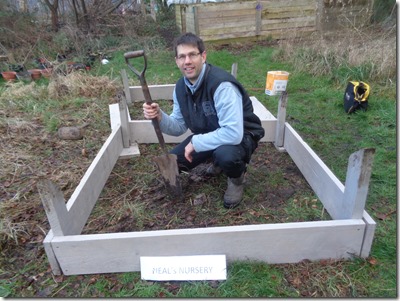
Neal's nursery. Photo: Paul Loughnane

At the Wirral Countryside Volunteer’s 32nd AGM in January, although the group is the biggest it has ever been, I made an appeal that we should encourage some more youngsters to be volunteers. The next day our youngest volunteer Ken was in contact say he has taken up a job with the National Trust in Devon and could no longer be our tool officer!

Ken Neal arrived on the scene in autumn 2011 just as we were coppicing the Embankment Coppice at New Ferry Butterfly Park. “Dr Ken” was a breath of fresh air being in his 30s with enthusiasm, backed up with a PhD and lots of nature conservation experience working as an ecological consultant carrying out a broad range of ecological surveys. Ken has been a regular and very energetic volunteer, a great driver for getting the roof of the container repaired and the tool container organised. He is the only volunteer I know who can step on to the container roof. One step on the lock protector on the door and the next up on to the roof. I wonder if it is anything to do with the spider tattoo he sports? Ken’s newly acquired chainsaw skills were especially useful at Alford when we were battling in February 2017 at 6pm with the fading light to get the final lengths of difficult hedge laid, those that were unsuitable for the national hedge laying match in October 2016.

Goodbye Ken. Photo: Elizabeth Woloschin

Ken gave two talks to Wirral Wildlife Group, one on “Sharks, Snakes, Spiders & Science” and the other on “The Ecology of Offshore Wind farms”. Both talks were honest, funny and illuminating accounts of these topics. Ken carried out systematic bird Surveys at Thornton Wood and New Ferry Butterfly Park. He organised some moth trapping nights at New Ferry Butterfly Park with the volunteers and wrote a blog of his findings. Ken surveyed the oak regrowth in Thornton Wood using GPS. Conclusions: those areas of oak regrowth often correlated with Wirral Countryside Volunteers activity! Confirming scientifically what we already knew. Thanks Ken.

Ken’s new position is working for the National Trust on an exciting project to increase the biodiversity of the farmland that they own by encouraging tenant farmers to modify their agriculture methods to benefit wildlife. Agriculture covers a large area meaning Ken’s work will benefit more wildlife than just volunteering with the WCV. Ken has often measured decline of the state of nature or the environmental impacts of industrial projects. Now he will be driving projects and measuring their environmental benefits.

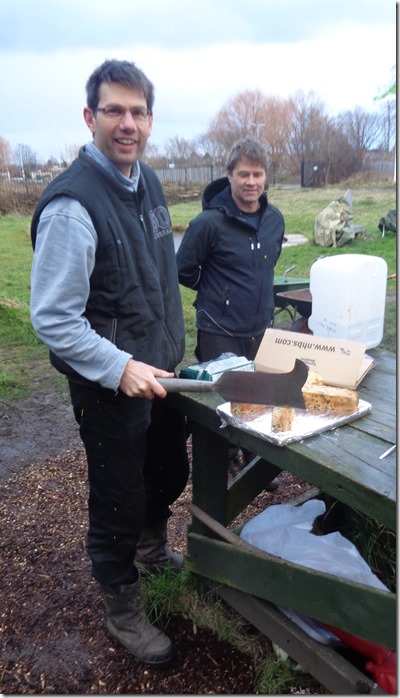
Ken cutting his cake with a billhook. Photo: Paul Loughnane

On his last day with the volunteers Ken constructed a raised bed as a revamp of the volunteer’s tree nursery or should we call it Neal’s Nursery? There was a little presentation with his favourite coconut and apricot cake in the shape of a large K which he cut in good volunteer tradition with a Yorkshire billhook and was presented with a book on Devon hedges. Ken said the experience with the volunteers helped him clinch the job.

Paul Loughnane

Tuesday, 13 February 2018

RECORD Meeting about local wildlife


Would you like to attend a RECORD meeting on 28th February 7 - 9pm at Chester Zoo.

This is an opportunity for anyone with an interest in local wildlife to get together and share their knowledge and views.

The speaker will be Gail Quartly- Bishop, a local bryophyte recorder.

Tea/coffee and snacks will be provided.

The venue is the Mottershead Suite, Cedar House, Chester Zoo.

Wednesday, 7 February 2018

Make a bird or bat box at the River Park


Two events at Port Sunlight River Park.

Saturdays 17th and 24th February
Make a Bird or Bat Box
1 - 3pm

Build a bird or bat box from the kits provided.
Suitable for accompanied children aged 8 and over.

Boxes will be put up in the River Park or can be taken home for cost price.

Book your place with the ranger on 07587550060